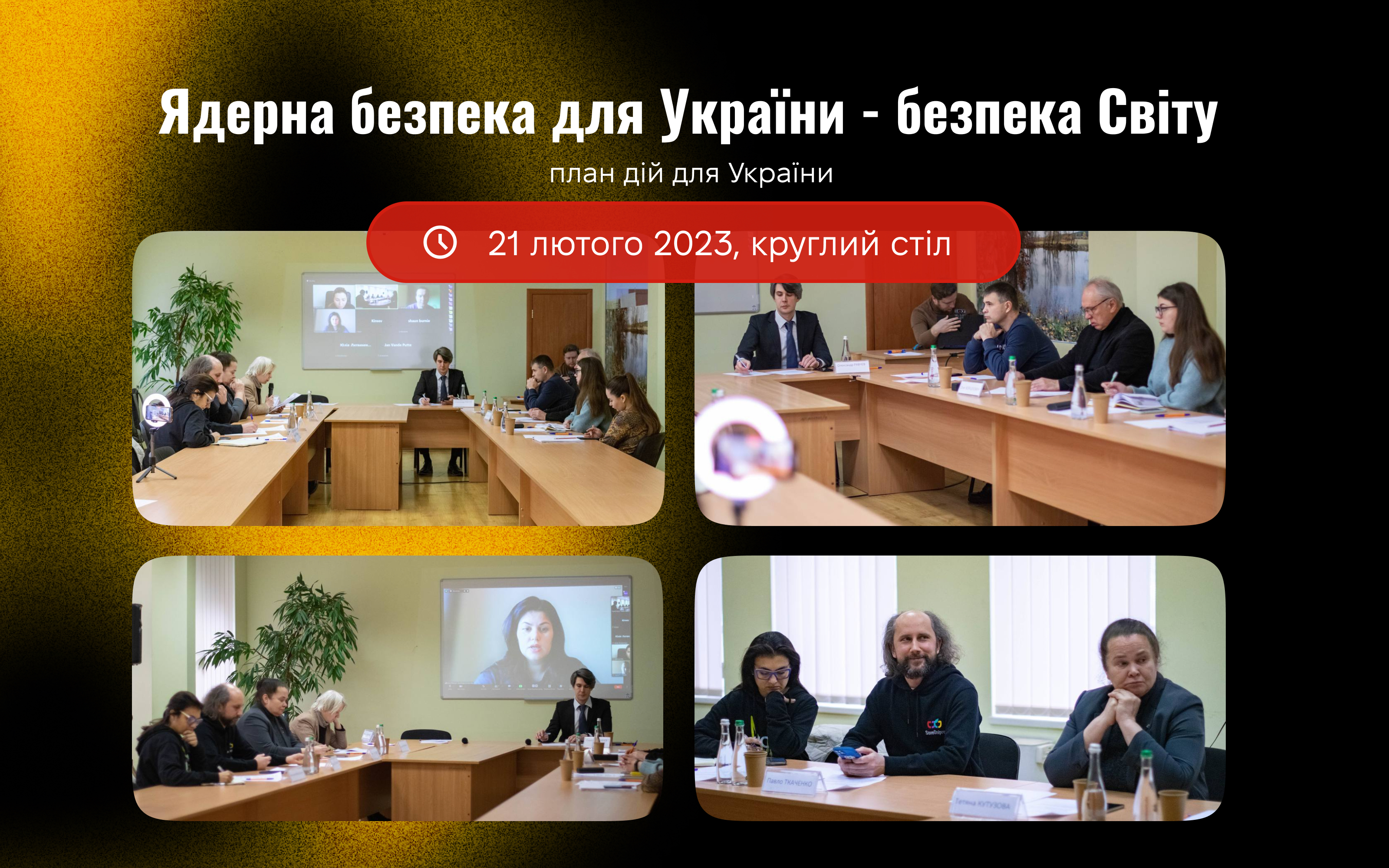
To help develop a new mechanism for radiation safety, SaveDnipro organised the roundtable “Ukraine’s Nuclear Safety Is the World’s Safety: An Action Plan for Ukraine”, held on 21 February.
Participants included representatives of Ukraine’s Ministry of Energy, Ministry of Foreign Affairs, Ministry of Environmental Protection and Natural Resources, State Emergency Service, Ukrainian Hydrometeorological Centre, State Nuclear Regulatory Inspectorate and Cherkasy Regional Military Administration. Civil society and expert participants included SaveDnipro head Iryna Chernysh; SaveEcoBot lead developer Pavlo Tkachenko; Greenpeace nuclear energy and energy policy experts Shaun Burnie and Jan Vande Putte, who had undertaken missions to Chornobyl and Zaporizhzhia; former MP and International Centre for Ukrainian Victory member Viktoriia Voitsitska; and Ecoaction representative Artem Kolesnyk.
The roundtable aimed to develop a roadmap for the main stakeholders’ further work to uphold Ukraine’s interests in wartime nuclear safety, both internationally and domestically.
Key discussion topics included:
- Relevant agencies’ efforts to isolate Russia and Rosatom internationally, introduce further sanctions, remove Russia from the IAEA Board of Governors, end dependence on Russian nuclear fuel and ensure safety at Zaporizhzhia Nuclear Power Plant.
- The effects of Russia’s military presence in the Chornobyl Zone on the environment and human health, including the need to withdraw Russian troops from nuclear facilities, secure those sites, clear mines and address the consequences of the 1986 disaster.
- Risks to the Prypiat River and drinking water in the Chornobyl disaster area, including forest fires that can spread radioactive substances and the danger of mines and other explosive devices.
- Greenpeace representatives said they had long warned about nuclear energy risks. Their current efforts focused on monitoring compliance with conventions and transport missions to Zaporizhzhia. Shaun Burnie stressed that the priority was withdrawing Russian troops from nuclear sites and securing them, given the fragility of the situation. Jan Vande Putte noted that the Chornobyl Zone remained highly vulnerable after the 1986 disaster, with mines among its most pressing problems.
Viktoriia Voitsitska recalled Russia’s plans to seize nuclear plants for blackmail as part of its aggressive policy. She stressed that these threats extend beyond the plants’ boundaries, requiring attention to other vulnerable locations that Russia might target.
Participants also discussed spent nuclear fuel safety and management, which must be incorporated into a nuclear safety action plan. Ecoaction and Artem Kolesnyk voiced concerns on this issue. Other participants described damage to the Chornobyl Zone, including destroyed laboratories and monitoring networks and stolen radiation sources and infrastructure.
State Nuclear Regulatory Inspectorate representatives raised Ukraine’s dependence on Russian uranium enrichment technologies and the IAEA’s role in addressing nuclear terrorism. Olena Syrota noted that protection of nuclear facilities during armed conflict had already been raised and that the IAEA could develop guidance. However, amending the IAEA Statute requires consensus and is a lengthy process. Recent unilateral EU and US decisions concerning funding for IAEA projects benefiting Russia or Belarus could provide practical outcomes supporting protection of nuclear facilities from attacks.
Radiation monitoring was another issue. Ukraine needs a state system coordinating facility-level and nationwide monitoring. Emergency and background pollution monitoring systems also face problems caused by inadequate equipment, management systems and specialist staffing.
A Cherkasy Regional Military Administration representative shared experience of creating an interactive map showing background radiation monitoring stations, capable of twice-daily updates and processing data every five minutes. If weapons of mass destruction were used, these stations could detect elevated background radiation and help inform effective civilian evacuation decisions.
SaveEcoBot lead developer Pavlo Tkachenko noted that Ukraine’s experience of building a background radiation map in the aftermath of Chornobyl showed that civil society could rapidly create a practical tool to answer questions about radiation levels nationwide. Nevertheless, Ukraine needs a state monitoring system.
The meeting resulted in a resolution proposing the following steps:
- strengthen Russia’s international isolation and pressure within international institutions, including suspension of its IAEA membership rights and privileges, preventing Russian citizens from holding management positions in the organisation, and prohibiting Agency events in Russia;
- introduce restrictive measures, including sanctions against Russia’s nuclear energy sector and its contractors in existing and new projects; an embargo on Russian nuclear fuel; and an end to research projects and programmes involving Russia and to transfers of Russian technology to other countries;
- hold Russia accountable for crimes against nuclear facilities and their personnel;
- restore control over all nuclear facilities and materials within Ukraine’s internationally recognised borders, liberate Zaporizhzhia Nuclear Power Plant and establish a safe zone around it;
- strengthen cooperation between state bodies and civil society to inform the public, foreign governments and international communities about the Russian army’s actions at occupied nuclear sites and their global consequences;
- designate a responsible state authority to coordinate monitoring across the different existing systems;
- develop new approaches to procedures within the nationwide monitoring system;
- integrate background and emergency monitoring systems, develop online monitoring and establish an effective, clear mechanism for monitoring and coordination in emergencies, including reviewing laboratory equipment, increasing qualified staffing and expanding funding;
- share good examples of cooperation between public authorities and civil society on technical architectures for automated data collection and delivery.
The full roundtable resolution is available through the link on our website.