
Imagine entering a supermarket and a smartphone app telling you whether dangerous pesticides were used to grow the vegetables on sale. When you want to cycle through the city, it immediately shows the route with the least polluted air. Then an app analyses salary trends and demand for specialists and recommends the best courses in the most promising employment fields.
This is no distant future. The technical foundations to build such services already exist. What matters is having the underlying information available in an open data format.
What is ‘open data’?
Open data is information that:
- is distributed under an open licence, so no one can restrict redistribution by invoking copyright or confidentiality;
- is provided at a charge no greater than the cost of reproduction — the cost of paper, pen and ink if we lived in the nineteenth century, or free of charge online;
- is distributed in a format that does not prevent modification: a machine-readable format that computer programs can process automatically without manual intervention or additional processing.
This final point makes open data convenient for reuse: creating digital services and applications, conducting analytical research or carrying out journalistic investigations.
Open data is already working
If you have used an app to track public transport, it draws on municipal vehicle tracking data that city authorities have made available as open data. In the United Kingdom, apps use police crime data to tell you about the characteristics of the neighbourhood you are in.
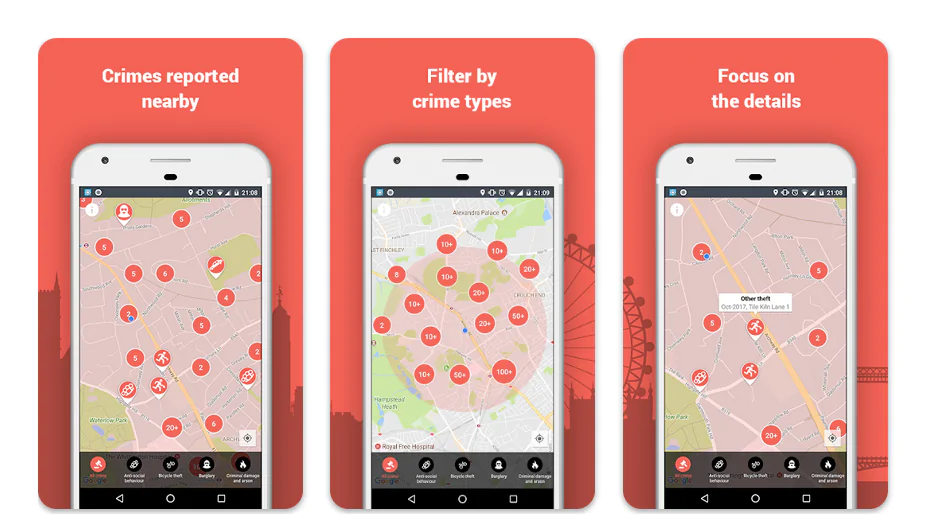
High-profile journalistic investigations such as the Panama Papers and Paradise Papers used open data from official registers among their sources. Researchers use open data to analyse energy system efficiency, climate change and more.
In Ukraine, open data from Prozorro has helped uncover corruption in public procurement. Through SaveEcoBot, Ukrainians check background radiation levels after another wave of false claims spread by Russian sources. An analysis of the logging permit register showed that 25% of sanitary logging in our country involved clear-cutting, making it look very unlike sanitary logging.
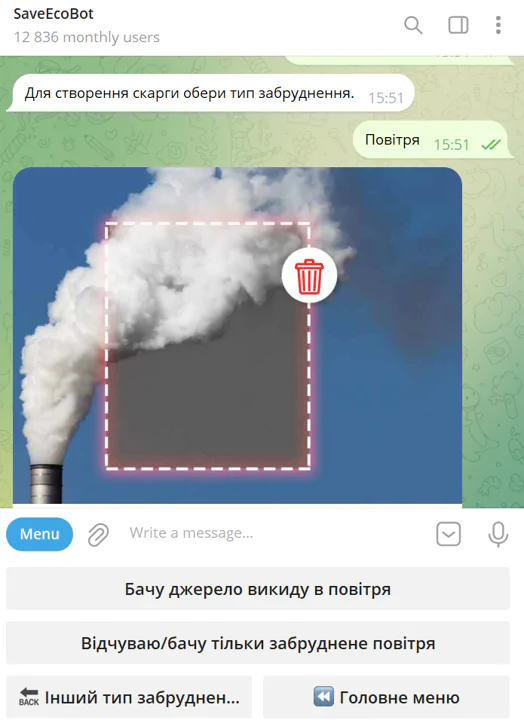
Even an apparently simple service such as drafting an environmental pollution complaint in SaveEcoBot’s chatbot uses extensive open data. To prepare a complaint correctly, it draws on the legal entities register, air emission permits register and other sources. Open data is already part of our lives. What more could we want?
Ukraine’s regression on open data
In September 2016, Ukraine joined the International Open Data Charter, a foundational document in this field. The same year saw the launch of the Unified State Open Data Portal. Since then, Ukrainian state bodies have been required to publish the datasets specified by Cabinet of Ministers Resolution No. 835 of 21 October 2015.
Following the full-scale invasion, however, the state closed access to many datasets, citing security concerns. Our preliminary analysis of just one field — environmental information — found that only 42 of the 163 datasets required to be open under Resolution No. 835 of 21 October 2015 are published properly. Yet on environmental information, Article 50 of Ukraine’s Constitution is categorical: ‘Everyone is guaranteed free access to information about the state of the environment, the quality of food and household goods, and the right to disseminate it. Such information may not be classified as secret by anyone ’.
Under Ukraine’s Law ‘On Access to Public Information’, an official restricting information must substantiate the decision, otherwise it is unlawful. No such justifications are currently being provided, while data remains closed. It would be interesting to hear what is secret, for instance, in the nine State Forest Resources Agency datasets that are now completely inaccessible.
Even where data includes sensitive information, Article 4 of the Aarhus Convention, to which Ukraine is a party, sets a clear requirement: where information exempt from disclosure can be separated without compromising its confidentiality, public authorities must make the remaining environmental information available.
These are clear violations of an international treaty. Unfortunately, international organisations cannot overlook them indefinitely. It would be deeply regrettable if these violations gave Ukraine a reputation for failing to fulfil its commitments and denied Ukrainians the opportunities open data offers. The general rule is simple: more open data means more useful services, apps and analysis.
This material was prepared with support from the European Union and the International Renaissance Foundation under the joint European Renaissance of Ukraine initiative. It represents SaveDnipro’s position and does not necessarily reflect the position of the European Union or the International Renaissance Foundation.
