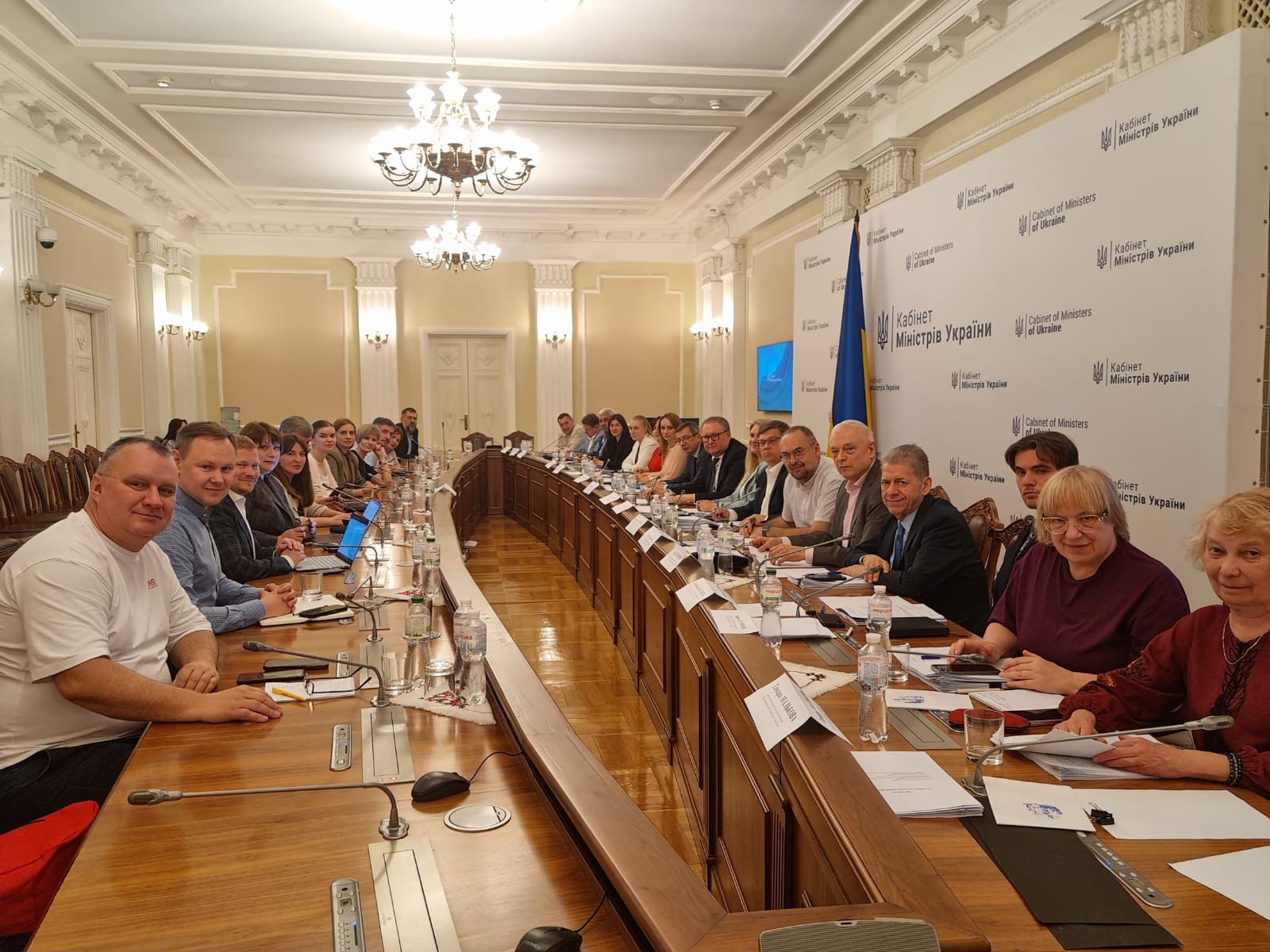
SaveDnipro has joined the Sustainable Development Advisory Group established under the Association Agreement between Ukraine and the European Union.
The Ukraine–EU Advisory Group is an official consultative forum bringing together representatives of civil society organisations, trade unions and business. Its members discuss Ukraine’s implementation of commitments on the environment, social policy, labour rights and sustainable development, and provide recommendations to the Ukrainian and European sides.
The group’s membership was renewed during the seventh meeting of the Council on Trade and Sustainable Development, chaired by Deputy Prime Minister and Trade Representative of Ukraine Taras Kachka.
During the meeting, participants reviewed 28 applications from civil society organisations. Eighteen candidates representing the social, environmental and economic sectors were recommended for final consideration.
‘Participation in the Advisory Group will enable civil society to contribute to discussions on Ukraine’s implementation of the sustainable development provisions of the EU Association Agreement. For SaveDnipro, it is an opportunity to consistently represent issues of environmental safety, access to environmental information, the impact of war on the environment and the development of ESG approaches in the financial and banking sectors in dialogue with the Ukrainian side and European partners’, said SaveDnipro chair Iryna Chernysh.
She also noted that participation in the Advisory Group would strengthen SaveDnipro’s work on sustainable development and the integration of environmental issues into Ukraine’s recovery.
This includes activities under the ‘Together for People and Planet’ programme, funded by Sida with support from WWF. The programme aims to strengthen the capacity of environmental civil society and environmental NGOs, and to integrate sustainable development and environmental protection into Ukraine’s recovery and development.
This material was produced with support from Sweden (Sida). The views expressed are the responsibility of the authors and do not necessarily reflect the position of Sida/Sweden.