Translation note: This article describes events and plant conditions in November 2022. Its technical explanations and temperature examples are an introductory historical account, not operating instructions or a current nuclear safety assessment.
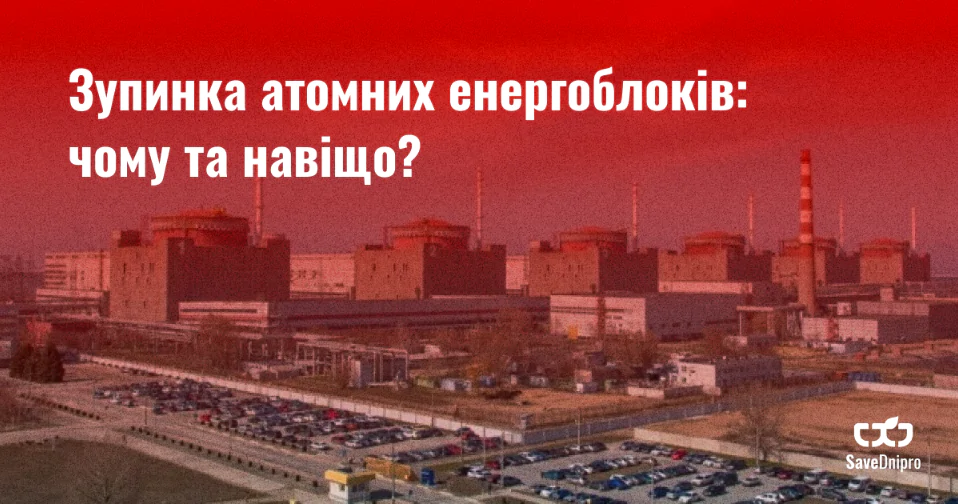
Russia continues attacking Ukraine’s energy infrastructure. As a result, on 15 November all units at Khmelnytskyi Nuclear Power Plant and one of Rivne’s four units were disconnected. On 23 November , emergency shutdowns occurred at all three operating nuclear plants: South Ukraine, Rivne and Khmelnytskyi. Why do these shutdowns happen, and what risks do they carry?
During the attacks on 15 and 23 November, frequency fell in Ukraine’s integrated electricity grid, triggering nuclear plant emergency protection. Units were disconnected and plants relied on backup diesel generators.
Reliable grid connections matter for both energy security and nuclear safety. Plants need electricity to cool fuel in reactor cores and spent fuel pools and maintain monitoring and control systems. Emergency diesel generators can supply essential systems following a loss of external power, but only for a limited period, depending on fuel and operating conditions.
Nuclear plants are designed to account for many risks, including loss of power to their own systems. Procedures specify responses to different events. Nevertheless, unplanned shutdowns outside scheduled preventive maintenance are stressful for equipment. Designs include limits on operating cycles and starts, so emergency events must be considered when assessing plant condition and service life.
On 15 and 23 November, Ukrainian reactors entered what is known as hot shutdown. The article describes temperatures remaining above 260°C. From this state, returning to normal operating conditions is easier. During longer outages or emergencies caused by Russian aggression, reactors can be brought into cold shutdown, described here as below 70°C, as had happened to most Zaporizhzhia units.
Power units may shut down not only because external supplies fail but also because they cannot deliver generated electricity. Generators require an electrical load; losing that load can cause automatic protection systems to shut down the reactor.
Although plants are designed for emergency power losses, prolonged failures can have devastating consequences. Worst-case scenarios include core damage, boiling off water in spent fuel pools and radioactive releases within containment. This is why the recent shutdowns are alarming. At publication, the article reported two Zaporizhzhia units in hot shutdown, making repeated grid disconnections caused by Russian shelling dangerous there too.
Since the full-scale invasion began, Russian forces have engaged in systematic nuclear terrorism, threatening the world and creating disaster risks. Attacks on Ukraine’s electricity infrastructure terrorise civilians and indirectly threaten nuclear safety. Everyone committed to preventing another nuclear accident must take every possible step to stop this.
To end Russian nuclear terrorism, SaveDnipro and other civil society organisations sent a joint open letter to the IAEA’s governing and executive bodies. They demanded Russia’s removal from the Board of Governors, suspension of its membership rights, removal of Russian citizens from executive duties, and suspension of ongoing technical cooperation and scientific and technological exchanges between the Agency, Rosatom and Rosenergoatom.