Translation note: This translation corrects a unit typo in the 2023 article: the diesel-exhaust experiment used 300 micrograms per cubic metre, not grams. Research associations described below should not all be read as proof of direct causation. Sources: Crüts et al., 2008: original study.
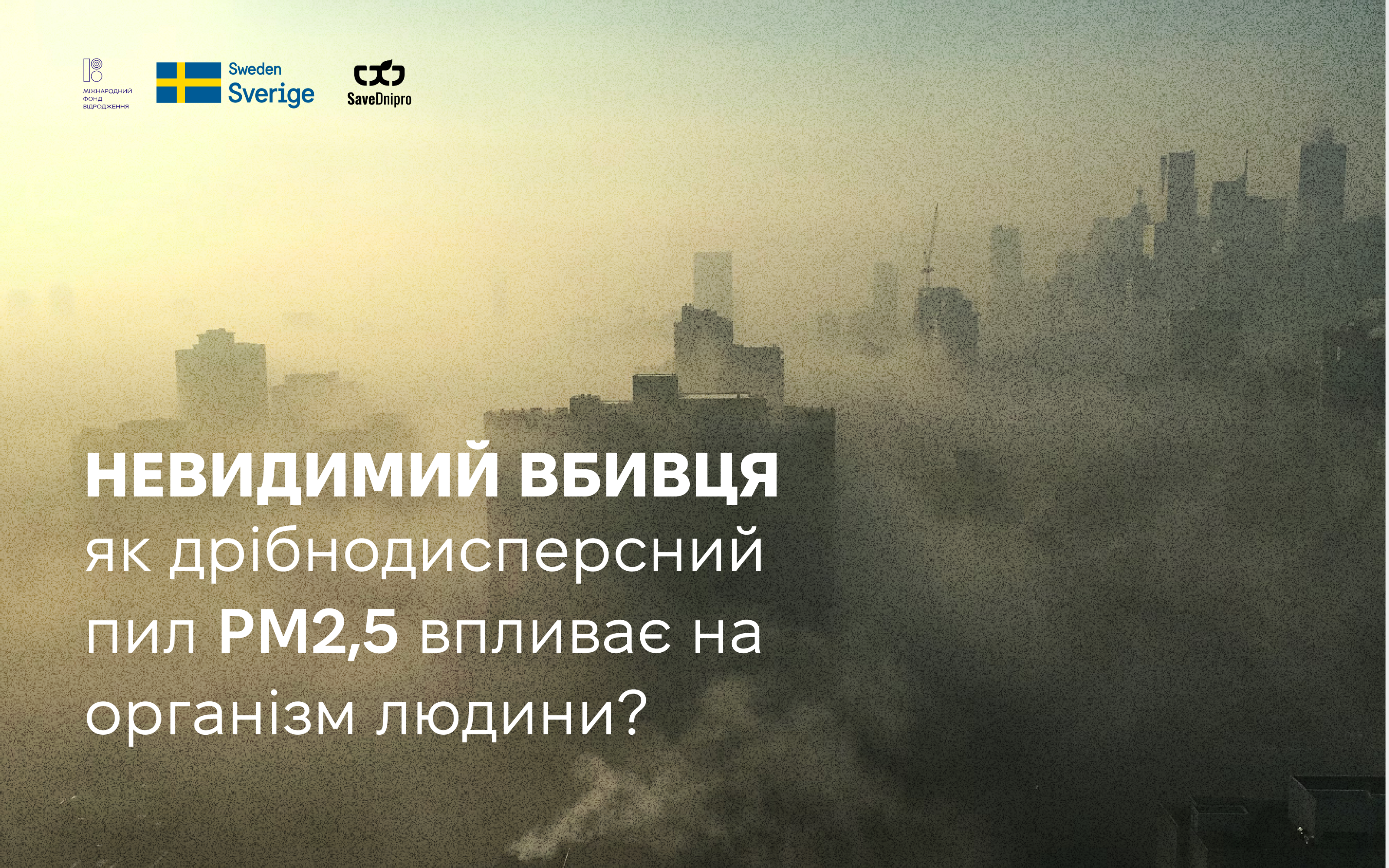
Air quality is extremely important for human health. High levels of industrial pollution and industrialisation make places with truly clean air increasingly hard to find. Air pollutants therefore affect everyone’s health to varying degrees. Let us look at the effects of fine particulate matter, PM2.5, also known as an invisible killer.
What is PM2.5? PM2.5 consists of particles smaller than 2.5 micrometres in diameter, with a wide range of physical and chemical compositions: nitrates, sulphates, elemental carbon, metals, mineral particles and water. Fine particles are much smaller than the width of a human hair. They can enter the atmosphere directly from pollution sources or form through chemical reactions in the air. Sources include businesses operating coal- and fuel-oil-fired boilers and furnaces; other industrial and energy facilities, such as thermal power plants; cars and lorries, particularly diesel vehicles; industries including oil refining and cement production; forest fires; road and construction dust; and agricultural activities.
The particles’ size is central to their effects on the human body. They can penetrate deep into the lungs, and some can enter the bloodstream. Exposure is associated with respiratory and cardiovascular disease, several cancers, effects on immune function and vulnerability to infections, neurodegenerative conditions and increased premature mortality.
How does PM2.5 affect the respiratory system? PM2.5 enters the body through the respiratory system. Its effects depend on its physical and chemical composition and the duration of exposure. Inhaled particles settle on the surfaces of the airways, bronchi and alveoli, causing oxidative stress and disrupting the normal functioning of lung cells or even killing them. PM2.5 also triggers inflammatory reactions that can damage respiratory tissues.
Persistent, prolonged PM2.5 exposure contributes to chronic bronchitis, chronic obstructive pulmonary disease, COPD, and asthma. Studies have shownthat increased PM2.5 exposure is associated with more hospital admissions and greater symptom severity in children and adults with COPD and asthma. Persistent exposure may also contribute to pulmonary fibrosis, the formation of scar tissue in the lungs’ interstitial tissue. Long-term exposure to dust of particular compositions can cause specific diseases, such as silicosis from silica or asbestosis from asbestos fibres. Dust carrying infectious agents can also transmit diseases such as tuberculosis, psittacosis, brucellosis and histoplasmosis; inert particles alone do not cause these infections.
How does PM2.5 affect the cardiovascular system? Their small size allows some particles to reach the bloodstream, although this is not the same process as oxygen diffusion. Numerous epidemiological studies have found clear links between PM2.5 and cardiovascular conditions, including arrhythmia, cardiac arrest, coronary heart disease, heart failure, venous thromboembolism and cerebrovascular disease. Despite differences between studies, particulate matter exposure is also associated with some increase in blood pressure. Although not all studies found a significant relationship, PM2.5 and traffic exposure, for example the distance between a home and a main road, have been associated with increased arterial stiffness.
PM2.5 contributes to cancer risk. Based on numerous studies, the International Agency for Research on Cancer has classified outdoor air pollution as carcinogenic to humans. High exposure to traffic-related PM2.5 has caused benign and malignant lung tumours in laboratory animals, colorectal cancer and stomach cancer. PM2.5 has been associated with both the incidence of and mortality from bladder cancer. Exposure to benzene in exhaust fumes, particularly during pregnancy and early childhood, has been linked to an increased risk of childhood leukaemia. Prenatal PM2.5 exposure may be associated with a child’s risk of leukaemia and astrocytoma.
How does PM2.5 affect the nervous system? Research indicates that air pollution can affect the central nervous system and contribute to its disorders. Fine particulate matter may enter the systemic circulation and reach the brain and other organs, or reach the brain directly through the nasal mucosa. Research has reported cognitive decline, problems with smell, hearing impairments, symptoms of depression and other adverse neuropsychological outcomes in people living in heavily polluted areas. A controlled short-term experiment using diesel exhaust at 300 µg/m3 reported changes in electroencephalogram readings.
Studies in Mexico Cityfound elevated markers of neuroinflammation in the brains of children exposed to high air pollution levels, as well as cognitive impairments and hyperactivity in seven-year-olds associated with early exposure to traffic pollution. A study in Catalonia, Spain, found an association between air pollution, defined as living within 300 metres of a motorway, and the prevalence of attention deficit hyperactivity disorder, ADHD.
A further study of PM2.5 exposure and children’s health foundthat children living in communities with high fine-particle levels had slower lung growth and smaller lungs at age 18 than those in communities with low PM2.5 levels. Polluted air is also particularly dangerous for older people and people with chronic respiratory or cardiovascular conditions.
High PM2.5 concentrations are associated with increased population mortality. Under chronic exposure, each 10 µg/m3increase is associated with a 6–13% rise in the long-term risk of cardiopulmonary mortality. Studies involving 360,000 people in 17 EU countries found an 18% increase in lung cancer incidence for each 5 µg/m3. The analyses accounted not only for smoking status but also its intensity and duration, along with income, occupation, fruit consumption and other relevant factors.
As these findings show, PM2.5 has a wide range of adverse effects on human health. The effects and consequences vary with exposure duration, particle concentration, physical and chemical composition, and even the season.
Fine particulate matter has a substantial impact on the human body and is a serious concern. The first step towards protecting yourself is to monitor air quality where you live. You can do this using our ambient air quality map, which displays PM2.5 readings across Ukraine in real time. Choose times with cleaner air for walks and vigorous exercise, and try to limit time outdoors when air quality is poor. Monitoring alone, however, is not enough. It is also important to join civil society efforts to make Ukrainian industry cleaner, since industry is a major source of air pollution, and to reduce other sources of pollution.
Do you share our values and want to support the team? Make a contribution! Your support will help us continue expanding air quality and background radiation monitoring, advocating cleaner industry and oversight of polluting businesses, fighting for open and digitised environmental data, and pursuing other ambitious goals.
This material was produced within the Environmental Policy and Advocacy Initiative in Ukraine.