Translation note: This article was published in December 2022. Damage estimates, climate projections and the discussion of the war’s effects reflect that historical account, not an updated climate attribution study.
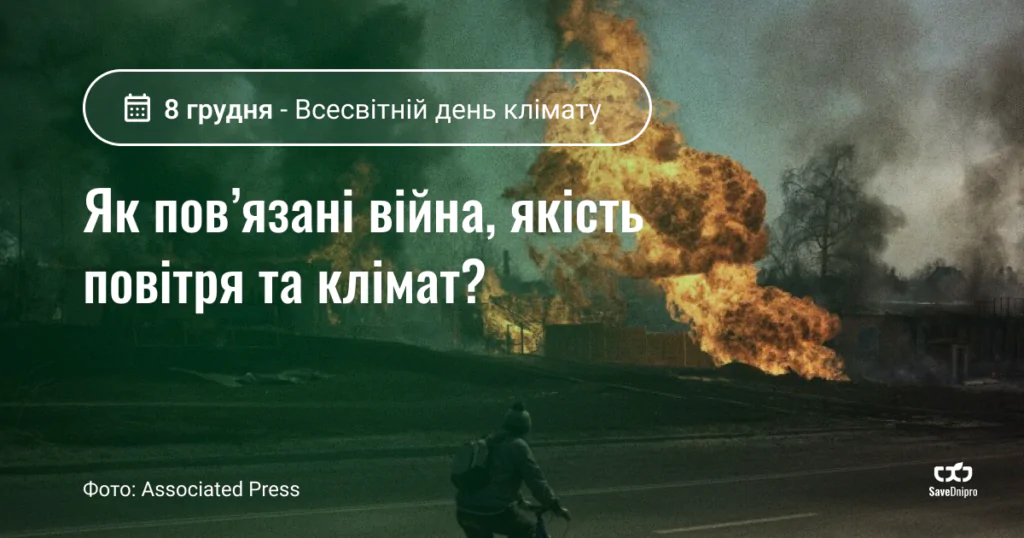
On 8 December, World Climate Day offers an opportunity to explore how war affects the climate and what humanity may face in the future.
The war in Ukraine is the largest and most destructive in Europe since the Second World War. Repeated shelling causes air pollution, fires and the spread of contaminants through the environment. These effects add to pressures driving climate change across the planet, particularly in the Northern Hemisphere.
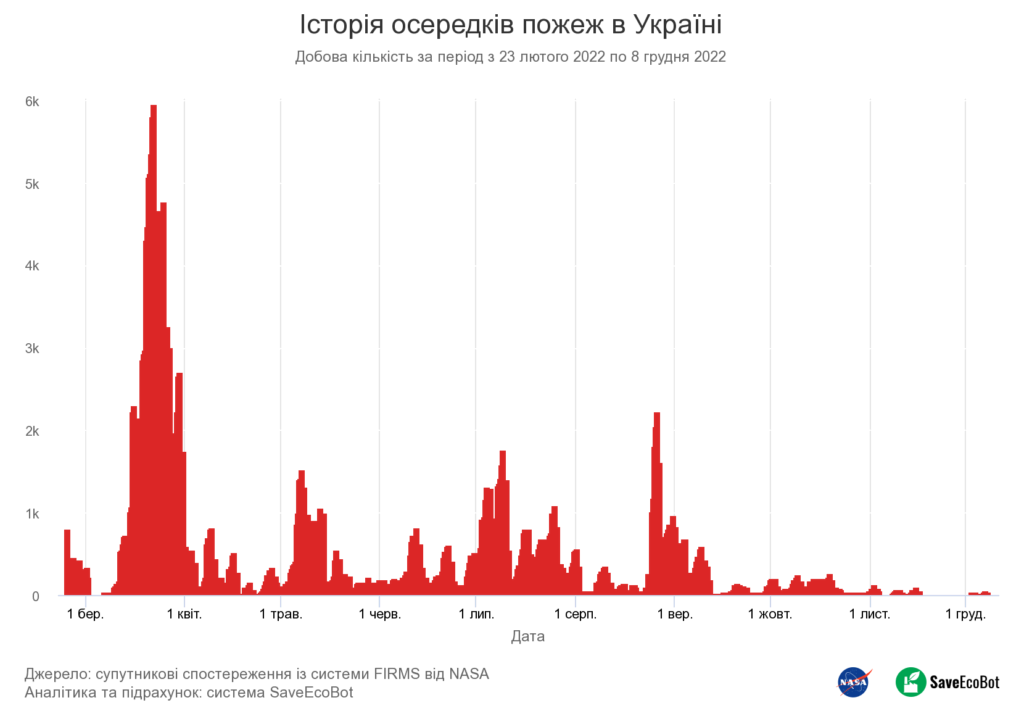
According to data from SaveEcoBot , tens of thousands of fires have occurred in Ukraine since the full-scale invasion began. During the most intense hostilities, we recorded several thousand daily, with a maximum of 5,957 active fires on 22 March. Everything was burning: Ukraine truly was on fire. You can follow current reported fires on our fire map.
In the war’s first stage, the enemy tried to destroy Ukrainian oil depots and refineries to disrupt military logistics. Preliminary estimates by the State Environmental Inspectorate put damage from burning petroleum products at UAH 49,363 million. This striking figure does not itself explain the environmental processes and consequences.
Burning petroleum products releases large quantities of carbon monoxide, carbon dioxide, benzo[a]pyrene, sulphur oxides, nitrogen oxides, gaseous and solid products of incomplete combustion, vanadium compounds, sodium salts and other substances. Ammunition depot explosions cause similar pollution. These emissions include greenhouse gases such as carbon dioxide and compounds with other direct or indirect climate effects.
These substances also threaten human health. Benzo[a]pyrene is a potent carcinogen and mutagen. Soot, a solid combustion product, can contain carcinogens, accumulate in the lungs and, in its finest fractions, reach the bloodstream. Avoiding smoke is therefore important, particularly from oil depots, ammunition stores and industrial fires.
Acid-forming gases released during combustion can react with water to form acids. Such reactions may occur on moist surfaces, including mucous membranes, and in atmospheric moisture, contributing to acid precipitation.
Hostilities have also greatly increased forest fires. By early December, the State Environmental Inspectorate’s estimated damage from them had reached UAH 896,528 million. These fires are dangerous not only because of atmospheric emissions but also because they destroy ecosystems, remove vegetation that absorbed carbon dioxide through photosynthesis and reduce biodiversity, undermining resilience.
As for soot’s climate effects, according to scientists’ calculations cited in the article, fine soot’s contribution to Earth’s heat balance exceeds that of any individual greenhouse gas except carbon dioxide. Its small particles can travel long distances and remain suspended for extended periods. During dry seasons, air masses may carry them to frozen regions. Bright ice normally reflects sunlight, limiting warming, but a dark soot covering reduces reflection and accelerates heating and melting.
Two mechanisms are involved: soot absorbs solar energy, while greenhouse gases limit the escape of heat to space, including heat absorbed during the day.
In peacetime, climate change is driven by human activities including industrial emissions and vehicle exhaust, alongside factors such as seasonal forest fires. Climate models account for these influences when projecting conditions 50–100 years ahead. Russia’s war follows neither the rules of war nor common sense, making its additional contribution particularly difficult to estimate at this stage.
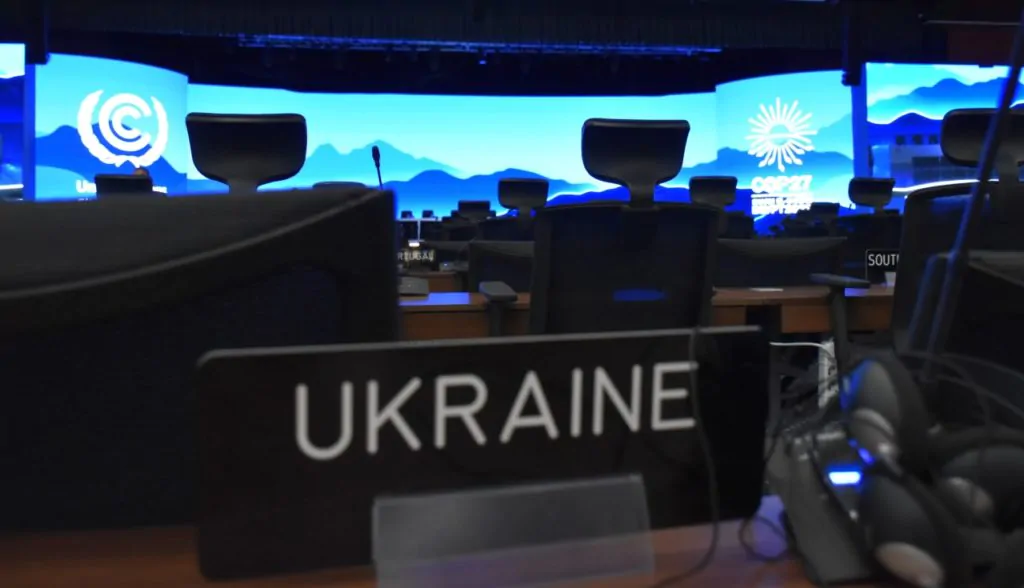
At this year’s COP27, a new UN report was presented indicating that existing commitments were unlikely to limit warming to 1.5°C by the end of the century. Combined national pledges under the Paris Agreement could instead lead to around 2.5°C. These troubling figures did not account for the war’s effects.
Hostilities contribute to climate pressures beyond Ukraine, across the Northern Hemisphere. Large fires in forests, oil depots and ammunition stores can send smoke high into the atmosphere, spreading it over vast areas. The original article places this additional pressure within the wider context of record temperatures, droughts, floods and resulting crop losses. Everything in nature is connected, and war mercilessly damages the planet.
Stay informed using SaveEcoBot’s fire maps, radiation mapsand air quality map . Since the full-scale invasion began, SaveDnipro has also documented Russian war crimes against the environment through its bot in Telegram and Viber. Join our initiative, follow environmental maps to stay informed and report environmental crimes so that Russia can be held accountable for every one of them!