Translation note: This is an archived overview published in January 2023. Figures and forecasts below are those cited in the original article; they have not been updated and may use different definitions, periods and estimation methods.
Everyday human activity has a profound impact on the planet’s natural environment. Most environmental problems are expected to intensify this year. Here we explore how human pressures are changing the world.
Climate change and its effects
Climate change has been debated for more than half a century. Despite initial scepticism, scientists now agree that human activity accelerates climate change and amplifies many related processes. A new UN reportpresented at COP27 found that countries were reducing projected global greenhouse gas emissions, but their efforts remained clearly insufficient to limit warming to 1.5°C by the end of the century. We should therefore expect increasingly pronounced effects.
Global warming. Scientists estimated the global temperature increase at 1.15°C above pre-industrial levels at the time of publication. Rising greenhouse gas emissions, particularly from burning oil, gas and coal, drive this warming. Its consequences are already evident: 2022 was the fifth-warmest year on record. The article cites an average atmospheric CO2 level of 417 parts per million on 12 July 2022. Such high concentrations last occurred around three million years ago, when it reports sea levels 30 metres higher than today and modern humans did not yet exist.
Melting frozen regions and rising sea levels. Global warming melts long-frozen areas and ice in both hemispheres. Melting land ice and thermal expansion of seawater raise global sea levels. Shrinking ice cover also reduces reflection of solar energy back into space, accelerating warming. The article cites average sea-level rise of 3.2 millimetres per year. In 2020, Greenland’s ice melt was reported to have raised sea levels by 2.2 millimetres in just two months, while Antarctic ice loss was contributing approximately one millimetre per year.
Rising water levels will devastate coastal communities. Research and advocacy organisation Climate Central estimated that sea-level rise this century could inundate coastal areas currently home to 340–480 million people, triggering large-scale climate migration. In Ukraine, Ecoaction’s calculationssuggest around 650,000 hectares could be flooded, or up to one million hectares when storm surges are included, forcing 75,000 people to relocate.
Ocean acidification. The world ocean absorbs around 30% of the carbon dioxidereleased into Earth’s atmosphere. CO2 emissions result from human activity and natural processes such as forest fires. Even small changes in pH can strongly affect marine ecosystems, killing vulnerable species, particularly coral reefs, changing food webs, destroying habitats and ultimately accelerating biodiversity loss.
Everything is interconnected. In 2022, Russia’s full-scale war against Ukraine became another factor contributing to climate change. Numerous fires at ammunition stores and oil depots, as well as forests and steppes, affect processes influencing the Northern Hemisphere’s climate. Precise estimates of the war’s contribution were not yet available, but the mechanisms were already understood. Read more in our article.
Biodiversity loss
Loss of wild species. Human activity also causes mass losses of plants and animals. Climate change is one factor, alongside conversion of forests, grasslands and mangroves into farmland, deforestation, wetland drainage, pollution and urbanisation. A new WWF report found an average 69% decline in monitored mammal, fish, bird, reptile and amphibian populations since 1970. A 2020 study also indicated that Earth’s sixth mass extinction was accelerating. More than 500 terrestrial animal species were on the brink of extinction and could be lost within 20 years, as many as were lost during the entire previous century.
Overfishing and overhunting. The original article links rising food consumption and population growth to pressure on natural resources, describing food consumption as roughly twice that of 50 years ago and population as four times the late-1960s level. It cites around 30% of exploited fisheries as overfished. Overfishing damages the environment, contributing to fish species losses, algal growth, destabilised marine ecosystems and ocean litter.
In Ukraine, more than 80 animal species face extinction and could disappear because of Russian aggression. Occupying forces deliberately attack natural parks, zoos and shelters. The article cites wartime deaths of more than ten million animals.
Deforestation
Some environmental problems persist over time, including industrial and uncontrolled logging. The article cites forest clearance equivalent to 300 football pitchesevery hour. Agriculture is the main driver, with land cleared for livestock or crops. It warns that, without changes in logging and restoration practices, forests could be reduced to 10% by 2030 — a projection presented in the original overview, rather than an updated assessment.
Air pollution
Air pollution is another persistent environmental challenge. World Health Organization data cited in the article put annual deaths related to polluted air at 4.2–7 million worldwide and indicate that nine in ten people breathe air containing high pollutant levels. Industrial facilities and transport are major sources of air pollution.
The war in Ukraine severely affects the atmosphere because hostilities involve constant fires and explosions. Both sides strike positions, ammunition stores and equipment. Millions of tonnes of emissions enter the air, including fine particles, nitrogen and sulphur oxides, aldehydes and anhydrides. The State Environmental Inspectorate’s preliminary estimate of wartime atmospheric damage cited here was UAH 1 trillion. You can follow reported air quality in Ukraine in real time on our map.
Waste pollution across ecosystems
Food waste. Around a third of food intended for human consumption, approximately 1.3 billion tonnes, is lost or discarded. The original article attributes a third of annual greenhouse gas emissions to this food-related problem. In developing countries, it reports that 40% of food waste occurs after harvest and during processing, compared with 40% during retail and consumption in developed countries. For the United States, it cites more than 50% of produce discarded because of an unattractive appearance, approximately 60 million tonnes of fruit and vegetables. Such waste undermines food security worldwide.
Mining and construction waste. Humanity’s enormous demand for resources drives mining and processing industries. Most extracted materials need processing and purification, generating huge volumes of industrial waste. The article cites more than eight billion tonnes annually in the United States alone. Depending on its composition, this waste occupies land and can pollute the air, groundwater and surface water.
Construction waste has similar environmental effects. War has destroyed dozens or hundreds of Ukrainian settlements. Our recent article explores how Russian aggression destroyed Mariupol and continues to damage the natural environment of the Azov region. Unusable buildings and debris will eventually need to be managed, including both storage at dedicated sites and recycling.
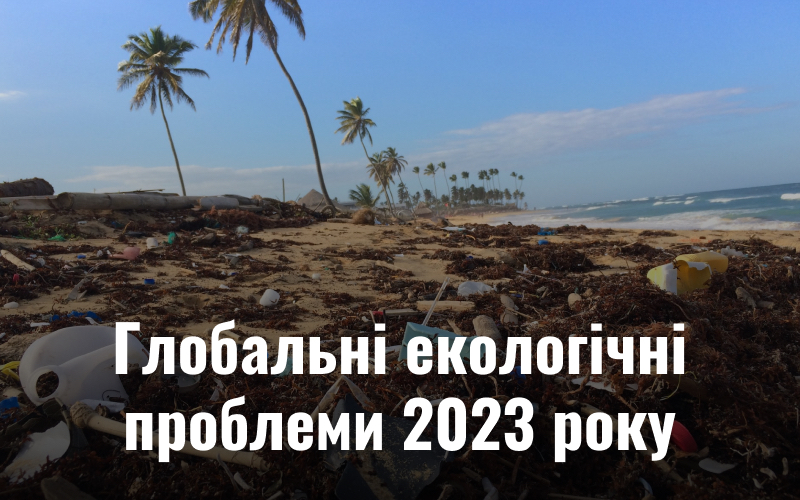
Plastic pollution. Every year, more than eight million tonnes of plastic enter the ocean. Some studies suggest the figure could reach 14 million tonnes. At sea and on land, plastic breaks down into tiny particles, microplastics, which have already spread across the planet. In 2022, microplastics were detected for the first time in freshly fallen Antarctic snow. Without action, plastic pollution will grow rapidly, potentially bringing new and unpredictable consequences.
Fast fashion and textile waste. The article attributes 10% of global carbon emissions to fashion. Citing the UN Environment Programme, it reports that the industry produces more greenhouse gas emissionsthan aviation and shipping combined, and almost 20% of global wastewater, or around 93 billion cubic metres associated with textile dyeing. At least 92 million tonnes of textile waste are generated worldwide each year, with a projection of 134 million tonnes annually by 2030. Fast fashion promotes enormous clothing output and synthetic material use. Textile waste can contribute greenhouse gas emissions and microplastic pollution as it degrades.
Humanity faces many challenges that we must address. Human activity drives most environmental problems and substantial ecosystem changes that need to be reversed or at least halted. Our future depends on how boldly and decisively we act. Everyone can contribute: even small steps matter. Avoiding plastic packaging, buying fewer unnecessary clothes or introducing a personal vegan day can be a meaningful start.
Working with environmental organisations can be even more effective. For example, you can help SaveDnipro document Russian war crimes against the environment through the @SaveEcoBot chatbot in Telegram and Viber. Open it and follow the steps. You can also support our organisation with a charitable contribution. Only together can we protect nature and build the stable, welcoming future we want!
This publication was produced with the support of the European Union. Its contents are the sole responsibility of SaveDnipro NGO and do not necessarily reflect the views of the European Union.