For a company, a successful outcome of the environmental impact assessment (EIA) procedure is obtaining an EIA conclusion. Depending on the planned activity, it sets out environmental protection measures, such as installing or upgrading pollution control equipment, monitoring emissions, waste management conditions, reducing adverse impacts on water resources and protecting animal species.
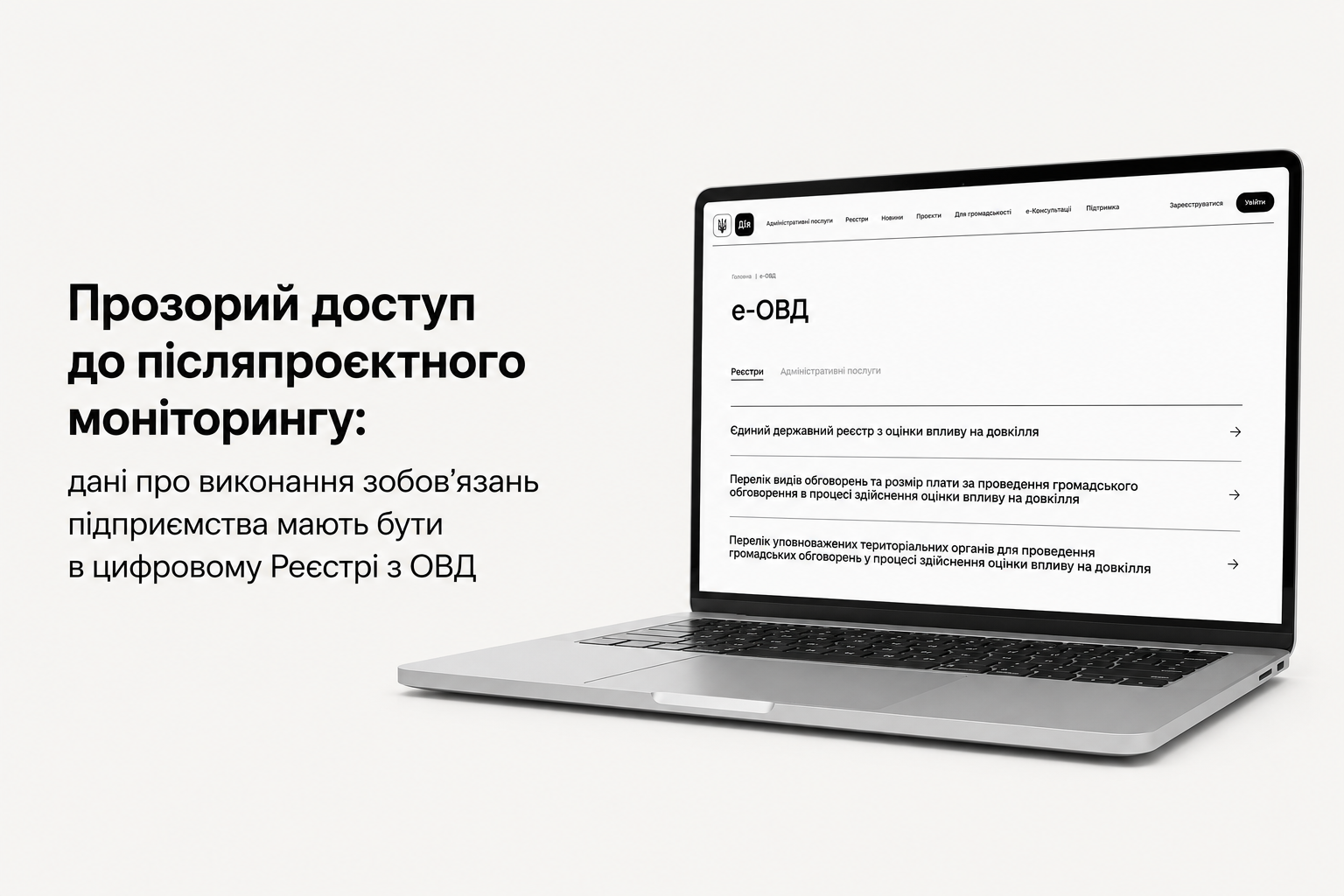
But there is a problem: the public often lacks convenient access to information on whether a company actually meets these requirements after receiving its conclusion. This is precisely what post-project monitoring documents should show. In practice, however, there is no requirement to publish this monitoring data for EIA projects in the EIA Register, so it is unavailable online. This makes public oversight considerably more difficult.
‘The problem we see is that, once an environmental impact assessment conclusion has been issued, the public often loses the ability to follow what happens next. A company receives obligations set out in its conclusion, but without access to post-project monitoring documents it is almost impossible to check whether it fulfils them or whether its environmental impact matches what the project declared. We insist that these documents must be part of the EIA Register and available electronically, ensuring transparency throughout the procedure’, said SaveDnipro chair and co-founder Iryna Chernysh.
The SaveDnipro team has already encountered this problem in practice. When analysing post-project monitoring materials in one region, the team found that the documents were literally stored on paper. More than 28,000 sheets of procedural documents from just one region had to be examined simply to obtain a systematic picture of what happens after positive EIA conclusions are issued.
For members of the public, journalists, analysts and researchers, this means unnecessary expenditure of time and money. For local authorities, it means an additional workload and dealing with large volumes of paper instead of having quick access to digital documents.
Transparency in the EIA procedure must continue after a conclusion is issued. Only once a project starts operating or is implemented does its actual environmental impact become clear, along with whether the measures stipulated in the conclusion are sufficient.
Environmental impact assessment is a procedure for projects and activities that may have a significant impact on the environment. It involves preparing an EIA report, public consultation, examination of the information by a state authority and issuance of an EIA conclusion. Ukraine’s Law ‘On Environmental Impact Assessment’ was adopted on 23 May 2017. It replaced the previous state environmental expert review approach with the new EIA procedure.