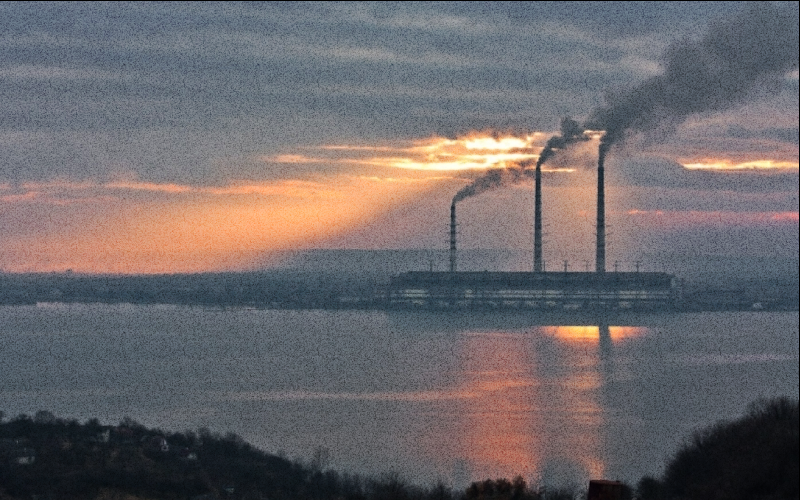
In 2021, Ukraine’s coal-fired plants produced about a quarter of the country’s electricity. All were built before 1977. None had equipment to remove sulphur and nitrogen compounds, and most operated without functioning dust filters. Their greenhouse gases also accelerate irreversible climate change. Every kilowatt-hour of coal electricity releases one kilogram of greenhouse gases, expressed as CO2equivalent, the worst performance among generation types.
Why, then, have these plants not been closed?
The answer has several parts. First, most Ukrainian coal plants belong to Rinat Akhmetov’s business empire. His influence over domestic politics long protected his assets, and his lobby still significantly influences some Government and parliamentary decisions. Second, retiring coal plants requires replacing their capacity. Russian attacks on energy facilities, including coal plants, make this far from simple.
Perhaps the most important current factor is flexibility. Coal units can be started and stopped relatively quickly, compensating for electricity shortages at peak demand. Ukraine’s existing nuclear units, which generate most electricity even during the war and occupation of the Zaporizhzhia plant, cannot do this. They operate steadily rather than changing output sharply. Solar and wind generation cannot be switched on and off at will at all.
What, then, can replace coal’s flexible capacity? We will examine alternatives and their advantages and disadvantages.
Alternatives to ‘flexible’ coal
Frequently discussed replacements include:
- gas engines
- gas turbine power plants
- biogas
- hydrogen
- hydroelectric plants
- modular nuclear plants
We will consider each technology’s ability to provide system flexibility, its environmental safety and the relevance of introducing it in Ukraine.
Gas turbine power plants
A gas turbine works much like an aircraft jet engine. Hot gases from burning natural gas spin turbine blades to generate electricity. Efficiency is low if the hot exhaust simply releases its heat into the atmosphere. To improve it, the exhaust heats another medium used for heating homes or generating additional electricity. Gas turbine units range from fifty to 340 MW, substantial for balancing system peaks. For comparison, Ukraine often uses 150 MW coal units for load-following.
Ukraine already has experience manufacturing and operating such equipment as mobile mini power plants. ‘We have Ukrainian-made stations like these. Some are already installed and being brought back into operation. We are taking those already manufactured out of storage and installing them too,’ said Prime Minister Denys Shmyhal in December 2022. It was also reported that in February 2023, the US Agency for International Development (USAID) provided Ukraine’s Government with a compact mobile 28 MW gas turbine plant.
Can this technology provide flexible generation?
Gas-fired flexibility means starting and stopping quickly and operating at partial load. Gas turbines need between eighteen minutes and one and a half to two hours to start generating. They can also start when the grid has lost power, helping restore the system after accidents. This is a particularly important argument for energy professionals during Russia’s aggression.
Other advantages include relatively low construction costs and operational reliability.
Will the technology reduce emissions (not just CO2)?
Burning natural gas produces half a kilogram of greenhouse gases, expressed as CO2equivalent, per kilowatt-hour. This is half coal plants’ emissions but an order of magnitude above other generation types.
Natural gas combustion also produces nitrogen oxides, NOx (nitric oxide NO and nitrogen dioxide NO2), which reduce the body’s resistance, cause oxygen deprivation in tissues, particularly in children, and irritate mucous membranes. Nitrogen compounds accumulating in soils reduce their fertility.
Gas turbines therefore have a justification only as flexible capacity, switching on at peak demand and off completely when consumption is low. Whether they are profitable in that mode is a complex question depending on peak electricity prices, natural gas costs and carbon taxation.
At present, energy professionals see the advantages as outweighing the disadvantages: gas is better than coal. But relying on gas turbines could prove short-sighted, quickly replacing the question ‘what replaces coal?’ with ‘what replaces gas?’. At COP28 in December 2023, an agreement was adopted on transitioning away from fossil fuels in energy systems. Natural gas is a fossil fuel.
Gas engines
If a gas turbine resembles an aircraft jet engine, a gas engine resembles a car’s internal combustion engine running on natural gas. The power relationship is similar: reciprocating engines are generally smaller than turbines and account for a relatively small share of gas-fired power plants.
As of November 2018, the average gas-engine generating unit was four megawatts, compared with 56 MW for gas turbines. Larger 16–19 MW units have since been installed in the US, usually several at one site. The largest such facility is the Denton Energy Center, commissioned in July 2018 near Dallas, Texas, with twelve 18.8 MW engines and 225 MW total capacity.
Large reciprocating-engine plants are often located in states with substantial renewable resources, particularly wind. Texas, with the country’s largest wind capacity, has 910 MW of gas engines, almost the capacity of one Khmelnytskyi nuclear unit.
Gas-engine plants can produce both electricity and useful heat and are relatively compact, depending on unit size. They can be integrated into a city’s system to supply homes, hospitals, schools and critical infrastructure. Fuel flexibility is another advantage: natural gas, liquid fuels or synthetic fuels made from industrial and household waste.
Can this technology provide flexible generation?
Gas engines need a few seconds to three minutes to reach full generation, a major flexibility advantage. Their relatively small capacity makes them more suitable for distributed generation and local solutions than for balancing the national system. They can be particularly useful for individual cities amid wartime threats to Ukraine’s grid.
Will the technology reduce emissions (not just CO2)?
Because they burn natural gas, the same considerations apply as to turbines. Gas engines also have cylinders and pistons requiring lubricating oil, whose combustion produces additional harmful emissions. This is a disadvantage even compared with environmentally unfriendly gas turbines.
Some manufacturers report progress in reducing nitrogen oxide (NOx) emissions. All such claims should be checked carefully before purchasing and installing equipment.
Biogas
Biogas feedstocks include:
- animal by-products;
- specially grown maize silage;
- crop residues: wheat, rye and barley straw, sunflower stalks, rapeseed, soy and beet tops;
- food industry by-products: pulp, molasses, distillery residues, spent grain and husks;
- sewage sludge from municipal treatment plants;
- the organic fraction of household solid waste.
Feedstock enters special tanks with bacterial cultures. Methane fermentation produces biogas, containing 55–75% methane, carbon dioxide and small amounts of other gases. Processing it yields biomethane: almost pure methane, indistinguishable from natural gas and transportable and usable in the same way.
Biomethane production is developing intensively in European countries including Germany, Italy, France, the Netherlands, Denmark and the United Kingdom. It remains less widespread in Ukraine. At the end of the first half of 2021, Ukraine had 54 biogas facilities totalling only 111 MW.
Can this technology provide flexible generation?
Because its composition resembles natural gas, biomethane can generate peak-time electricity in the same turbines or gas engines.
Will the technology reduce emissions (not just CO2)?
Biomethane combustion produces emissions similar to natural gas. The fundamental difference is that the CO2released was previously removed from the atmosphere by growing plants. Overall, it is therefore a carbon-neutral energy source. This is simplified, but total greenhouse emissions are broadly balanced by atmospheric carbon uptake or avoided emissions.
Biogas has a potential disadvantage unrelated to emissions. Widespread adoption could accelerate biodiversity loss by increasing land devoted to biofuel crops. Using existing waste avoids this problem and helps manage certain waste categories. The question is achievable scale. Without growing additional feedstock, biogas facilities suit individual farms and small villages but are unlikely to solve national system flexibility. A definitive answer requires further calculations.
(Read the continuation here)
This publication was produced with financial support from the European Union through the EMITTER project. Its contents are the sole responsibility of SaveDnipro and do not necessarily reflect the views of the European Union.