Translation note: This translation corrects a biological error in the 2022 source: carbon monoxide binds to haemoglobin, not platelets. Carbon monoxide has no smell or colour, and a particulate air-quality map cannot establish whether it is present. Use generators outdoors only, well away from doors, windows and vents, and follow current official safety instructions. Sources: CDC: Clinical guidance on carbon monoxide poisoning; CDC: Generator Safety.
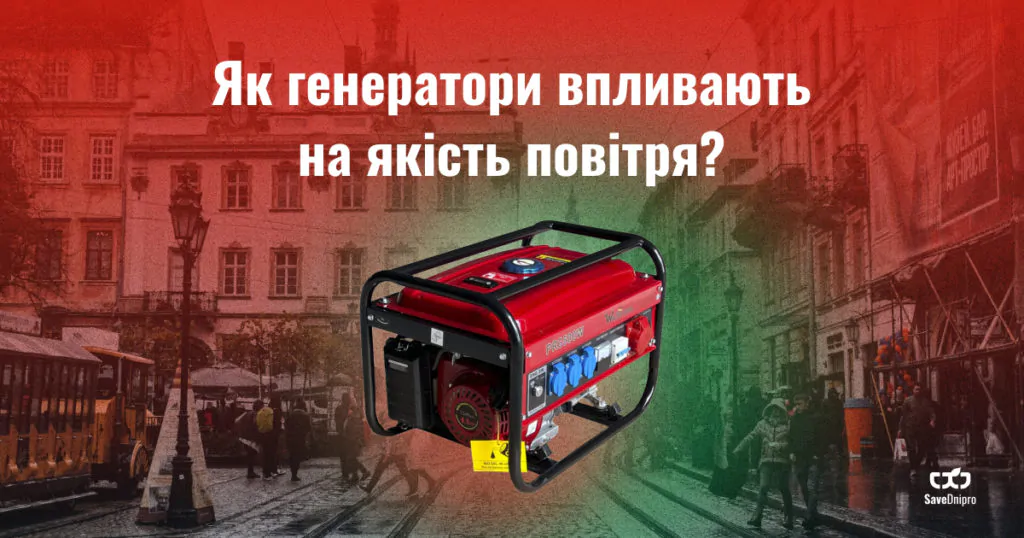
Repeated Russian attacks on Ukraine’s integrated energy infrastructure have led to scheduled power cuts nationwide. After the attack on 23 November, a complete blackout occurred for the first time, leaving millions without electricity, heating and water for several days because these systems are interconnected. These new challenges have prompted widespread purchases of diesel and petrol generators. Let us examine their effects on people and the environment.
A generator works on a relatively simple principle: an engine drives a shaft that rotates the generator’s rotor, producing the required electromotive force and electrical current at the appropriate frequency. Operation also releases combustion products in exhaust gases, including carbon monoxide, carbon dioxide, nitrogen oxides, hydrocarbons and aldehydes.
Exhaust gases are harmful, but their components affect the body differently. Carbon monoxide binds to haemoglobin and disrupts oxygen delivery and use, potentially causing severe tissue injury and death. Nitrogen oxides can cause coughing, vomiting and headaches; reactions on moist respiratory surfaces can cause irritation and, at high exposure, serious lung injury including pulmonary oedema.
More diesel generators operating during a blackout can worsen ambient air quality. Their contribution varies with placement and local conditions. In cities, existing pollution and street layouts that restrict air circulation can increase exposure, especially in narrow, enclosed streets in older neighbourhoods. Avoid concentrated exhaust sources during power cuts. When planning a route, you can consult our map of ambient particulate air quality, while remembering that it does not detect every exhaust pollutant or guarantee safety.
Generators are difficult to do without at present, but safe use requires care. Ukraine’s State Emergency Service advises keeping them at least six metres from nearby walls, windows and other surfaces. Operate them outdoors only, away from doors, windows, vents and busy pedestrian areas. Refuel outdoors with the engine switched off and after it has cooled. These precautions help prevent carbon monoxide poisoning and fire and reduce risks to other people.
Getting through these difficult times means caring for ourselves, our loved ones and those around us. Use generators responsibly and share this information so more people understand how to protect themselves.