World Environment Day is observed every 5 June to draw global attention to environmental problems, emphasise communities as the main force behind changing environmental approaches, and demonstrate the value of partnerships for a safe, stable future for every country and people.
Its origins are prophetic. In 1971, 2,200 scientists and cultural figures from 23 countries appealed to humanity, warning of unprecedented danger from pollution: ‘Either we end pollution, or it ends us.’
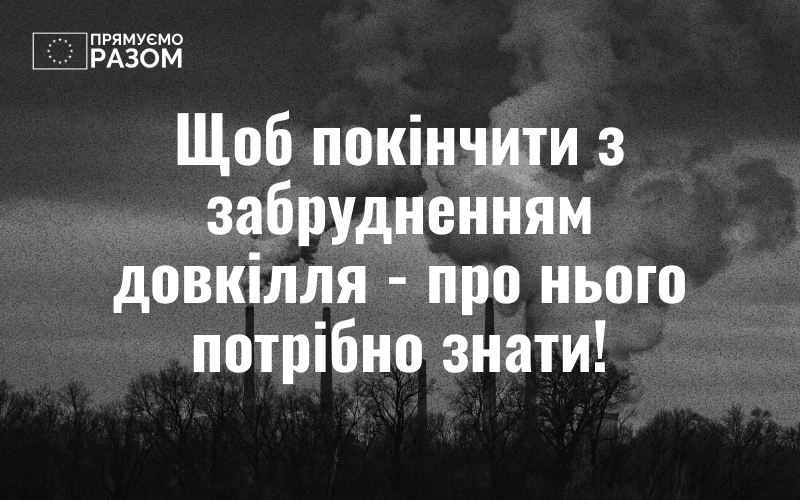
To fight pollution effectively and with determination, however, we need to know about it. Environmental information must therefore be open and accessible. Citizens are its main beneficiaries: understanding environmental conditions and influencing factors helps us protect ourselves and plan effective action to preserve and improve the environment.
Environmental information has special status under the Aarhus Convention on access to information, public participation and access to environmental justice. These rights are protected by Article 34 of Ukraine’s Constitution, the Cabinet resolution on state ambient air monitoring and other international and Ukrainian legislation.
A high-quality, transparent access system includes a Pollutant Release and Transfer Register (PRTR), the relevant agreement having been ratified by Ukraine in 2016. Consistent, integrated national registers expand public access, support participation in environmental decisions and help prevent and reduce pollution.
A PRTR includes information about businesses producing potentially harmful releases and transferring waste into different environmental media, the substances involved, their quantities over a defined period and geographical distribution.
It is facility-specific for point-source reporting and also includes diffuse sources; distinguishes releases to air, land and water; relies on mandatory periodic reporting; contains standardised, timely data, including electronically; involves the public in development and modification; and forms a structured computerised database, or linked databases, maintained by a competent authority.
A PRTR encourages pollution reduction and sustainable development. Greater business accountability makes it an effective environmental performance tool. It gives the public easy access to high-quality local release and transfer information. Although designed for public needs, governments can also use it to demonstrate emission reductions, monitor international treaty compliance, set priorities and assess environmental policies and programmes.
Decades of international use show clear benefits. Companies reduce releases and adopt corporate responsibility for reductions. The public obtains information on toxic substances and actual exposure, clarifying overall environmental and health impacts. Comprehensive information enables constructive dialogue with polluters and more effective reduction measures. Authorities can assess progress, evaluate modelling and monitoring systems, and improve public service planning.
Establishing effective Ukrainian PRTRs will give citizens clear, understandable release information and enable their environmental participation and justice rights. Only by understanding pollution can Ukrainians fight it and develop effective protection and recovery strategies. SaveDnipro is therefore already actively contributing to PRTR development and will continue this work.
Protecting the environment begins with comprehensive knowledge of what threatens it.
This publication was produced with financial support from the European Union. Its contents are the sole responsibility of SaveDnipro and do not necessarily reflect the views of the European Union.