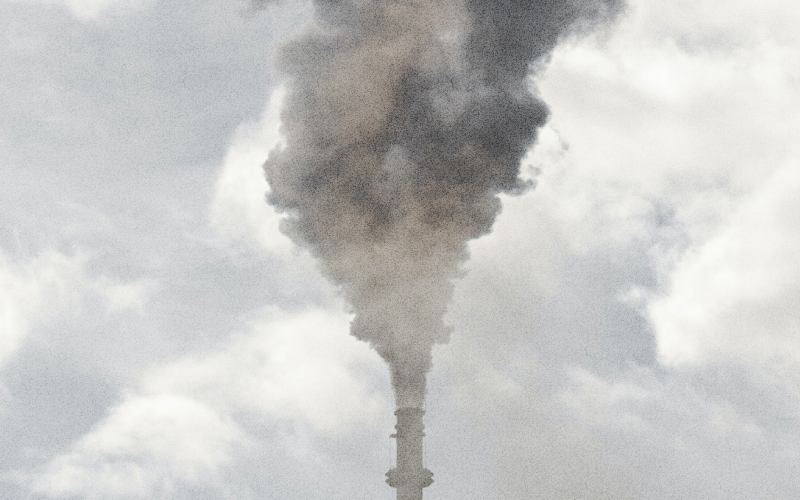
You have probably heard of greenhouse gases and the greenhouse effect even if environmental issues are not a particular interest. The issue has long moved beyond scientific discussion to become a planetary concern.
That is why the UN Climate Change Conference is taking place for the twenty-eighth year. It seeks ways to stabilise atmospheric greenhouse gas concentrations and reduce humanity’s critical influence on climate. This year’s conference starts on 30 November in Dubai.
As COP28 approaches, it is worth exploring greenhouse gases more deeply.
Which gases are greenhouse gases?
Carbon dioxide (CO₂) is the best known, but other substances also affect the climate.
The World Meteorological Organization identifies carbon dioxide, methane, nitrous oxide, hydrochlorofluorocarbons (HCFCs), hydrofluorocarbons (HFCs) and ozone in the lower atmosphere among the principal greenhouse gases whose concentrations are increasing.
Ukraine’s State Statistics Service lists carbon dioxide, methane, nitrous oxide, hydrofluorocarbons, perfluorocarbons and sulphur hexafluoride.
Greenhouse gases therefore extend beyond CO₂, with other pollutants adding to its effects. Excessive concentrations of some are recorded in Ukraine too. Borys Sreznevskyi Central Geophysical Observatory data shows nitrogen dioxide limits exceeded in twenty Ukrainian cities in the first half of 2023. Methane emissions are substantial: in 2019 they accounted for 31% of Ukraine’s greenhouse emissions, primarily from energy (66%), waste (16%) and agriculture (13%).
International environmental documents often treat air pollution and climate change as links in the same chain. Strategies to reduce humanity’s harmful effects on air and climate must address the same sources.
How greenhouse gases affect climate change
Greenhouse gases absorb infrared radiation emitted by Earth’s surface and return it towards the surface. Their accumulation prevents energy from escaping into space.
This strongly affects the Earth system’s energy balance and contributes to major climatic shifts. Greenhouse concentrations were generally high during warm historical periods and low during cold ones.
Each gas’s climate impact depends on three main factors:
- Atmospheric abundance: more emissions increase concentrations and their consequences.
- Atmospheric lifetime: gases may remain for years or a thousand years. They have time to mix thoroughly, so measured concentrations are approximately similar worldwide regardless of emission sources.
- Warming effect: some gases affect planetary temperature more strongly than others. Global warming potential (GWP) allows their effects to be compared.
Sources of greenhouse gases
Some enter the atmosphere naturally. Human activity, particularly fossil fuel combustion since the Industrial Revolution, is responsible for continuously increasing concentrations of gases including carbon dioxide, methane, ozone and chlorofluorocarbons. Humanity therefore bears responsibility for the catastrophic consequences the planet faces.
Carbon dioxide (CO₂) enters the atmosphere through burning fossil fuels — coal, natural gas and oil — solid waste, trees and other biological material, and through chemical reactions such as cement production.
Methane (CH4) is released during coal, natural gas and oil extraction and transport, as well as livestock farming, other agriculture, land use and organic waste decomposition in landfills.
Nitrous oxide (N2O) is produced through soil cultivation, agricultural and industrial activities, fossil fuel and solid waste combustion, and wastewater treatment.
Fluorinated gases are synthetic greenhouse gases released through various household, commercial and industrial uses and processes.
Ukraine’s greenhouse gas commitments
In 2015, Ukraine approved its first nationally determined contribution (NDC) towards emission reduction commitments. It envisaged reducing CO2 emissions to 60% of the 1990 level.
Ukraine has also ratified the UN Framework Convention on Climate Change, the Kyoto Protocol and the Paris Agreement. Parliament adopted relevant legislation and the Government implementing regulations, including documents covering the period until 2030:
- The Concept for Implementing State Climate Change Policy
- The Environmental Security and Climate Change Adaptation Strategy
On 30 July 2021, the Government approved Ukraine’s updated nationally determined contribution to the Paris Agreement (NDC2), targeting greenhouse emissions at 35% of the 1990 level by 2030.
The Cabinet also developed steps to establish a national greenhouse gas emissions trading system, essential to EU integration commitments. In November 2023, however, the European Commission stressed that progress remained insufficient for a high assessment of Ukraine’s efforts.
What lies ahead?
No analyst can predict it precisely. One thing is certain: the problem will persist while humanity makes exceptions to its own recommendations for reducing greenhouse concentrations.
The twenty largest countries, responsible for about 78% of global greenhouse emissions, have not yet made the changes needed. Climate is nevertheless one of the few issues on which the US and China, the largest economic powers, say they find common ground. We will therefore follow COP28 discussions and decisions closely to understand the central question: what are humanity’s prospects for survival on this planet?
This publication was produced with support from the European Union. Its contents are the sole responsibility of SaveDnipro and do not necessarily reflect the views of the European Union.