
Formaldehyde is a carcinogen and one of the most dangerous air pollutants. Ukraine’s daily average maximum permissible concentration (MPC) is 0.003 mg/m3. According to US Environmental Protection Agency estimates, a person continuously breathing air with an average formaldehyde concentration of 0.008 mg/m3 — about 2.5 times the MPC — throughout their lifetime would theoretically have no more than a one-in-ten-thousand cancer risk: up to one hundred cases per million residents.
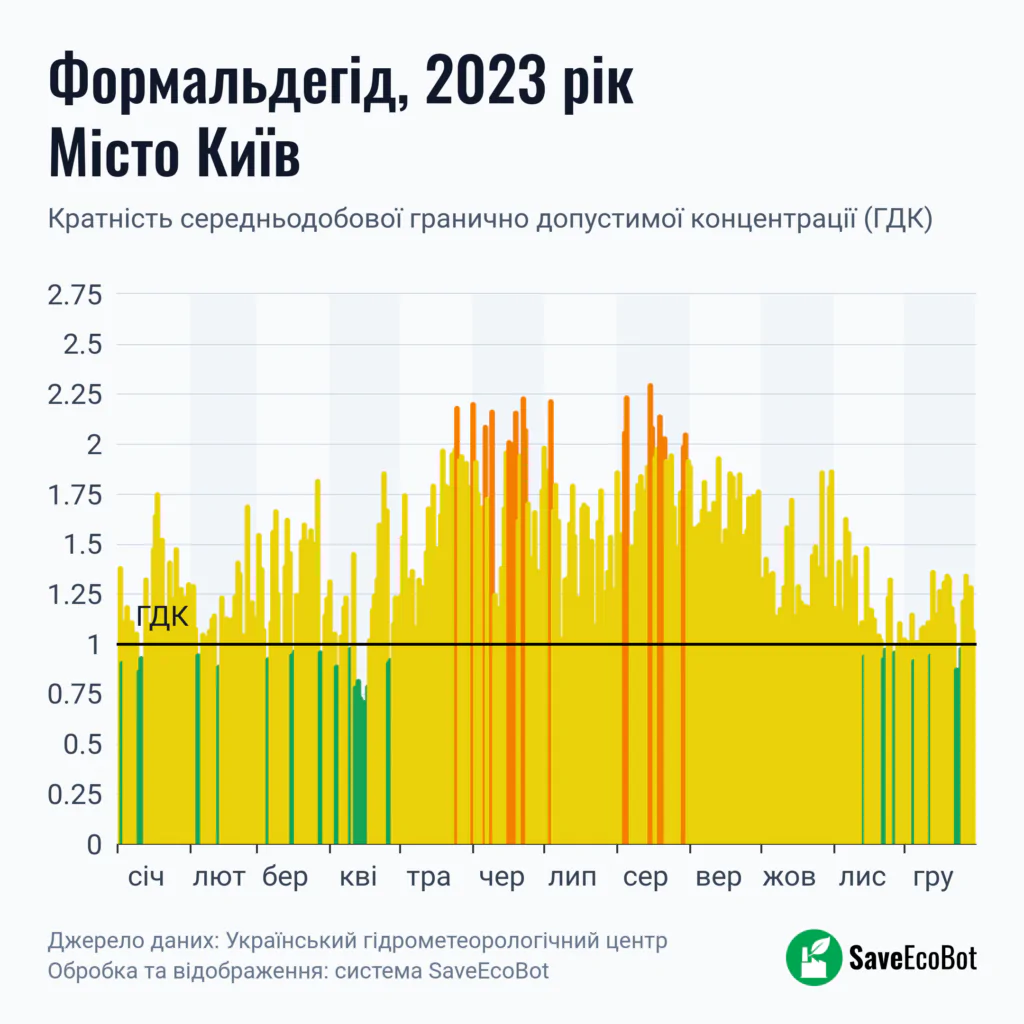
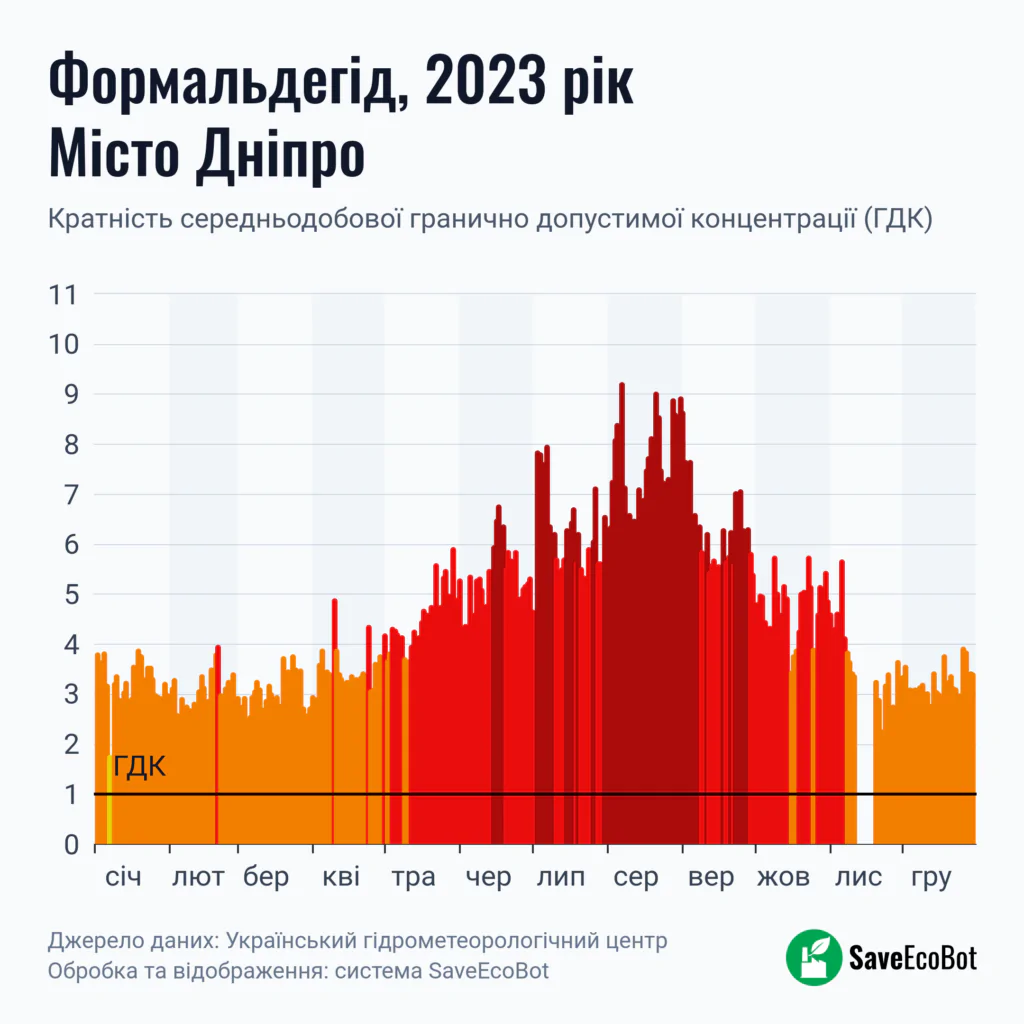
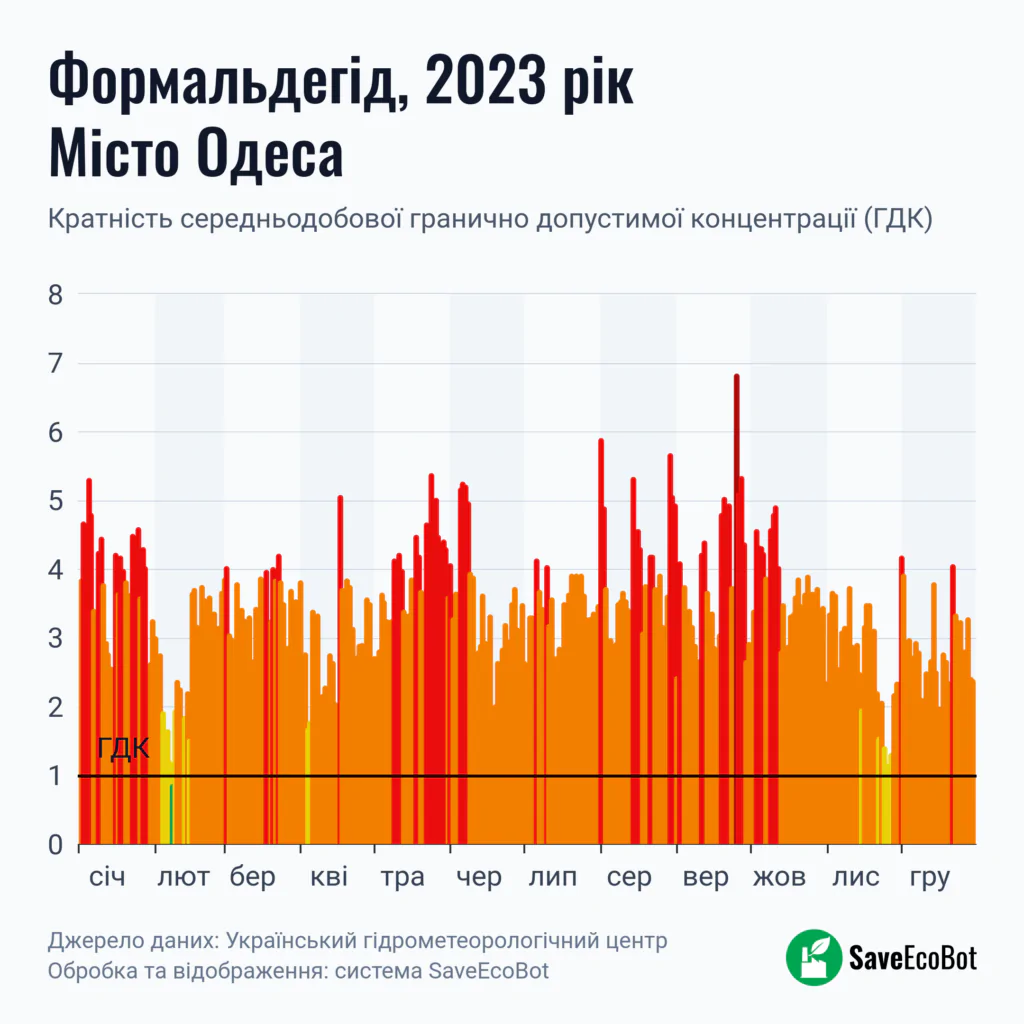
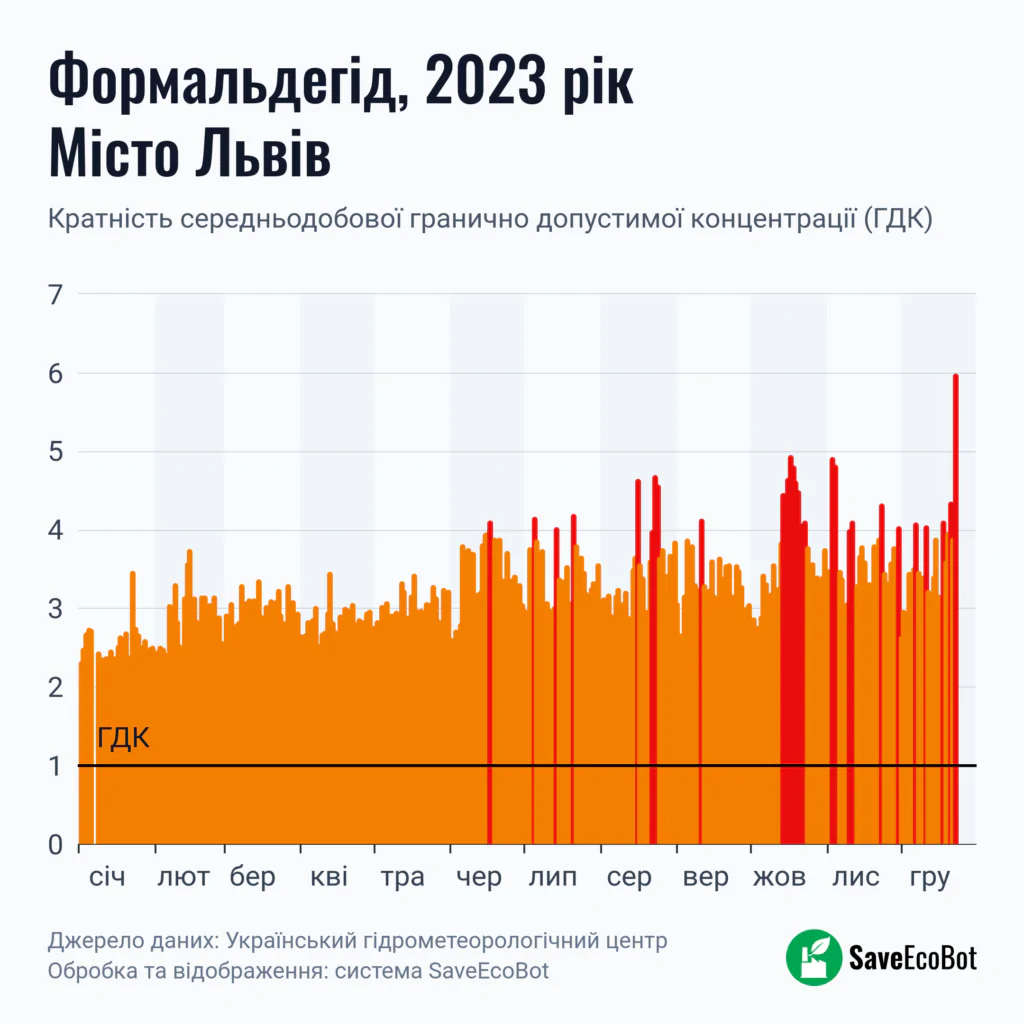
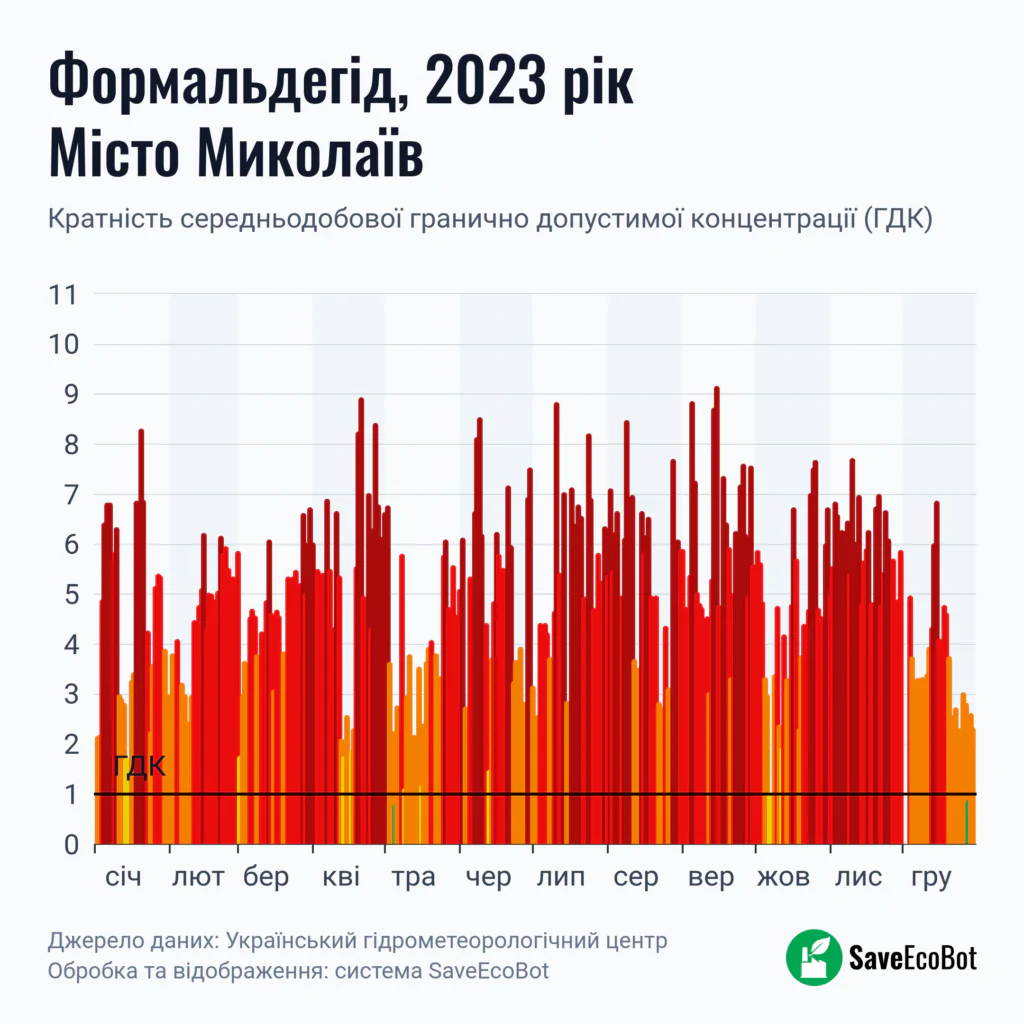
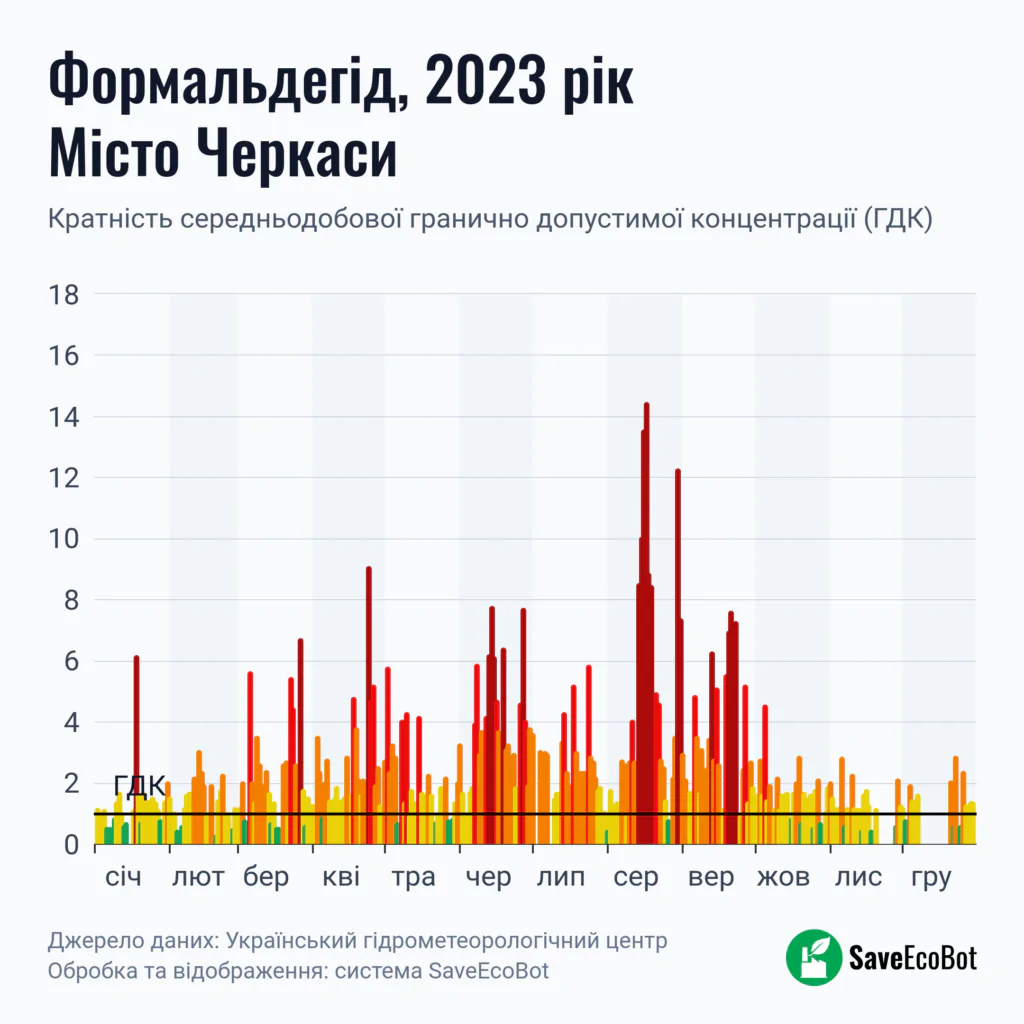
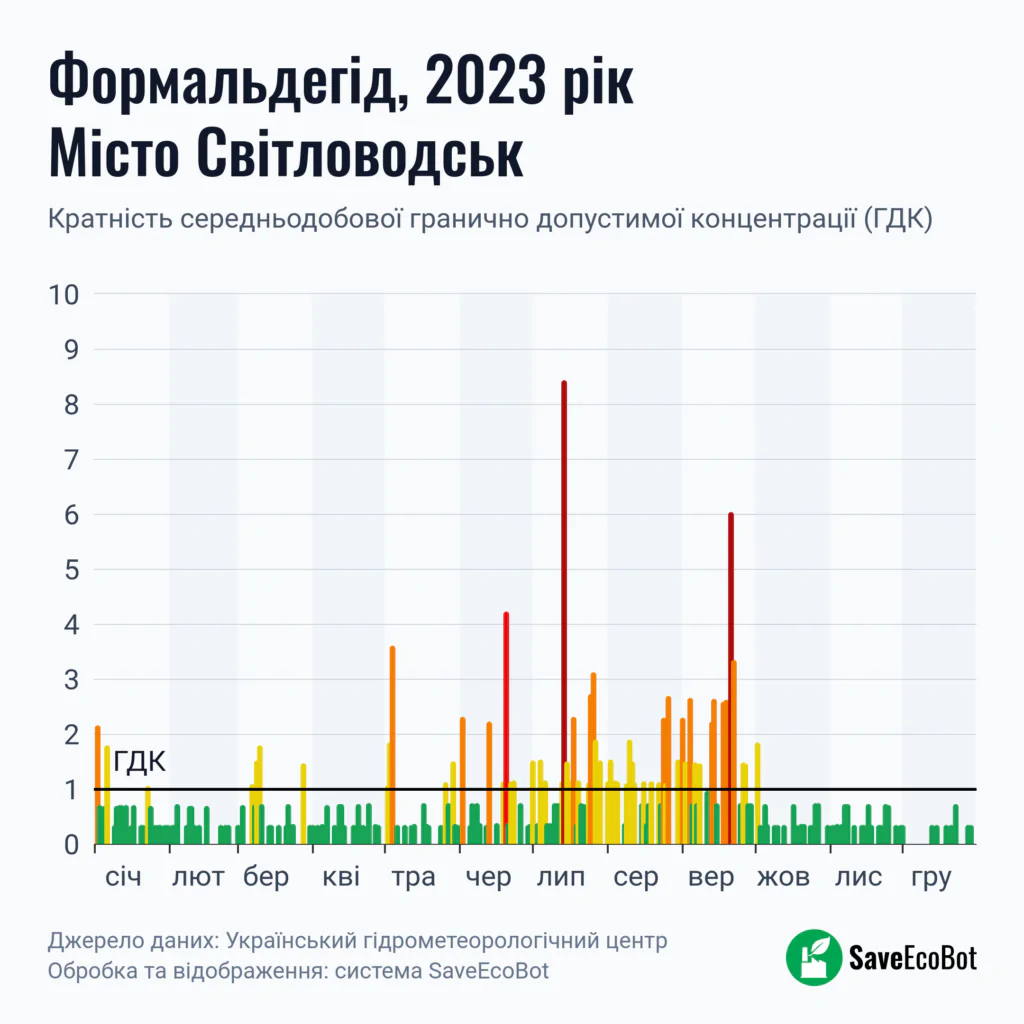
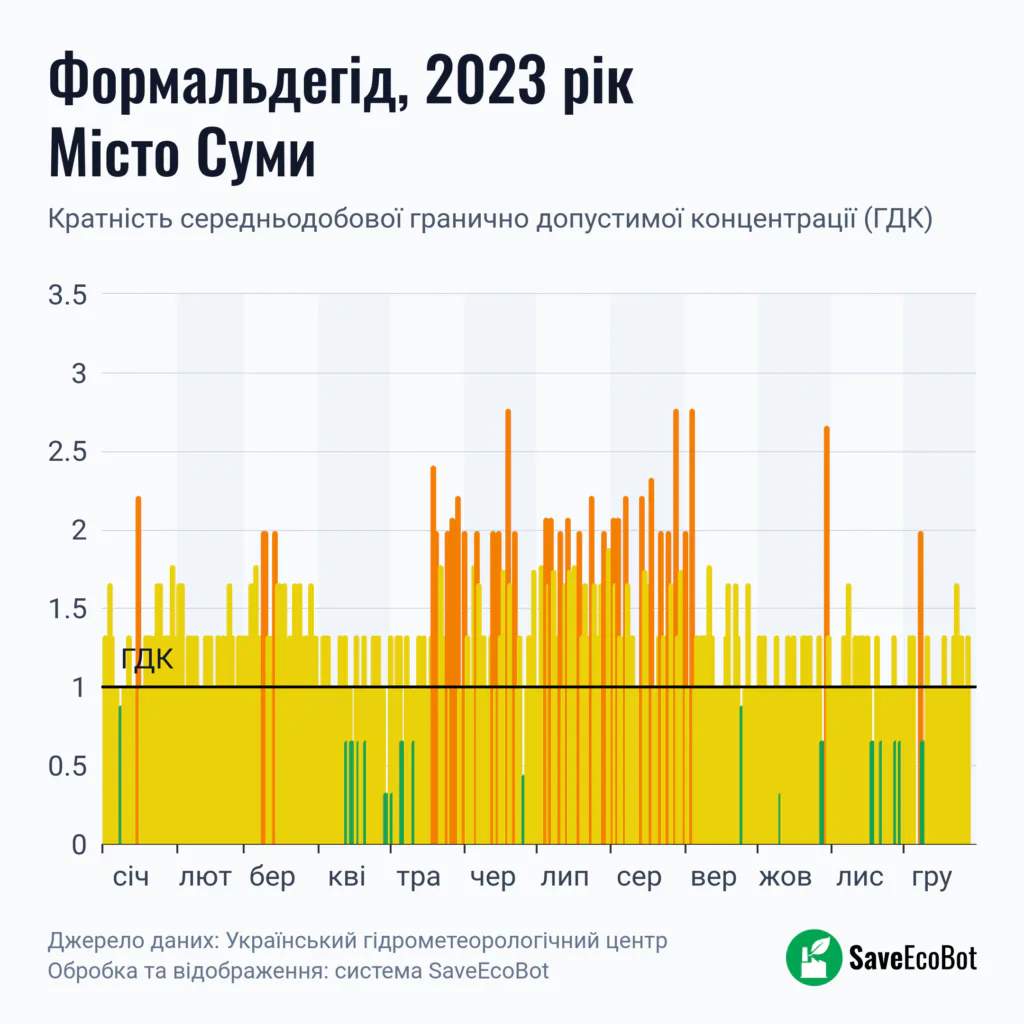
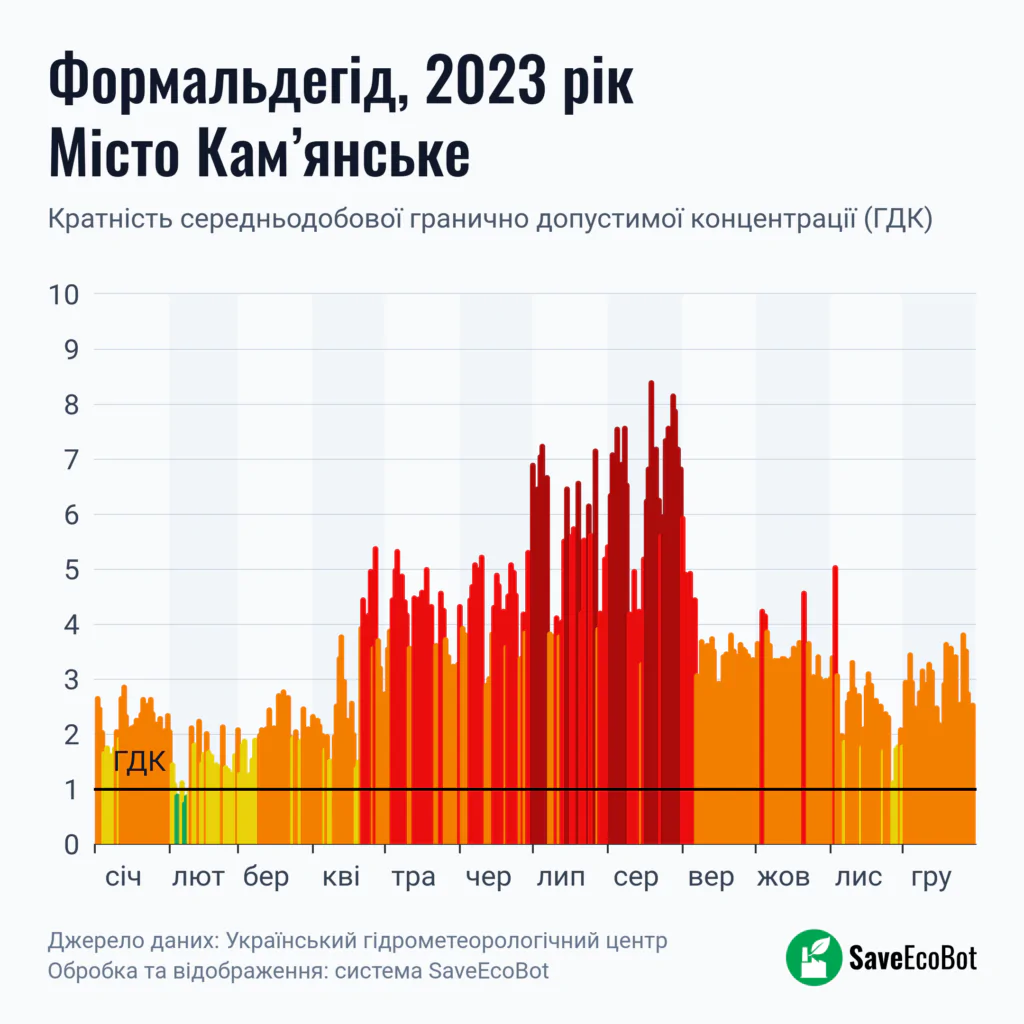
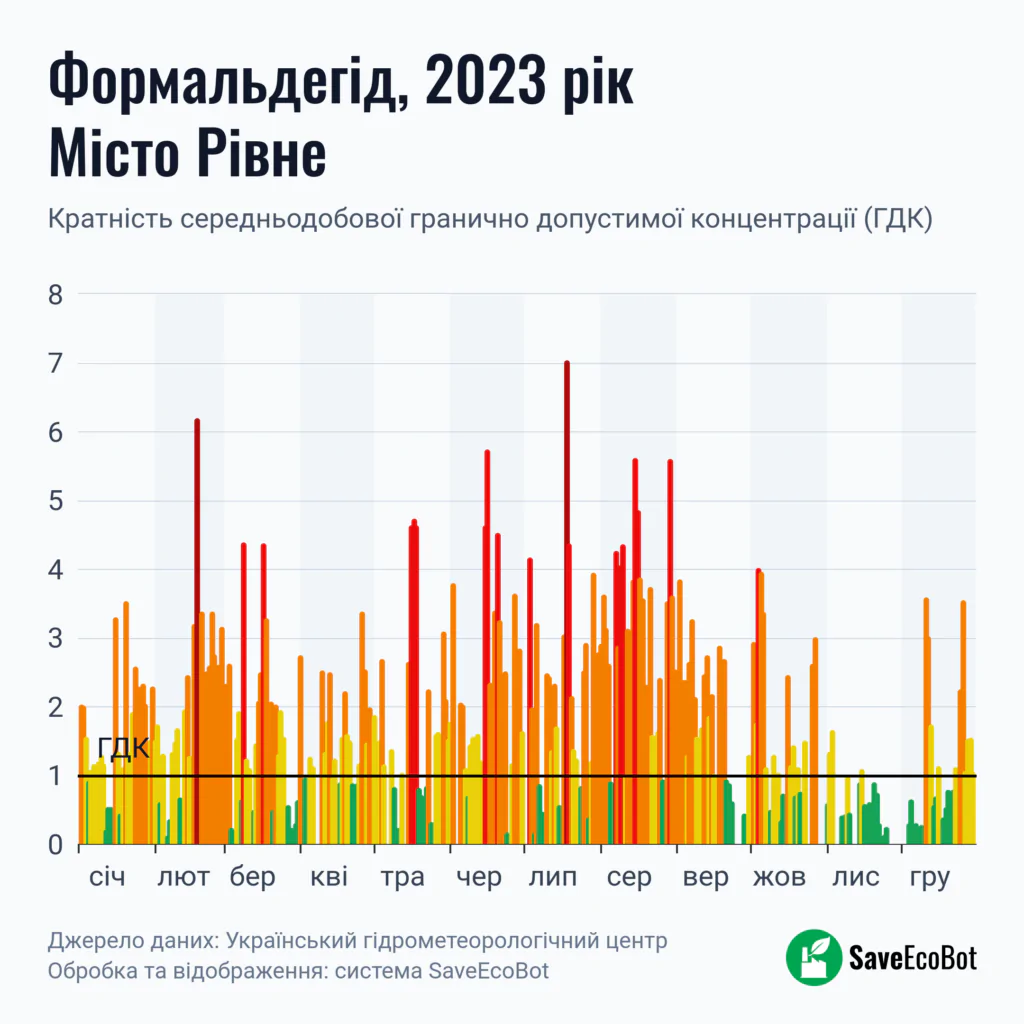
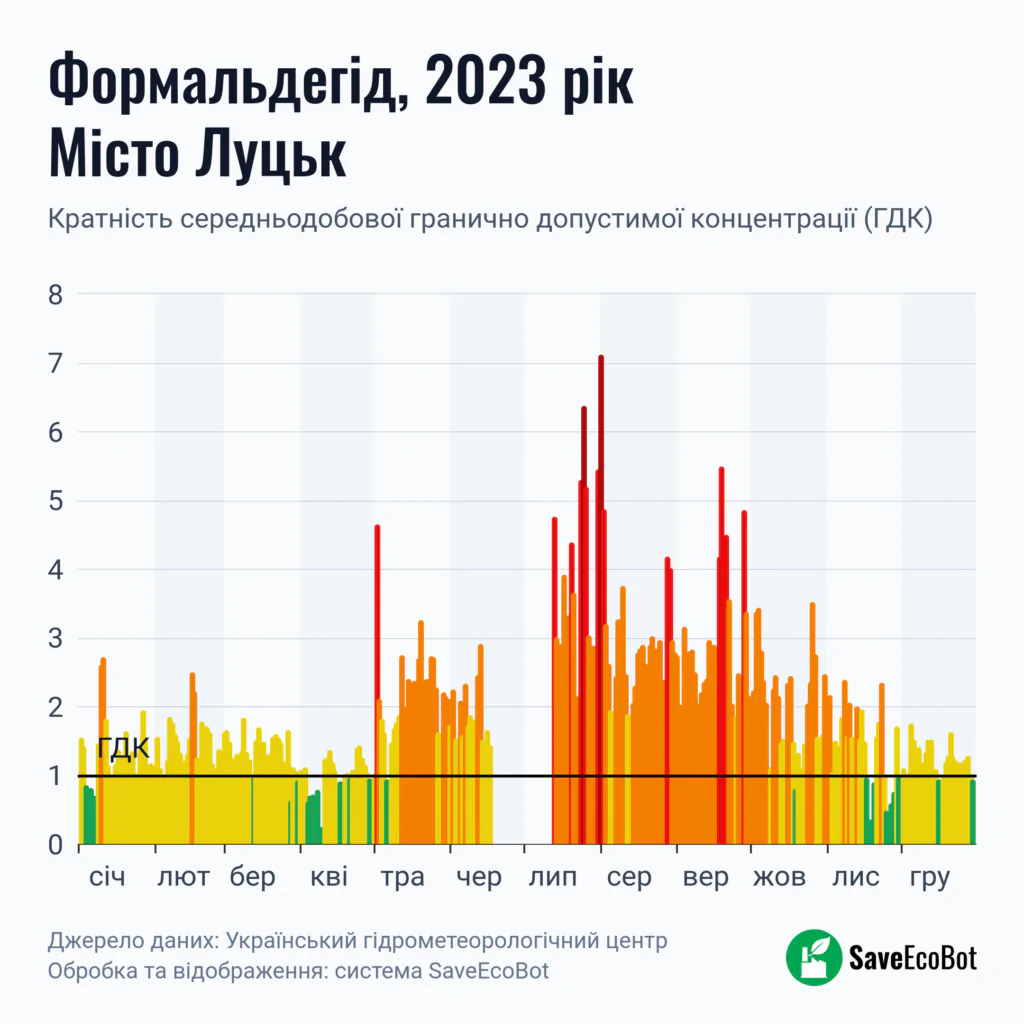
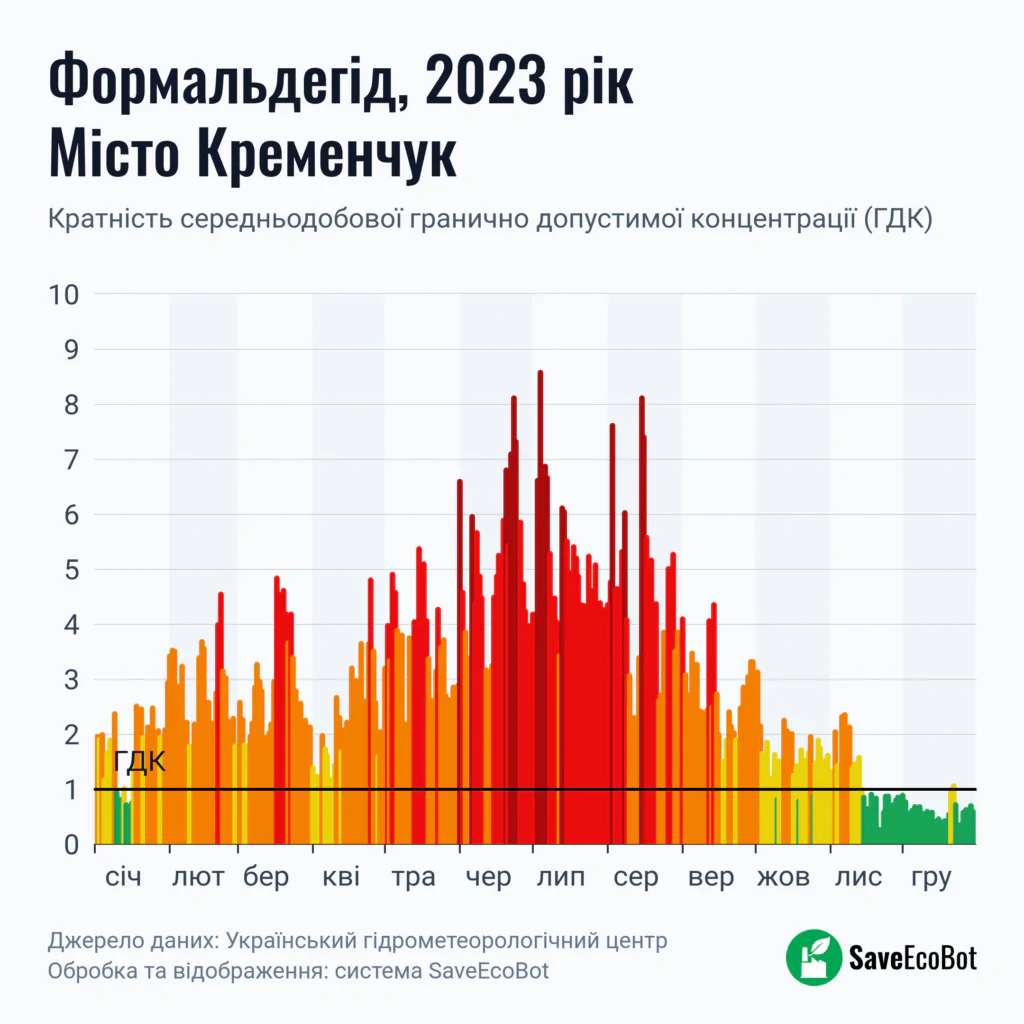
The charts below, however, show cities where daily averages often exceed 2.5 times the MPC: Mykolaiv, Dnipro, Odesa, Kremenchuk, Lviv, Kamianske, Kryvyi Rih and Cherkasy. Health risks there would therefore be higher.
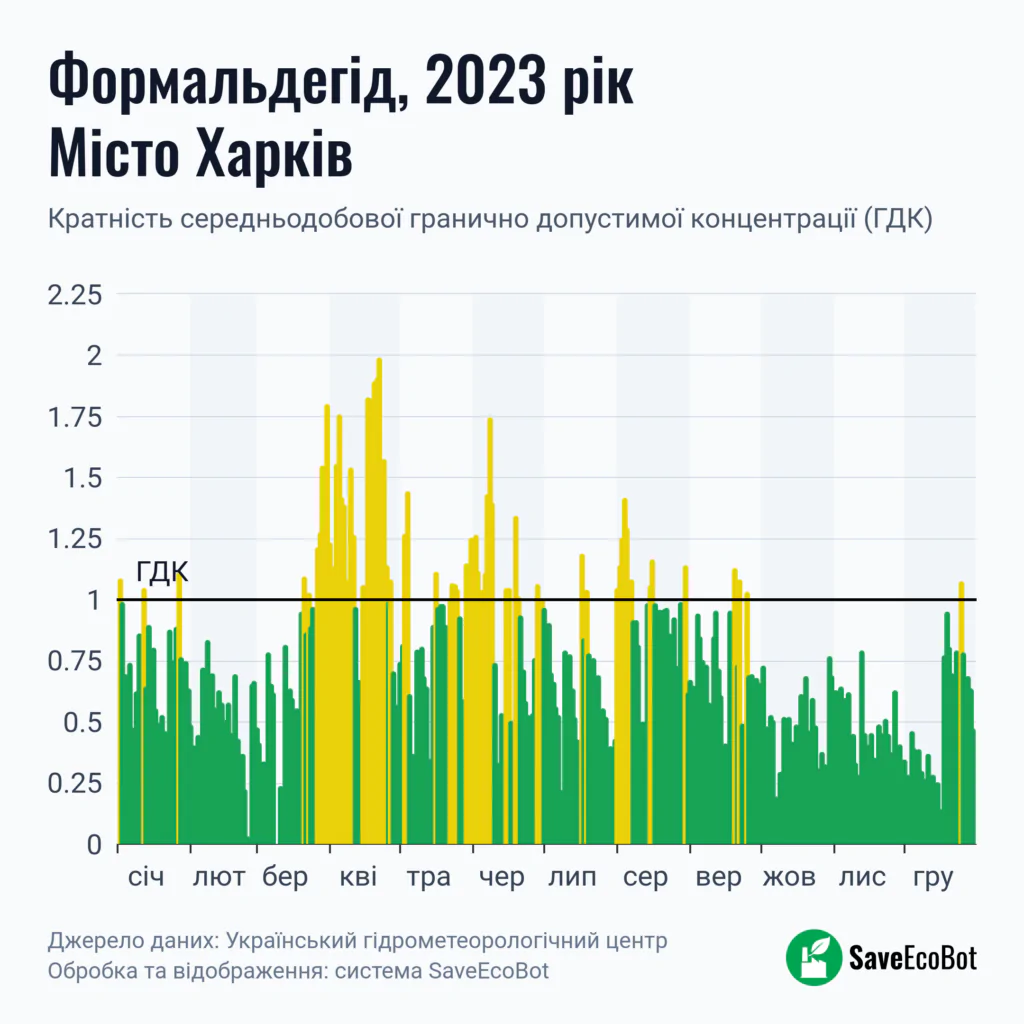
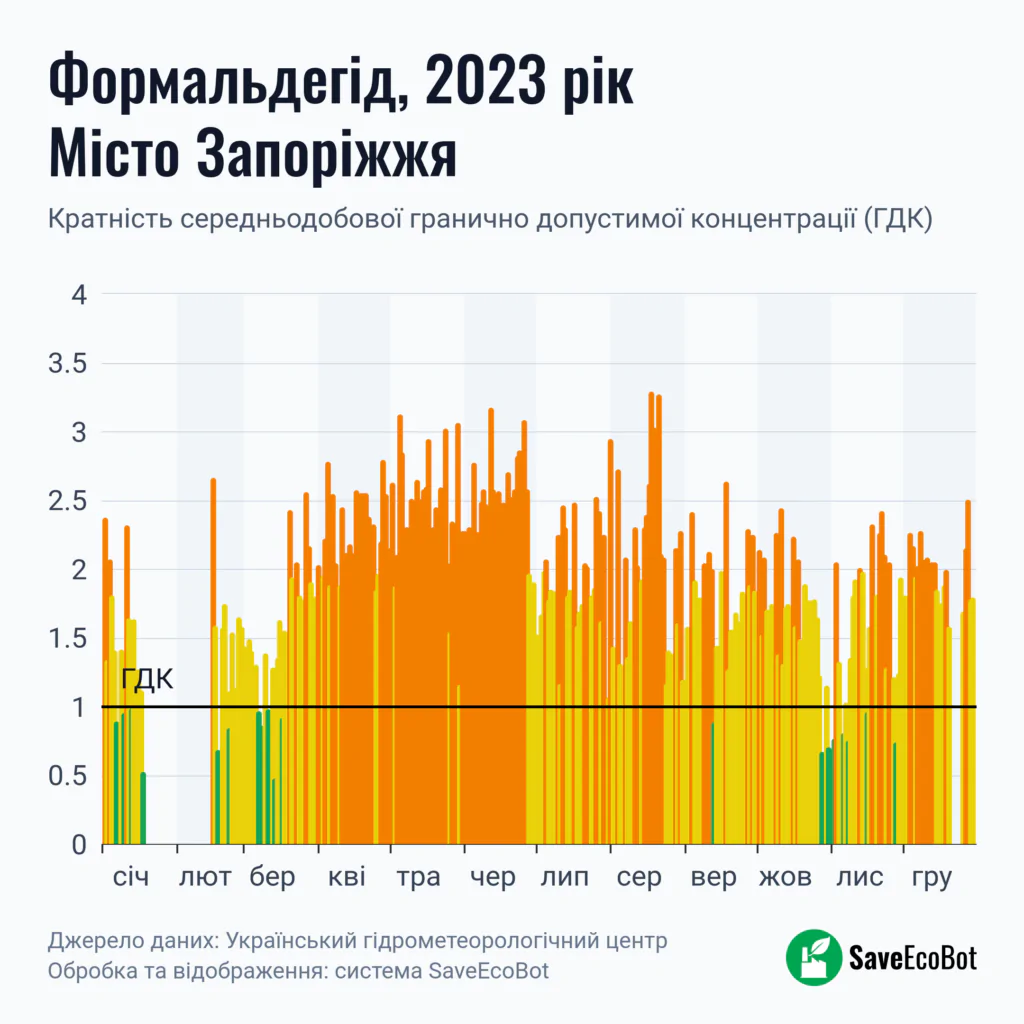
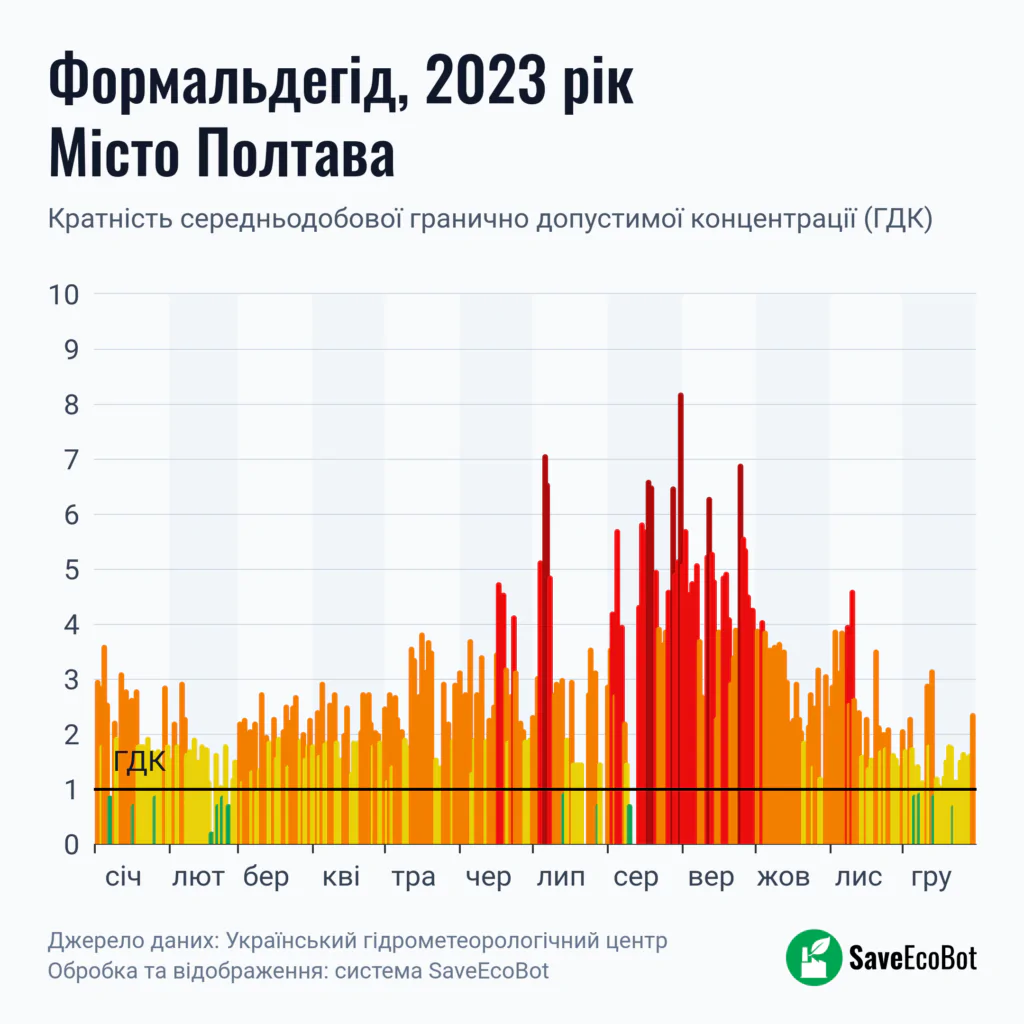
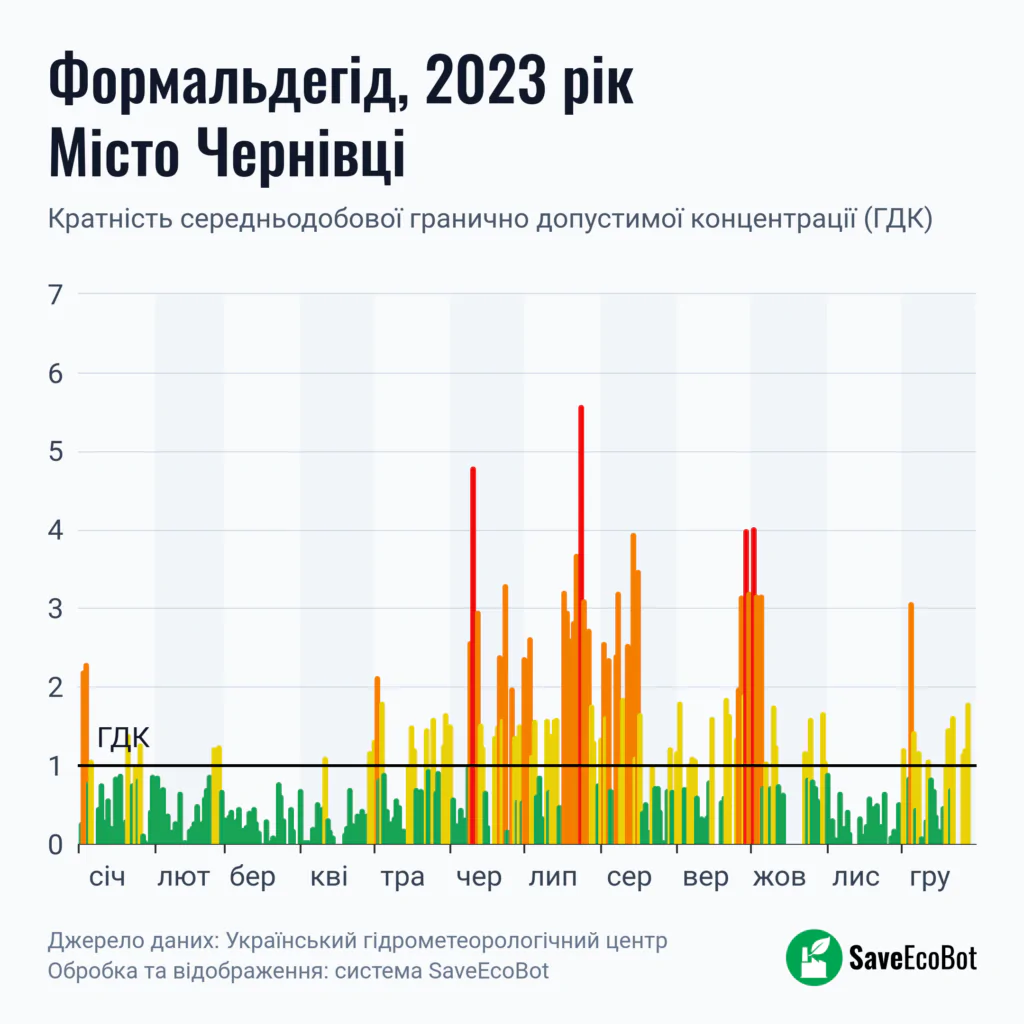
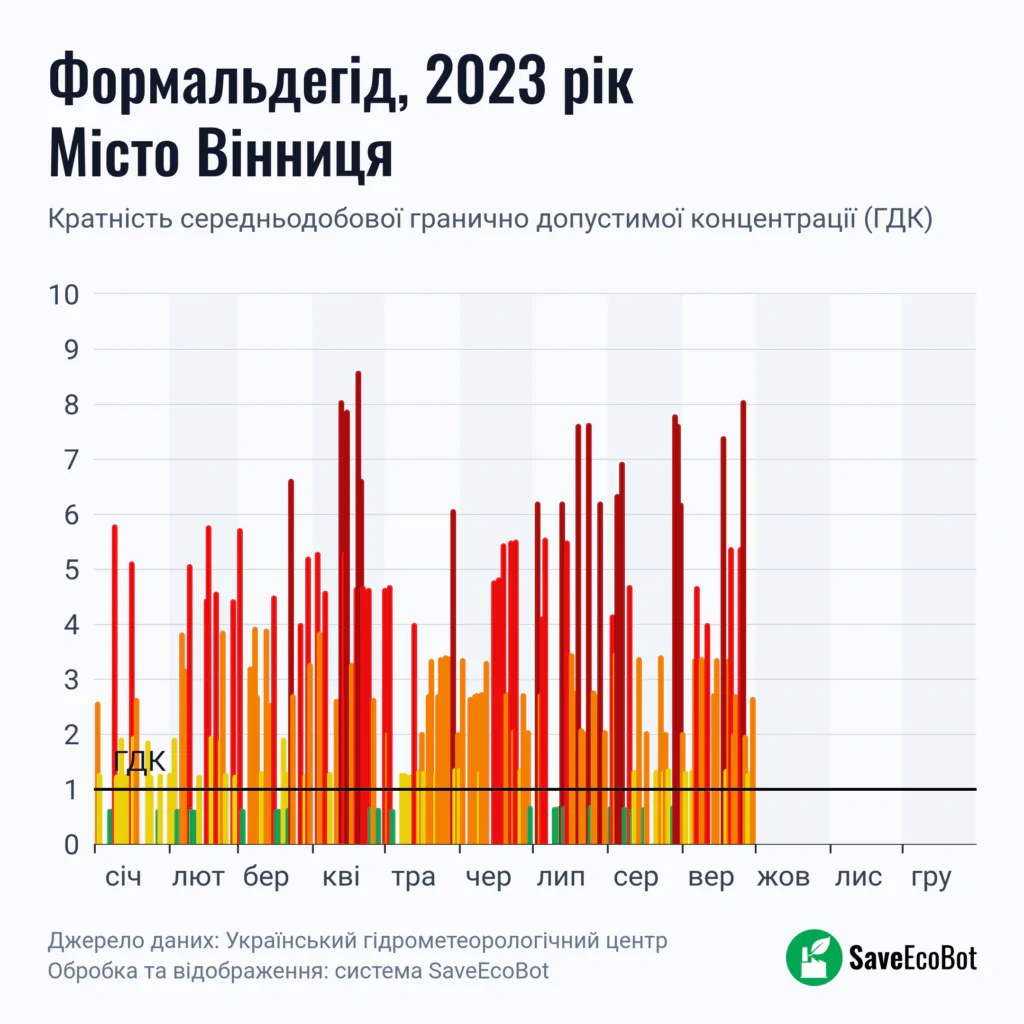
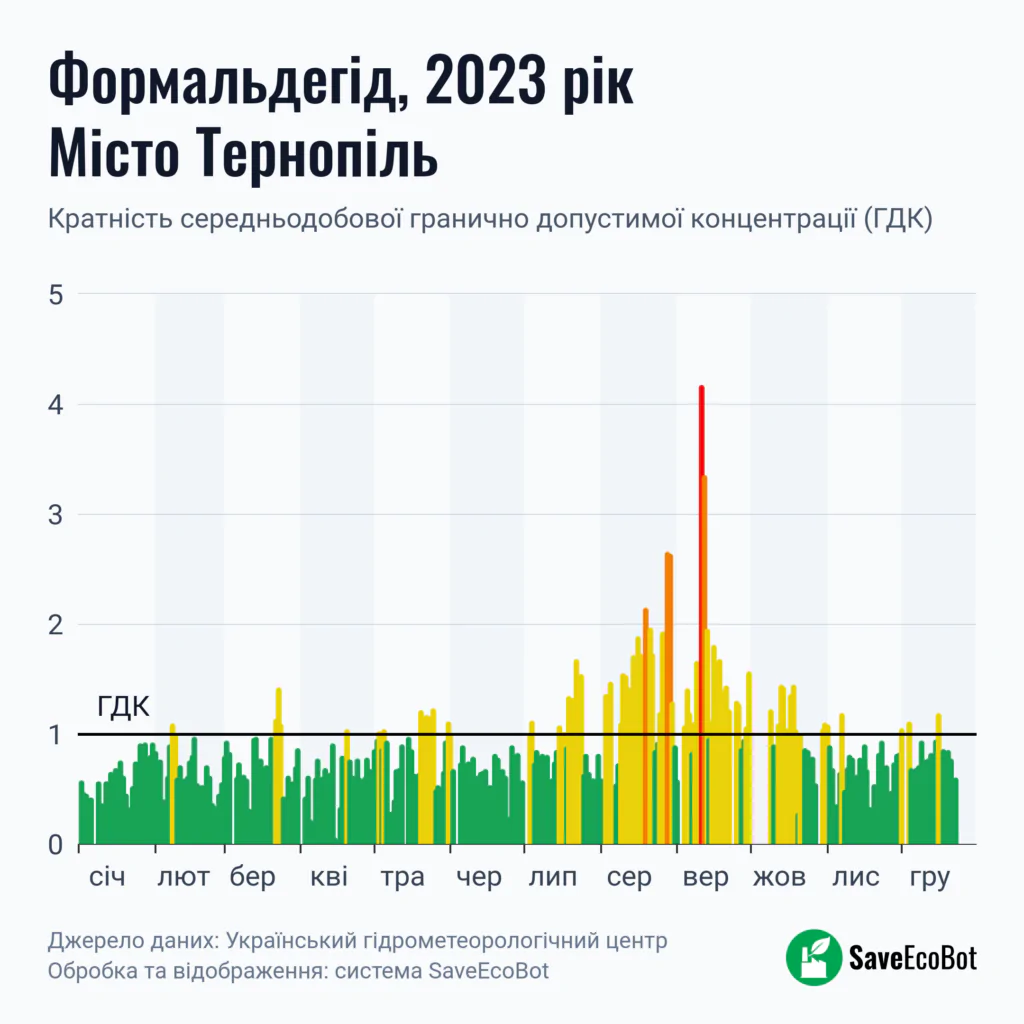
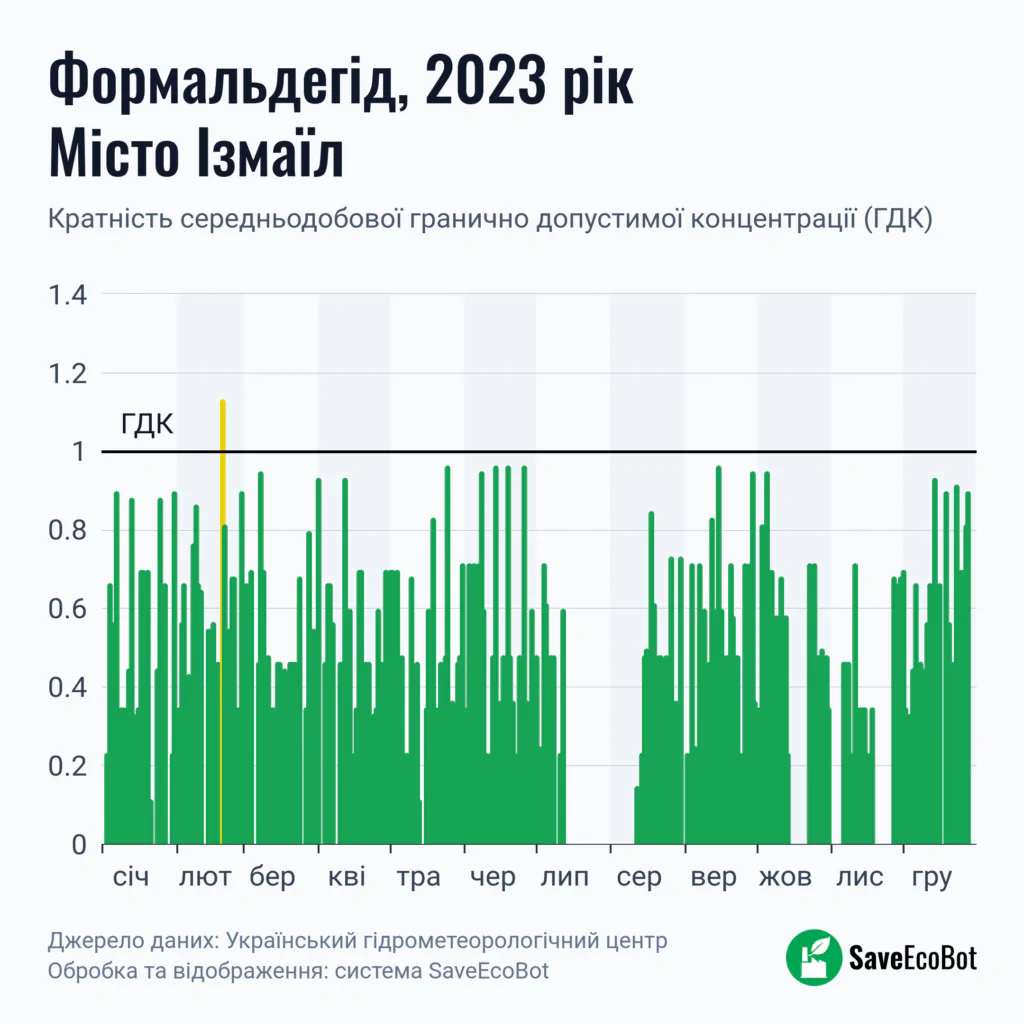
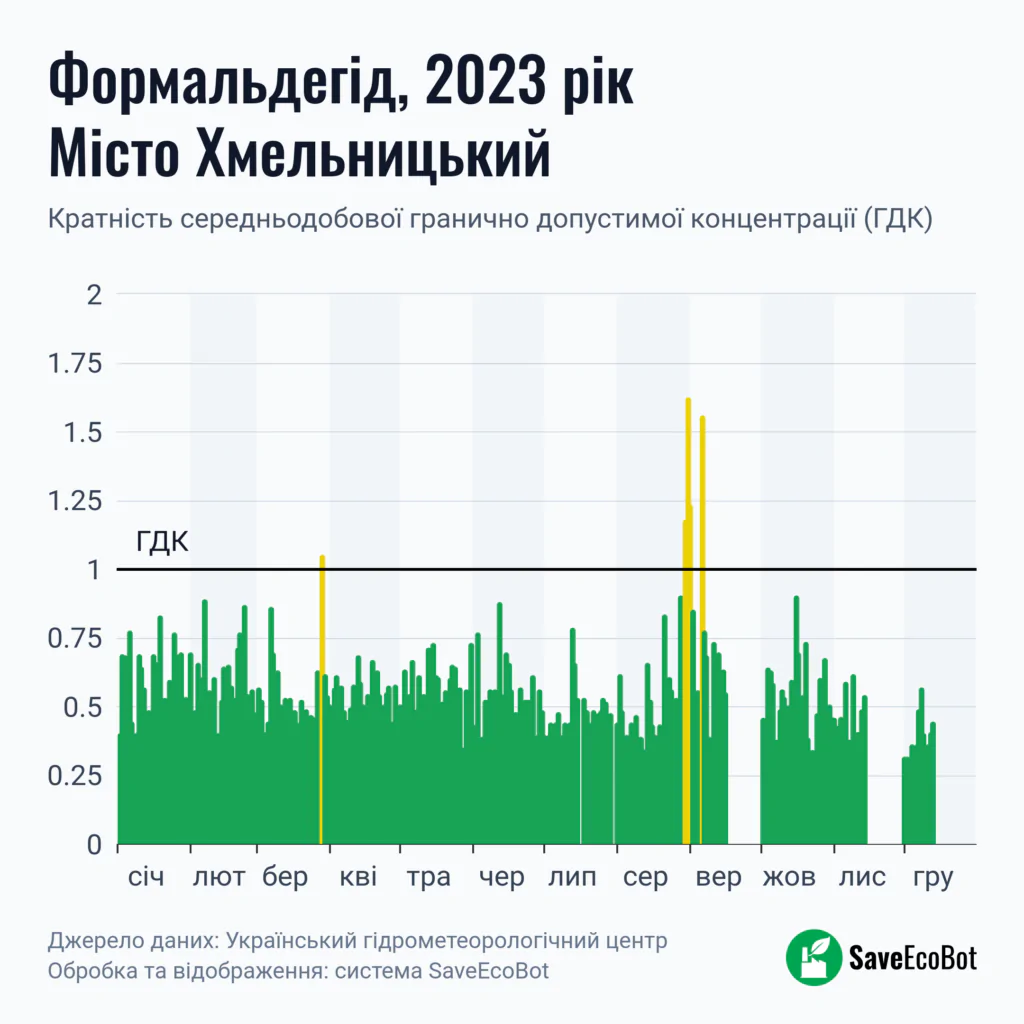
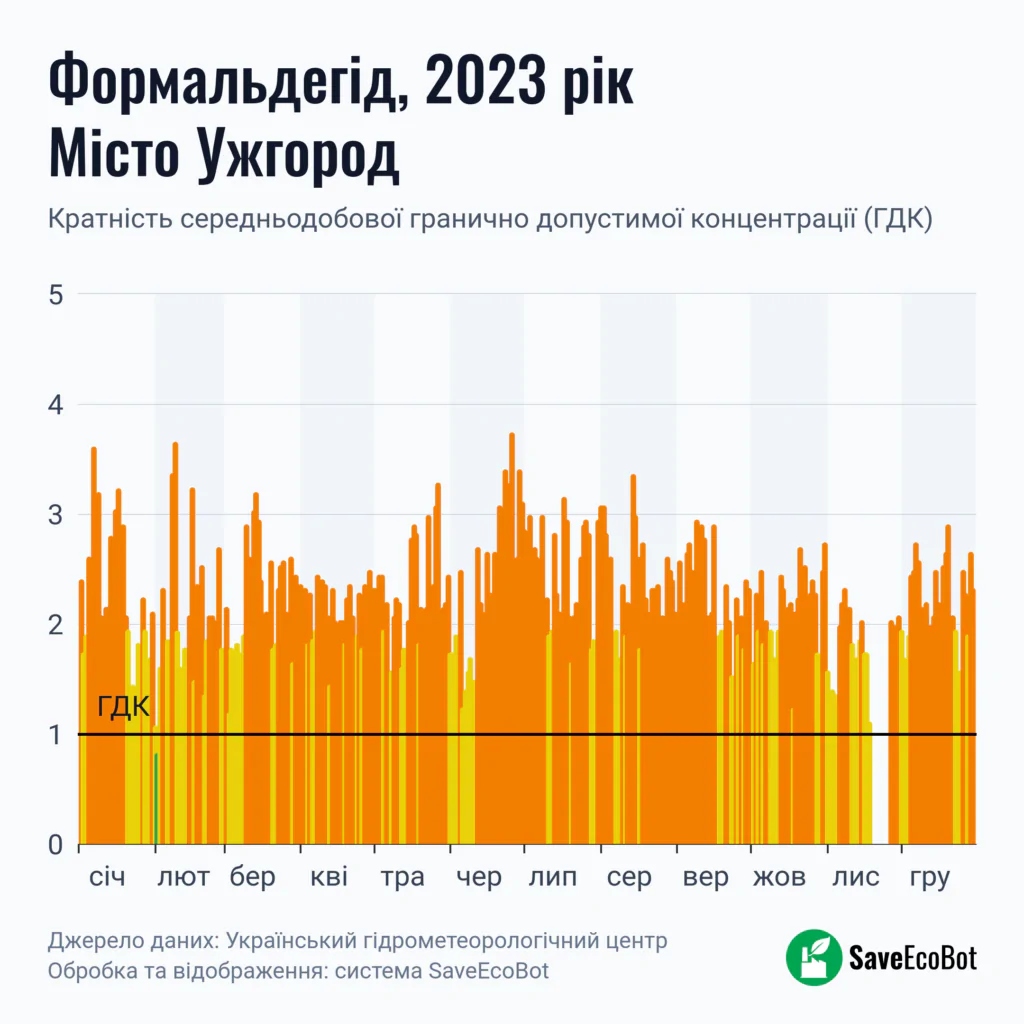
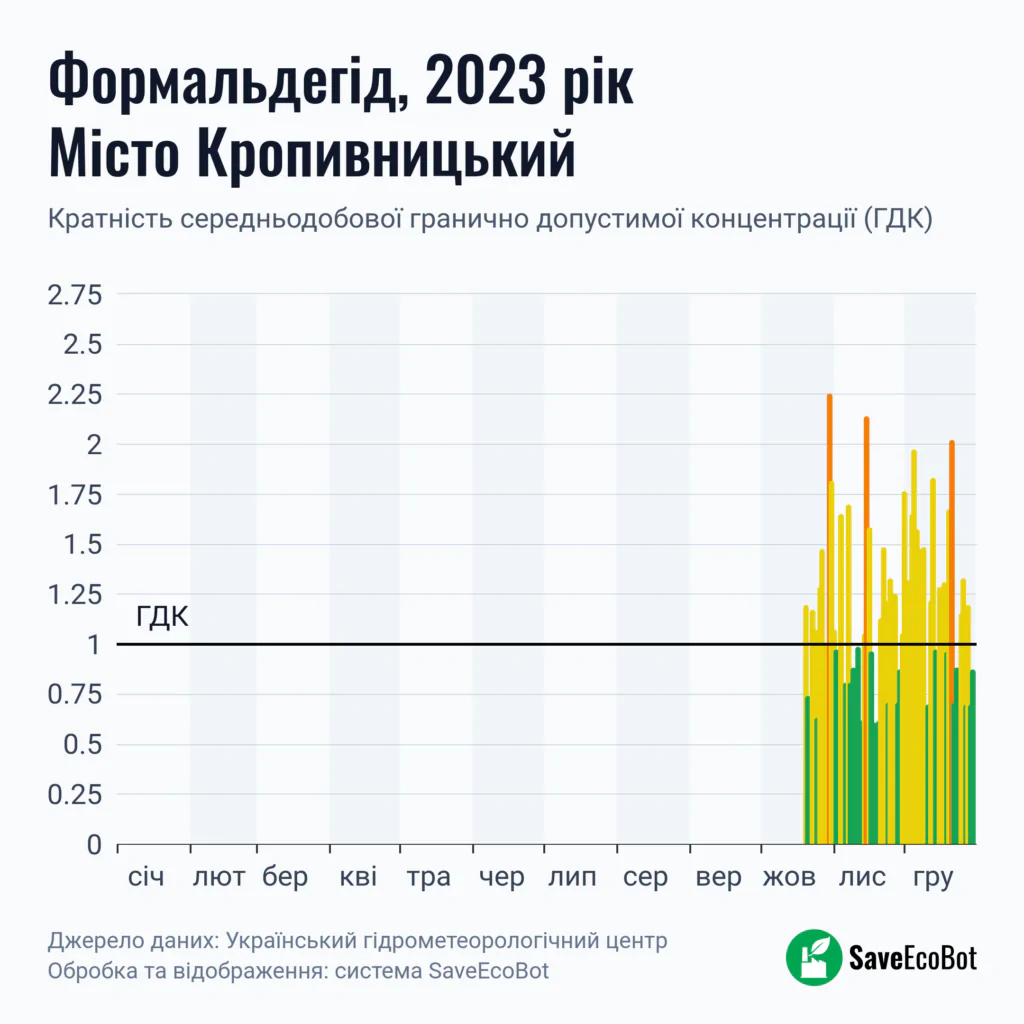
The charts use Ukrainian Hydrometeorological Centre data for 2023. Coloured bars show daily average formaldehyde concentrations. Green indicates compliance with the limit. Most cities have very few such ‘green days’, or none at all.
The vertical axis shows how many times the limit was exceeded. Exceedances are yellow, orange or red according to their magnitude.
Where does the danger come from?
The main human-caused formaldehyde sources are power plants, combined heat and power plants, industrial facilities, waste incinerators and vehicle internal combustion engines. Formaldehyde also forms through photochemical reactions involving other atmospheric pollutants, so high background pollution contributes to its increase.
Formaldehyde concentrations near ground level rise under certain weather conditions. This explains the characteristic pollution peaks in some cities in the third quarter of 2023, when those conditions occurred more often.
Why is the data incomplete?
Gaps with no bars indicate missing data. For Kropyvnytskyi, for example, data is available for only a couple of months at year’s end. Comparing earlier years would reveal even more gaps because the Ukrainian Hydrometeorological Centre does not provide full access.
Hydromet is required to publish all ambient air quality data regularly under Cabinet of Ministers Resolution No. 835 of 21 October 2015. Its inaction also violates Ukraine’s international commitments under the Aarhus Convention, exposing the Ministry of Internal Affairs of Ukraine , as data holder, and the State Emergency Service, of which Hydromet is a component, to criticism. Ultimately, Hydromet compromises the Government and Ukrainian state in the eyes of the international community.
A call to open the data
The data shown here was taken in tabular form from the Ministry of Environmental Protection and Natural Resources website and recognised and converted into clear charts by SaveEcoBot. Even this was not publicly available a year ago. It remains incomplete and unsystematic, although full, regular publication is required.
Analysing the reasons for high formaldehyde levels requires publishing data from every measurement at every monitoring post, with the longest possible historical coverage. We call on the Ukrainian Hydrometeorological Centre to take action and open all ambient air quality data. We are ready for constructive dialogue and offer technical assistance.
This publication was produced with financial support from the European Union. Its contents are the sole responsibility of SaveDnipro and do not necessarily reflect the views of the European Union.