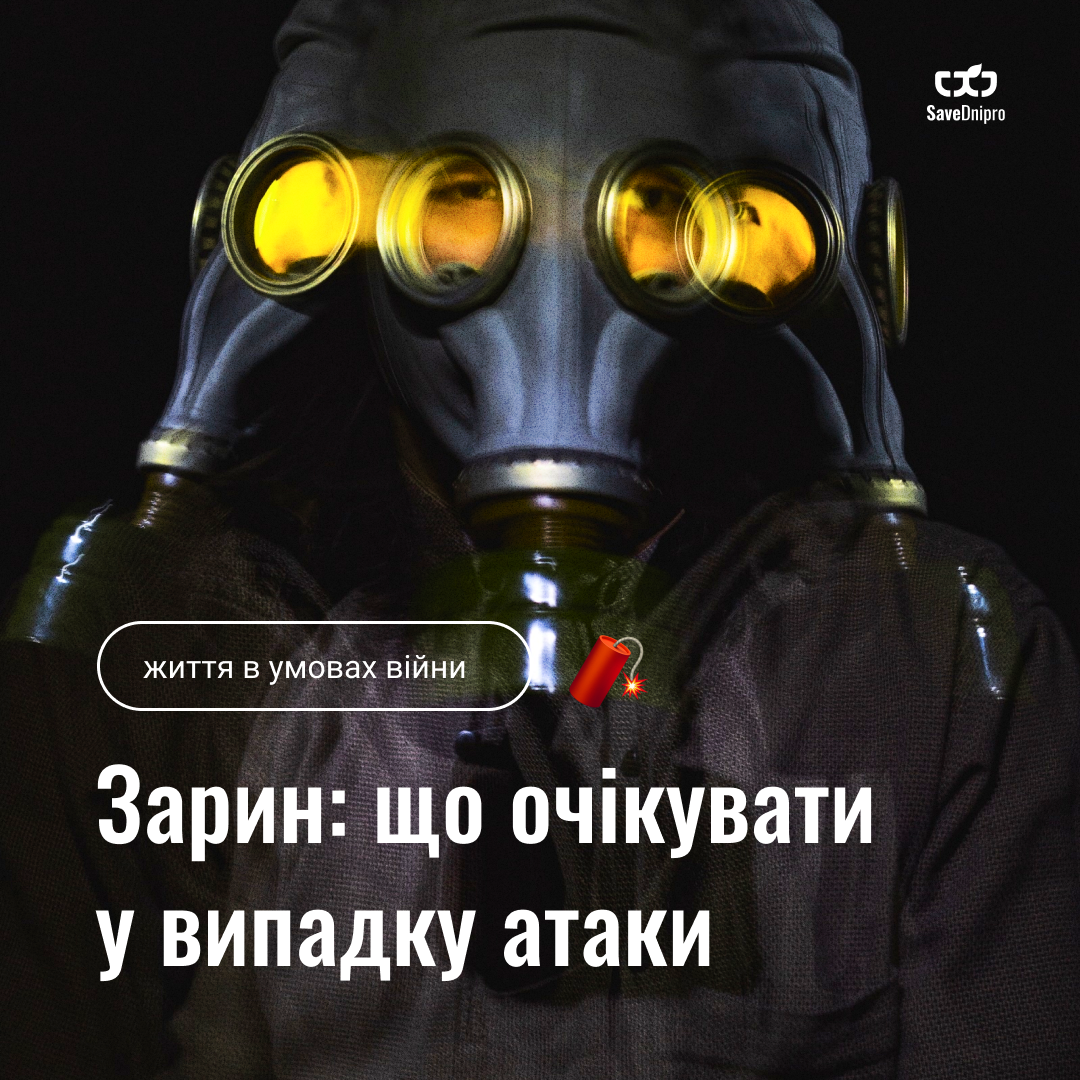
Translation note: This April 2022 article has been translated with safety corrections. Its original suggestions to use dust masks, household alkalis, baking soda in the eyes or a stomach wash have not been reproduced as advice. Follow current emergency instructions. Sources: CDC sarin guidance.
Sarin is an extremely toxic nerve agent. In its pure form it is a colourless, tasteless and odourless liquid. Exposure can occur through skin contact or by breathing its vapour.
Early signs of sarin exposure:
- pinpoint pupils;
- difficulty breathing;
- a runny nose;
- chest tightness.
Nausea and excessive saliva may follow. Severe poisoning can cause vomiting, involuntary urination or defecation, seizures, coma, respiratory failure and cardiac arrest.
How can you reduce exposure?
Remember: sarin vapour is heavier than air.
- If authorities advise sheltering because of an outdoor release, in a home or apartment close windows and doors, shut ventilation and air conditioning, and seal gaps where possible. Move away from low-lying areas. A high floor does not guarantee protection.
- If there is a designated shelter with chemical filtration , follow official directions on whether to use it. Do not assume that an ordinary basement or metro station is safe against a chemical release.
- Be aware of the limitations of personal protective equipment. Dust respirators and cloth masks do not protect against sarin vapour. An old gas mask without a suitable, functional filter and proper fit cannot be relied on. Move to safety rather than entering a contaminated area to help without protection.
First aid
- Get away from the source without exposing yourself further and seek emergency medical help;
- Remove contaminated clothing carefully, avoiding pulling it over the head. Rinse affected eyes with clean water; do not add chemicals;
- If liquid has contacted skin, remove contamination promptly and wash with plenty of water and mild soap. Do not apply household alkalis or attempt chemical neutralisation;
- If sarin has been swallowed, do not induce vomiting or attempt a stomach wash. Get urgent medical help. Antidotes and respiratory support require trained medical personnel.
Detailed instructions from the Centre for Strategic Communication and Information Security on chemical emergencies.
Take care of yourself!