Translation note: This article describes events and monitoring coverage as reported in April 2022. Explanations for the initial Chornobyl reading spikes remained contested; they should not be read as a confirmed current assessment.
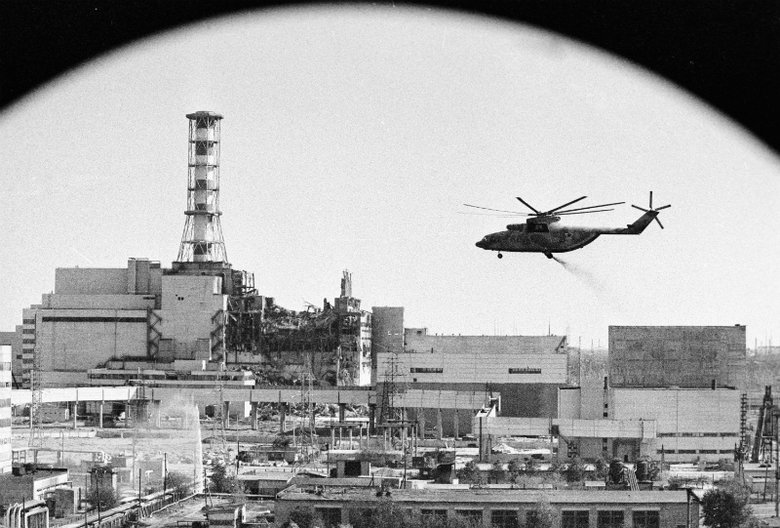
On the 36th anniversary of the Chornobyl disaster of 26 April 1986, Russia’s nuclear terrorism again placed the world at risk of a nuclear tragedy.

At around 00:30 at the start of the full-scale war’s second day, SaveEcoBot’s map showed a sharp spike in Chornobyl Exclusion Zone radiation readings: not twofold or threefold, but tens of times higher.
We had seen something similar before, during a period involving spent fuel transfers to storage. Neither zone management nor our European partners receiving the data knew sensors were being calibrated. Although readings appeared to come from fixed field locations, the instruments were actually undergoing checks in the zone’s laboratory.
Because information during war and occupation could cause additional panic, we contacted responsible state officials about readings already being shared worldwide through social media and news outlets.


By morning, the Exclusion Zone monitoring operator Ecocentre, whose data we aggregate, confirmed spikes and attributed them to military vehicles disturbing contaminated soil.

Questions remained. Some stations showed thirtyfold increases, while the official letter described maximum increases of six to seven times.
The largest spikes were recorded at the plant itself rather than areas of the zone where vehicles might be moving extensively.
International researchers began offering other possible explanations. Apaperby British scientists, “Chornobyl radiation spikes are not due to military vehicles disturbing soil”, suggested technical effects, including electromagnetic interference affecting sensitive instruments, were more likely.
Immediately after the initial spike, we realised we urgently needed additional radiation data sources to reduce the risk of an information vacuum.
The key principle is simple: if conditions are normal, people should know and feel less anxious; if something is wrong, they should learn as quickly as possible.
Industrial facilities take manual readings on their sites, so we sought partners willing to publish them. DTEK responded first, and readings from its thermal plants appeared on SaveEcoBot’s map.
Partnership with the Environment Ministry then helped bring in other major data holders.
Measurements are now collected daily, automatically or manually by specialists, even in dangerous settlements, and published on theshared mapof background radiation in Ukraine.
At publication, the map covered 655 measurement points. Contributors included the Health Ministry, Ukrainian Hydrometeorological Centre, State Emergency Service, ECOTEST and Kyiv regional environmental department; community networks EcoCity and uRADMonitor; and industrial businesses including DTEK and Kryvyi Rih Iron Ore Plant.

Radiation, air quality in major cities and fire counts are also published daily in ourTelegram channel SaveDnipro.

Unfortunately, we continue recording Russian nuclear terrorism.
On 25 April at 08:10, two Russian cruise missiles were recorded over Khmelnytskyi’s cooling reservoir. The article also reports three Russian missiles over South Ukraine Nuclear Power Plant on 16 April.
Zaporizhzhia remains under Russian occupation. Staying informed about radiation readings has become part of daily life: timely information can help protect lives.
Iryna Chernysh, SaveDnipro head and SaveEcoBot co-founder
Source: Business Censor