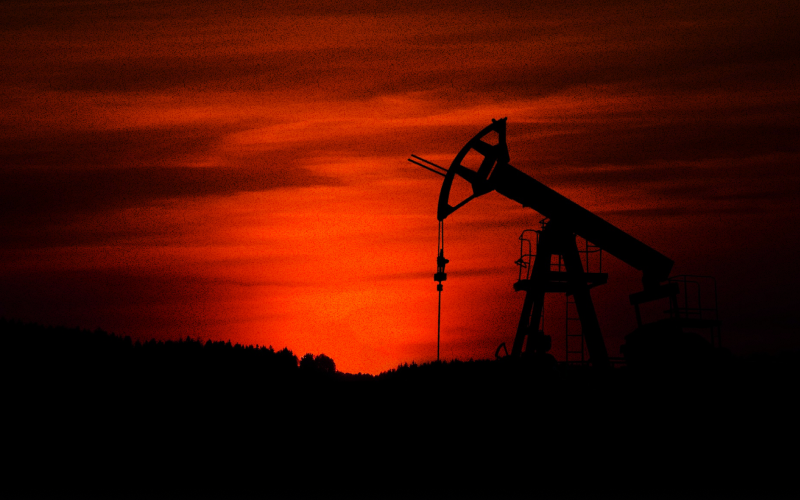
Ahead of the G20 summit in New Delhi on 9–10 September 2023, 55 civil society organisations worldwide sent an open letter to participating leaders
“Esteemed G20 leaders,
With respect, we wish to reiterate the need to leave Russian fossil fuels in the ground and stop expansion of Russia’s oil and gas infrastructure, particularly LNG. Ukrainian civil society organisations have already appealed to the European Commission on the latter issue, hoping for appropriate policy decisions in response.
We find it inconceivable that a representative of Russia’s criminal regime may participate in the G20 summit while dictator Vladimir Putin has been charged by the International Criminal Court with war crimes in Ukraine. Russia’s invasion under Vladimir Putin is a war against Ukraine’s sovereignty and independence and a gross violation of human rights, international law and global peace. It confronts the world with a bleak future in which natural and social systems may collapse and violence become the dominant force.
Putin’s war machine is financed, fed and fuelled by the fossil fuel industry, which drives both the invasion and the climate crisis threatening humanity’s future. Putin and his regime’s representatives should have no place at the G20 or any other respectable international meeting.
Since launching full-scale aggression against Ukraine on 24 February 2022, Russia has accumulated more than USD 318 billion in export revenues from fossil fuels. This enormous flow has enabled Russia to put its economy on a war footing and increase weapons production for its brutal war, while encouraging further fossil infrastructure expansion — even now, more than a year and a half after the attack.
We urge all leaders of goodwill to end fossil fuel dependence once and for all. G20 heads of state must act immediately to phase out Russian fossil fuel imports and exit oil and gas joint ventures with Russian companies. Russian officials are working to involve G20 countries in joint infrastructure projects that could restore Russia’s former position in global oil and gas markets.
In July 2023, Russian oil prices rose above the G7 price cap, while EU, US and UK embargoes are undermined by ‘laundromat’ loopholes as those countries continue buying petroleum products refined from Russian crude.
Although G20 members including Australia, Canada, the United States, the United Kingdom and the EUhave responded to Russia’s violation of Ukraine’s sovereignty and territorial integrity and its countless war crimes, including attacks on civilians and child abductions, with a limited set of sanctions, the overall international response to the existential threats Russia poses remains very weak.
Many leading economies continue supporting Russia’s war by sustaining Kremlin revenue, increasing Russian fossil fuel imports and investing in new infrastructure. They are falling further behind the necessary commitments to a just phase-out of all fossil fuels, ending all fossil subsidies by 2030, installing at least 1.5 TW of renewables annually and doubling energy efficiency deployment every year from 2022.
G20 countries undermine their own energy security and urgent decarbonisation by allowing companies to join Russian oil and gas ventures and providing ineffective, harmful public subsidies that raise fossil fuel demand.
G20 countries must recognise the consequences of their actions, as too many are moving in the following directions:
- In 2022, EU countries increased imports of liquefied natural gas (LNG) by 60%. In the first quarter of 2023, EU imports of Russian LNG were the highest in three years. Belgium, Spain and France actively participate in Russian LNG transshipment.
- China remains the largest buyer of Russian fossil fuels, importing USD 30 billion worth in 2023 up to 16 June, including a 66% rise in Russian LNG imports. Russian oil deliveries to China in June rose 44% year-on-year to a record 10.5 million tonnes.
- Brazil’s total diesel imports in June rose almost 13% to 1.08 billion litres, with Russian suppliers providing 64%.
- India increased Russian oil imports elevenfold: On 9 August 2023, it emerged that Russia supplied almost 37 million tonnes to India between January and May, nearly eleven times the volume in the same period the previous year.
- South Korea continues increasing LNG imports from Russia. It imported 2.9 million tonnes in June, 17% above June 2022. Total LNG imports in the first half of 2023 rose 1.6% to over 23 million tonnes.
- Mexico refused to impose economic sanctions on Russia.
- Argentina has imposed no sanctions on Russia.
- Saudi Arabia buys around 180,000 barrels of Russian diesel daily,, processes it and ships it to Europe
- Turkish imports of Russian diesel and oil rose to a seven-year high, while Russian crude imports increased from 530,000 tonnes in April to 781,000 tonnes in May 2023.
- South Africa’s bilateral trade with Russia grew 16.4% in 2022 to USD 1.3 billion. Over the past two years, Russian exports of oil, petroleum products and liquefied gas to Africa increased 2.6-fold. Key Russian investments in Africa are in oil and gas, with companies including Gazprom, Lukoil, Rostec and Rosatom active there.
- Australia banned importing, purchasing or transporting Russian oil, gas, petroleum products and coal from 25 April 2022, but Australian company Tigers Realm Coal Limited continues mining coal in Russia.
We call on the G20 to pursue a fair, rapid path of clean energy investment, including in developing countries and post-war Ukraine, to protect economies and the planet. Governments must immediately end Russian fossil fuel dependence and halt infrastructure expansion, including LNG. The G20 cannot continue supporting Putin’s war machine and an unfolding climate catastrophe. Democracy and human lives are at stake.
There is nevertheless some hope. The EU is pioneering the move away from Russian fossil fuel dependence. Falling demand led to a collapse in EU fossil fuel demand of 17% in 2023 to its lowest recorded level, while seventeen EU countries generated a record renewable share between January and June. Japan also reduced Russian LNG imports by 16.5% year-on-year during the first six months of 2023.
Other G20 countries should follow.
G20 governments must end this terrible oil and gas dependence both to address the climate crisis and to drain funding for Russia’s brutal war against Ukrainians, which also attacks international rule of law and democracy.
Ahead of the summit, we therefore call for commitments to climate action and peace by addressing these unresolved issues:
- Align national energy and climate policies with climate science and international justice through effective measures to eliminate dependence on Russian fossil fuels, including LNG.
- Immediately and effectively ban new investment in Russian fossil fuel infrastructure.
- Exit all existing Russian fossil fuel projects and joint ventures, including Arctic LNG 2 and Sakhalin-2.
- Strengthen and enforce embargoes on all Russian fossil fuels and establish lasting international sanctions on Russia’s extractive industries. Global peace and climate action require consistent efforts to keep Russian fossil fuels underground and, particularly, prevent LNG expansion.’
Signatories:
- Razom We Stand, Ukraine
- Khmelnytskyi Energy Cluster, Ukraine
- EcoClub, Ukraine
- Green Liberty, Ukraine
- SaveDnipro, Ukraine
- Zero Waste Society, Ukraine
- Environment-People-Law, Ukraine
- Ecoaction Centre for Environmental Initiatives, Ukraine
- DiXi Group, Ukraine
- Centre for International Cooperation and Project Implementation, Ukraine
- Osokorky Wetland Park, Ukraine
- Danube-Carpathian Programme, Ukraine
- Ukrainian Nature Conservation Group, Ukraine
- Environment Office, Ukraine
- Zero Waste Society, Ukraine
- Black Sea Women’s Club, Ukraine
- Platon, Ukraine
- Ekoltava
- One Planet
- Green Dossier Information Centre, Ukraine
- Green World, Ukraine
- City of the Sun Social Initiative, Ukraine
- Energy Transition coalition of civil society organisations and municipalities, Ukraine
- Earth Action, Inc., United States
- Physicians for Social Responsibility, Arizona, United States
- ARRCC (Australian Religious Response to Climate Change)
- Workshop for All Beings, Poland
- Rozwój TAK — Odkrywki NIE Foundation, Poland
- Ekowyborca, Poland
- Jindra Čekanová, lesy Čekanová s.r.o., Czech Republic
- EKOenergy ecolabel, Finland
- Jamaa Resource Initiatives, Kenya
- Citizens’ Environmental and Governance Centre (CECIC), Uganda
- Bond Beter Leefmilieu, Belgium
- Vredesactie, Belgium
- WeSmellGas, Belgium
- NGO GreenFaith, US/Kenya
- NGO Centre for Climate Safety, Australia
- NGO, Stand.earth, United States and Canada
- NGO, Quaker Action – Mid Atlantic Region
- Batani Foundation, USA
- Better Tomorrow Solar, USA
- SEE (Social Eco Education), USA
- Round table on renewable energies (Runder Tisch Erneuerbare Energien), Germany
- Community Matters Toronto, Canada
- Intelligence Flows, Canada
- Clean Air Action Group, Hungary
- Polish Foundation for Energy Efficiency (FEWE), Poland
- Urgewald, Germany
- Estonian Green Movement, Estonia
- Destination Zero, Canada
- Andy Gheorghiu Consulting, Germany
- 198 methods, USA
- 350 Bay Area Action, USA
- Leave it in the Ground Initiative (LINGO), Germany