
Translation note: This investigation was published in September 2022. Measurements, regulatory comparisons and risk conclusions describe the evidence available then. They are not a current assessment of radiation levels, the ash storage facility or nuclear plant safety.
The world has come close to a nuclear catastrophe unlike anything humanity has experienced.
For the first time, Europe’s largest and the world’s sixth-largest nuclear power plant, ZaporizhzhiaNuclear Power Plant, or ZNPP, has completely stopped. It stands on the Dnipro River in Enerhodar, Ukraine’s energy capital.
The complete shutdown followed loss of the last operating line connecting its generated electricity to Ukraine’s integrated power system.
Every day of Russian military presence and terrorist actions since troopsoccupiedthe plant in early March 2022 made this scenario possible: disconnection of a facility responsible for around 25% of Ukraine’s electricity balance.
Russia uses many methods of nuclear blackmail: artillery fire from and towards the nuclear site, detonations and missiles threatening the neighbouring Zaporizhzhia Thermal Power Plant, or ZTPP. The thermal plant has not operated since May because of coal shortages. More recently, as Ukrainian intelligence warned, Russian forces started large fires in Enerhodar.
Defence Intelligence reports that mortar attacks on Enerhodar’s outskirts have recently targeted theash storage areasof Zaporizhzhia Thermal Power Plant. Intelligence assessed that this raised local radiation readings and was intended to create panic while blaming Ukraine.
We investigated two hazards in detail: ash and slag radioactivity, and the possible consequences of failure of the thermal plant’s ash storage dam.
Our finding: measured radiation is within the Ukrainian limits discussed here, but destruction of the dam could sharply increase risks at the nuclear plant.
We therefore:
- Analysed the 2019 environmental impact assessment report for reconstruction and expansion of ZTPP’s ash storage facility.
- Measured background radiation at DTEK’s Prydniprovska Thermal Power Plant ash and slag storage facility in Dnipro.
- Analysed satellite images of ZTPP’s ash storage area from February to September 2022.
Analysis of Zaporizhzhia Thermal Power Plant’s official documents
Do the official documents submitted to the Environment Ministry for public consultation on expanding the ash storage facility identify radiation hazards for the public?
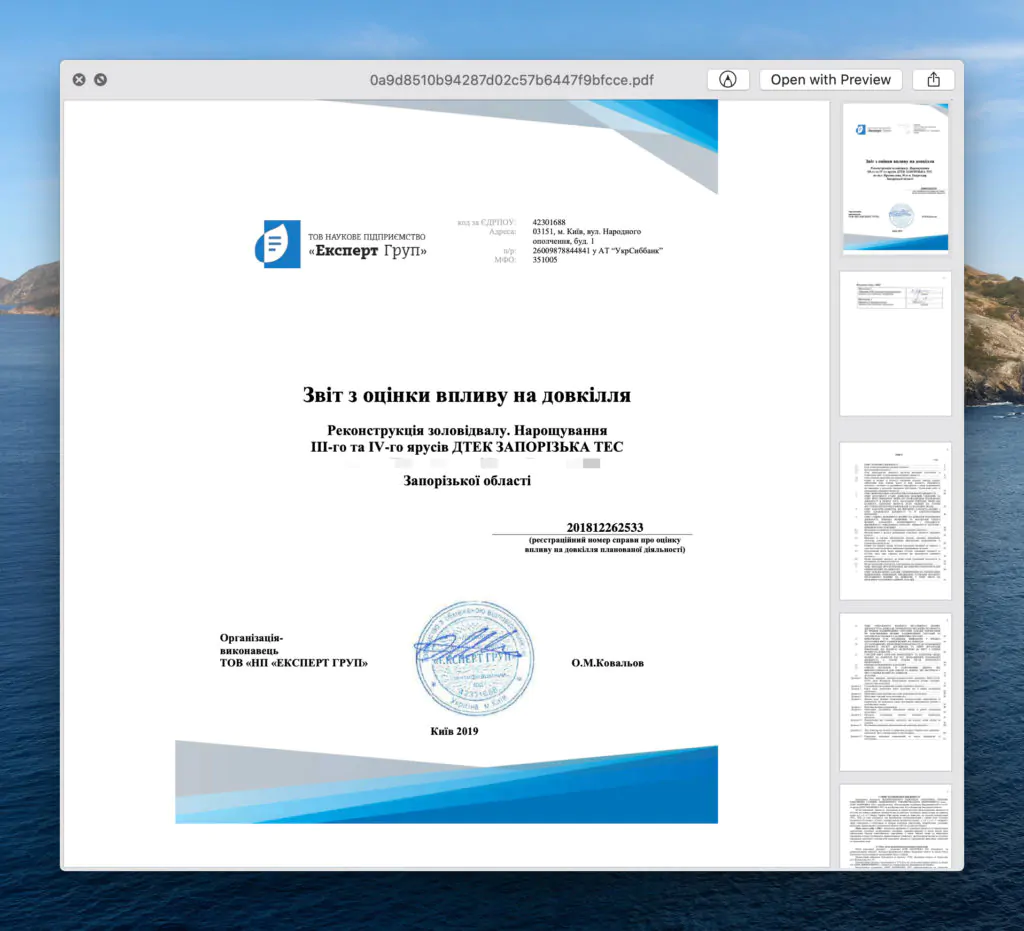
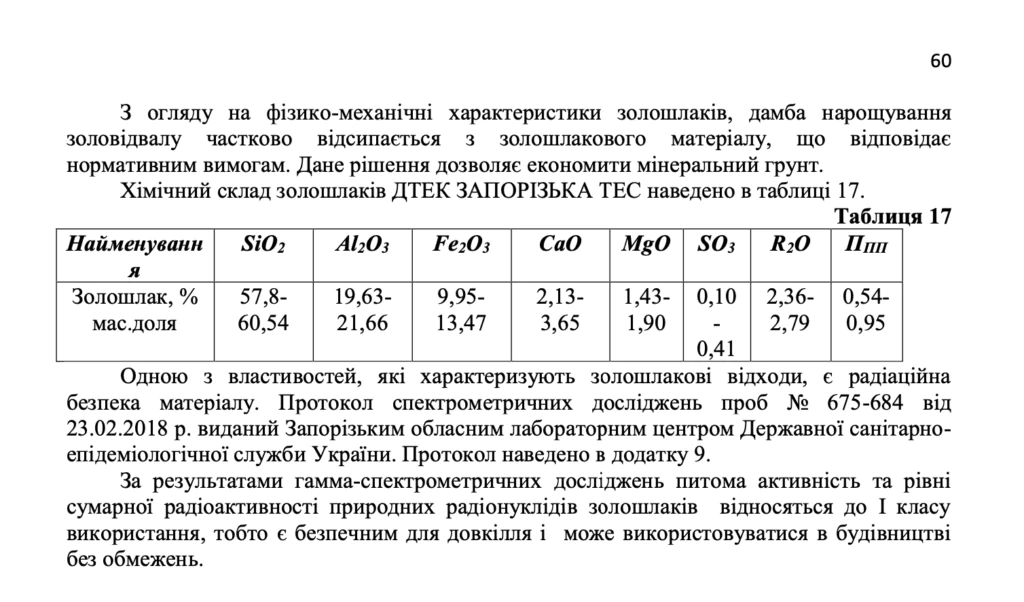
The report specifically identifies one property ofash and slag wasteas thematerial’s radiation safety.
The report includes a spectrometric testing protocol issued by the Zaporizhzhia Regional Laboratory Centre of Ukraine’s State Epidemiological Service in 2018.
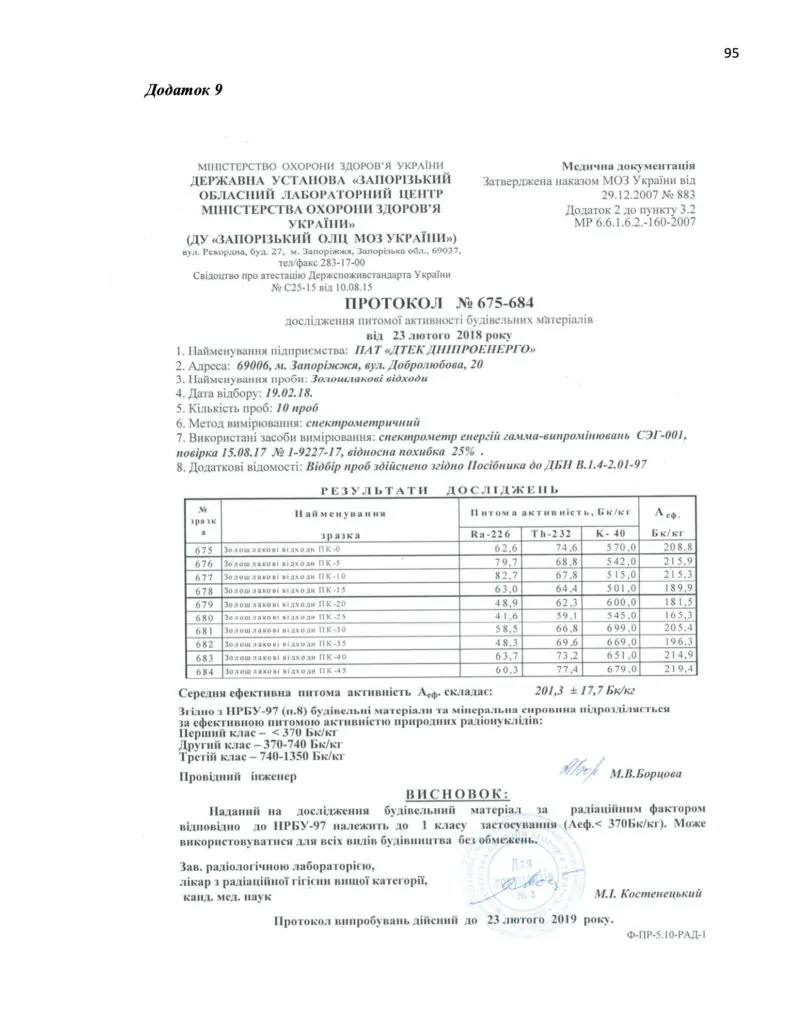
Its conclusion places the tested material in application Class 1 under Ukraine’s NRBU-97 radiation standards and states that itmay be used in all types of construction without restrictions.We therefore have an official document from a Health Ministry body indicating that ZTPP ash and slag could be used even in kindergartens and maternity hospitals.
The EIA report also states that long-term research gives no reason to expect radioactive soil contamination.

In summary, official documents considered by the country’s principal environmental permitting authority identify no radiation hazard from ZTPP ash and slag. On that basis, the article concludes that a mortar impact should not in itself cause a significant radiation increase.
Our own measurements at a comparable site: Prydniprovska Thermal Power Plant
Occupation prevents direct testing at Zaporizhzhia, so we examined a comparable site belonging to the same owner, DTEK: Prydniprovska Thermal Power Plant. Its ash and slag storage facility lies in the Shyianka riverbed in Dnipro.
Both plants use Grade G gas coal, so their readings should be broadly comparable.
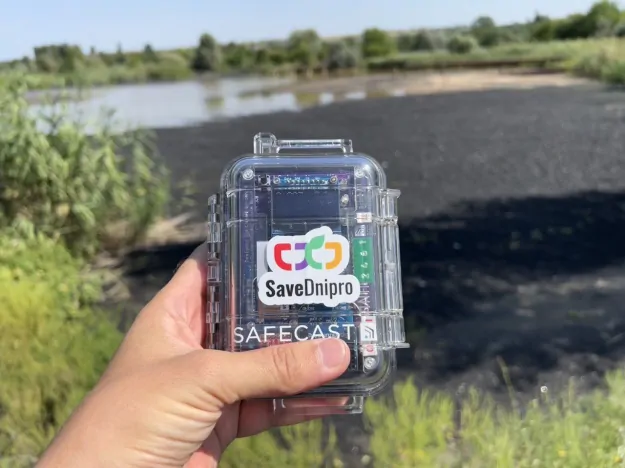
On 27 August 2022, we measured radiation using Safecast bGeigie Nano instruments supplied by our international partners, the Czech National Radiation Protection Institute, SURO, and Safecast.
As shown on theSafecast map, gamma readings in the storage basins and on the ash heaps were higher than elsewhere on the waste site, reaching 0.220–0.260 µSv/h at some points.
Measurements were made 1–1.5 metres above ground with instrument No. 2460, its sensor pointing downwards.
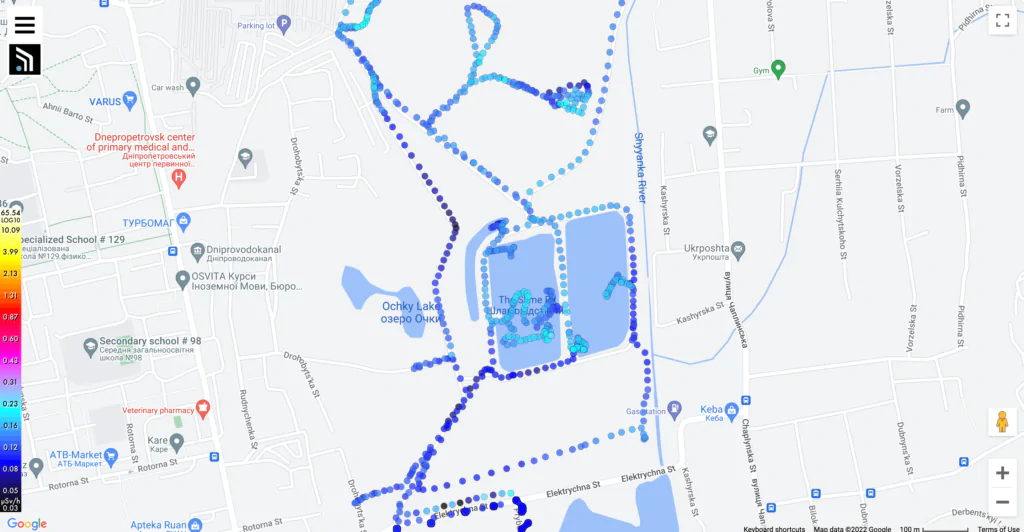
Separate ground-level measurements close to the ash and slag used instrument No. 2461. Average gamma readings were 0.290 µSv/h, almost 30% higher than at one metre.

Safecast bGeigie Nano uses an LND 7317 pancake Geiger–Müller tube capable of detecting beta as well as gamma radiation. Detecting beta requires removing the protective plastic enclosure, which blocks it.
Readings without the enclosure reached 0.323 µSv/h, almost 10% above those taken inside it.

Are these readings safe for the public? The article compares them with 30 µR/h, or 300 nSv/h, under NRBU-97. It concludes that even surface readings are close to the cited limit and that, provided homes are not directly on the ash dump, dust is controlled and storage requirements are observed, the material does not present the radiation hazard alleged here. This is the investigation’s historical comparison, not a general safety clearance.
What do satellites show?
Alongside ZTPP’s environmental documents and measurements at the comparable Prydniprovska site, we analysed Sentinel-2 images available through the publicSentinel HUB EO Browsersystem to assess compliance with environmental requirements for ash and slag storage.
Ash and slag are formally classified as Class 4, the least hazardous waste category, yet contain many harmful compounds, including heavy metals and carcinogens.
Why? In economic terms, this classification is cheaper. Ukraine’s environmental tax for disposing of Class 4 waste was UAH 5.50 per tonne. That is an environmental problem deserving a separate article. Here we return to storage requirements.
Among the many requirements, we focus on wetting the waste to prevent dust. Ash and slag should be covered with water to stop hazardous ash particles polluting the air. Fine particles can damage the lungs and cardiovascular system and may travel through the body.
They also carry contaminants. Fine ash can harm people through both its physical properties and chemical composition, so it must be contained at the storage site. Wetting with water or appropriate solutions is a basic control measure.
We examinedsatellite images to investigate thisfrom February to late August 2022.
Analysis of moisture and normalised difference vegetation indices over several months indicates that the facility began drying progressively in May without adequate additional wetting. By late August, it was almost entirely dry compared with February.
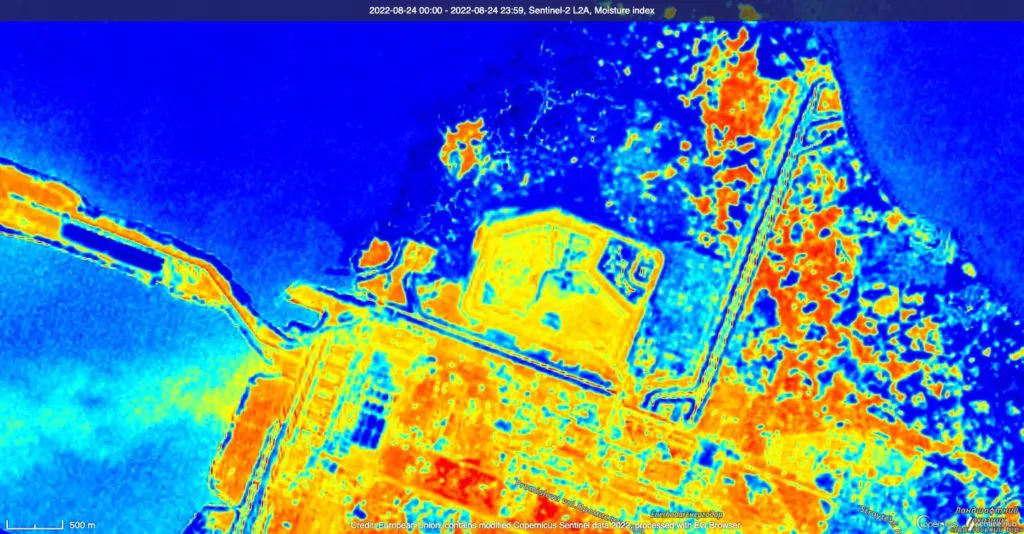
It therefore adds industrial pressure through dust emissions to a region already facing radiation risks from the Russian-occupied nuclear plant.
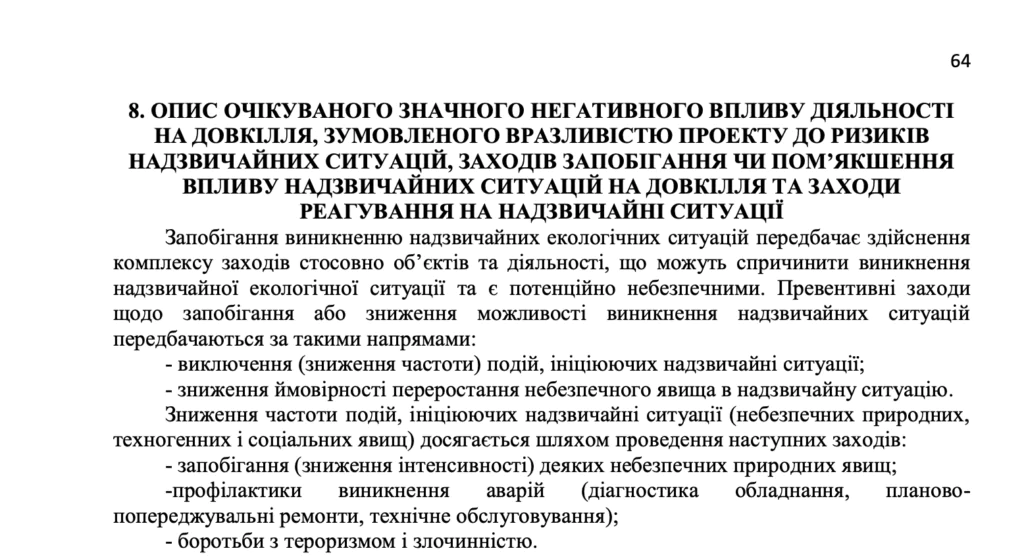
The facility’s official documents classify dust release from the ash storage area as an emergency situation.

Could the ash storage facility threaten the nuclear plant?
The EIA report indicates that damage to the ash storage dam by Russian forces could release slurry and block the discharge channel that supplements the cooling pond and supplies technical water to ZNPP. This could create critical problems and a potential nuclear plant accident.
ZTPP’s owner is obliged to prevent environmental emergencies through a range of measures, including countering terrorism and crime.
Our conclusions*:
- Ash and slag comparable with ZTPP’s material have background radiation readings approximately twice the surrounding natural background.
- Official oversight documents classify ZTPP ash and slag within the Ukrainian radiation limits discussed here.
- ZTPP ash and slag storage violates environmental requirements, constituting an emergency situation at the facility.
- Destruction of the ash storage dam could sharply increase accident risks at the nuclear plant.
As Energy Minister Herman Halushchenko stated, restoring Ukrainian control of ZNPP and creating a demilitarised zone are essential for nuclear safety. Ukrainian businesses must also obey domestic law rather than give the enemy additional opportunities through their own violations.
*Our conclusions combine facts from official public documents, satellite observations and environmental legislation. Relevant oversight institutions should examine them when making decisions.
Iryna Chernysh, SaveDnipro co-founder and head,
Pavlo Tkachenko, SaveDnipro co-founder
Source: Ukrainska Pravda
You can use SaveEcoBot to follow air quality in Kyiv and other cities. Visit the air quality map or join the chatbot in Telegram or Viber.
More environmental news is available on ourTelegram channel.