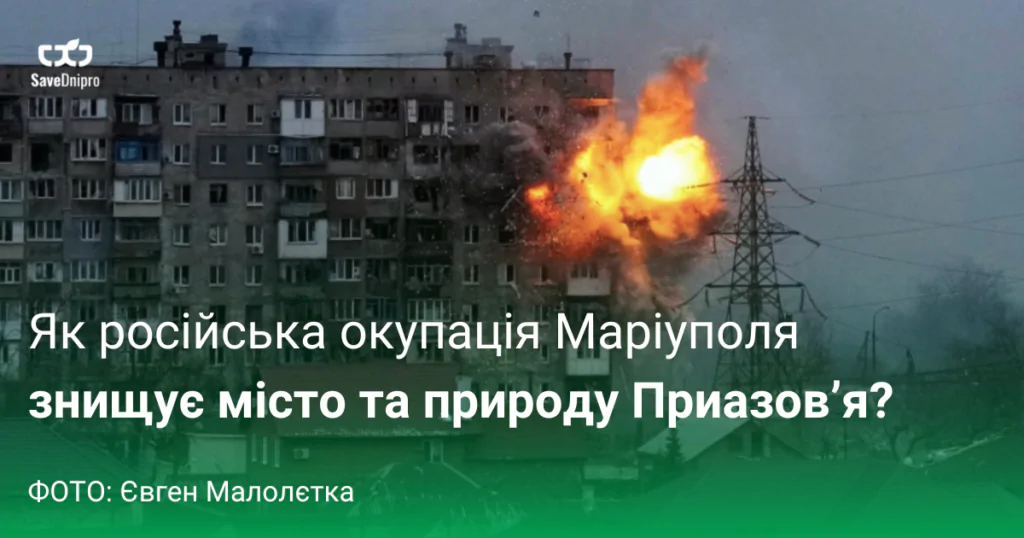
The full-scale war in Ukraine has lasted more than 300 days. During that time, Russia has committed thousands of crimes. In the siege and battle for Mariupol, Russian forces spared nothing: bombs fell from every direction and thousands of shells destroyed everything in their path. There may be no undamaged building left, and we may never know the exact number wounded or killed. Destruction is so extensive that the occupying forces have chosen not to rebuild the city but to demolish it further.
We previously explained how war affects air quality and climate change. Here we examine how the occupying forces have destroyed, and continue to destroy, Mariupol and the natural environment of the Azov region.
According to a report by Mariupol mayoral adviser Petro Andriushchenko, at least one apartment building is removed from the city every day. New informationindicates plans to demolish an entire neighbourhood near Azovstal in the Livoberezhnyi district. Buildings are blown up or pulled down with heavy machinery. On 22 December, in an effort to conceal evidence of their crimes, the occupying forces began demolishing the Drama Theatre, where hundreds of women and children were killed in the bombing on 16 March.
Demolition creates not only enormous piles of construction debris but also vast quantities of airborne suspended particles, or dust of different sizes and compositions. Their effects on people and the environment depend on size: larger particles settle faster, while smaller particles remain airborne longer and pose greater health risks.
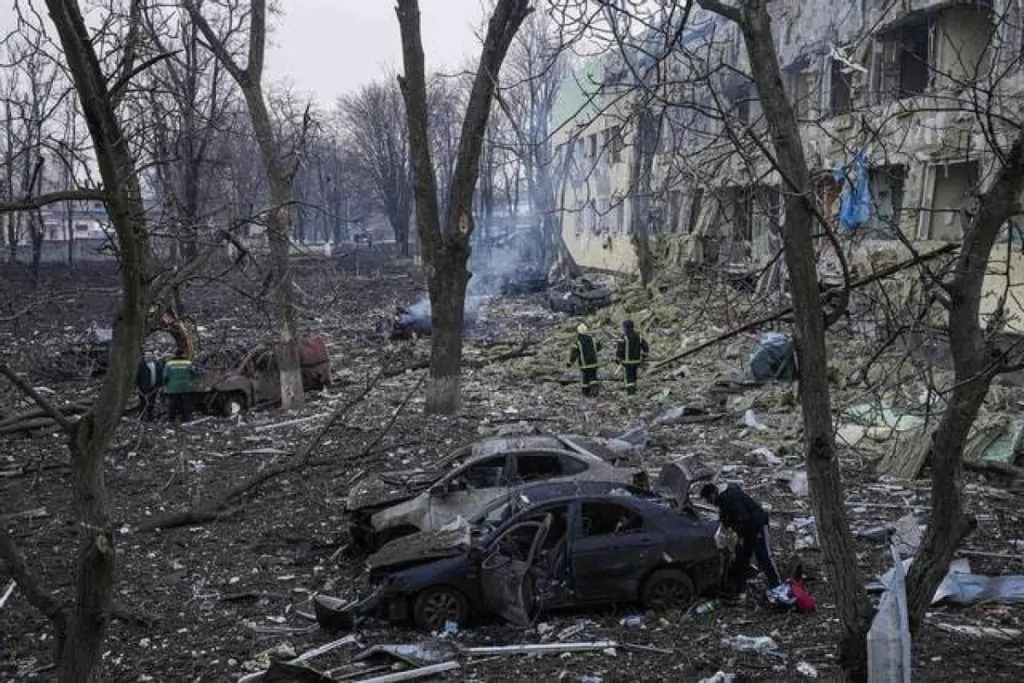
An estimated 120,000–130,000 Ukrainians remain in Mariupol, including around 70,000 older people. They are forced to live in partly destroyed buildings without electricity, gas or heating, breathing polluted air every day. Prolonged exposure to silica or asbestos dust can cause silicosis or asbestosis as these materials accumulate in the lungs. Fine particles can also penetrate deep into the lungs, and some can reach the bloodstream, contributing to cardiovascular risks including blood clots and death.
The occupying forces are creating enormous construction waste dumps, effectively hills or mountains. Entire neighbourhoods are demolished and debris is taken outside the city to clear the sites, damaging land around Mariupol as well.
Another environmental crime currently being committed is cutting down trees in Mariupol’s parks for heating. Trees matter to the urban ecosystem not only because they absorb carbon dioxide and release oxygen, but also because their leaves capture fine particles during warmer months, helping clean the air.
What has happened and continues to happen in Mariupol is a tragedy and crime history will not forget. Each inept attempt by the occupying authorities to manage the city deepens the crisis. We cannot yet grasp the full scale of suffering, torture and deaths, environmental consequences or the damage Russia has caused. But we must keep resisting, document every Russian crime and plan to restore our cities and villages after victory.
If you see environmental crimes in your city, open @SaveEcoBot and report them. We will pass on the information received and work with you to hold those responsible accountable!