
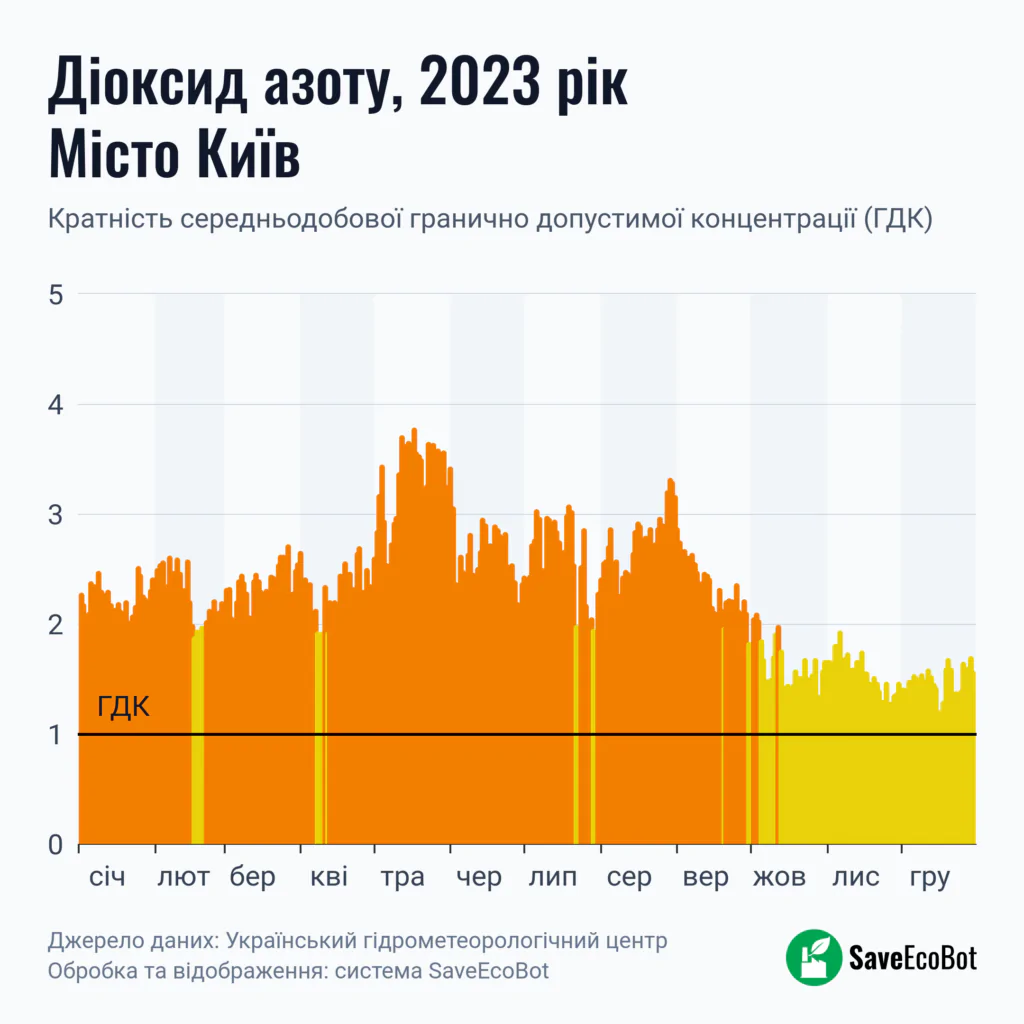
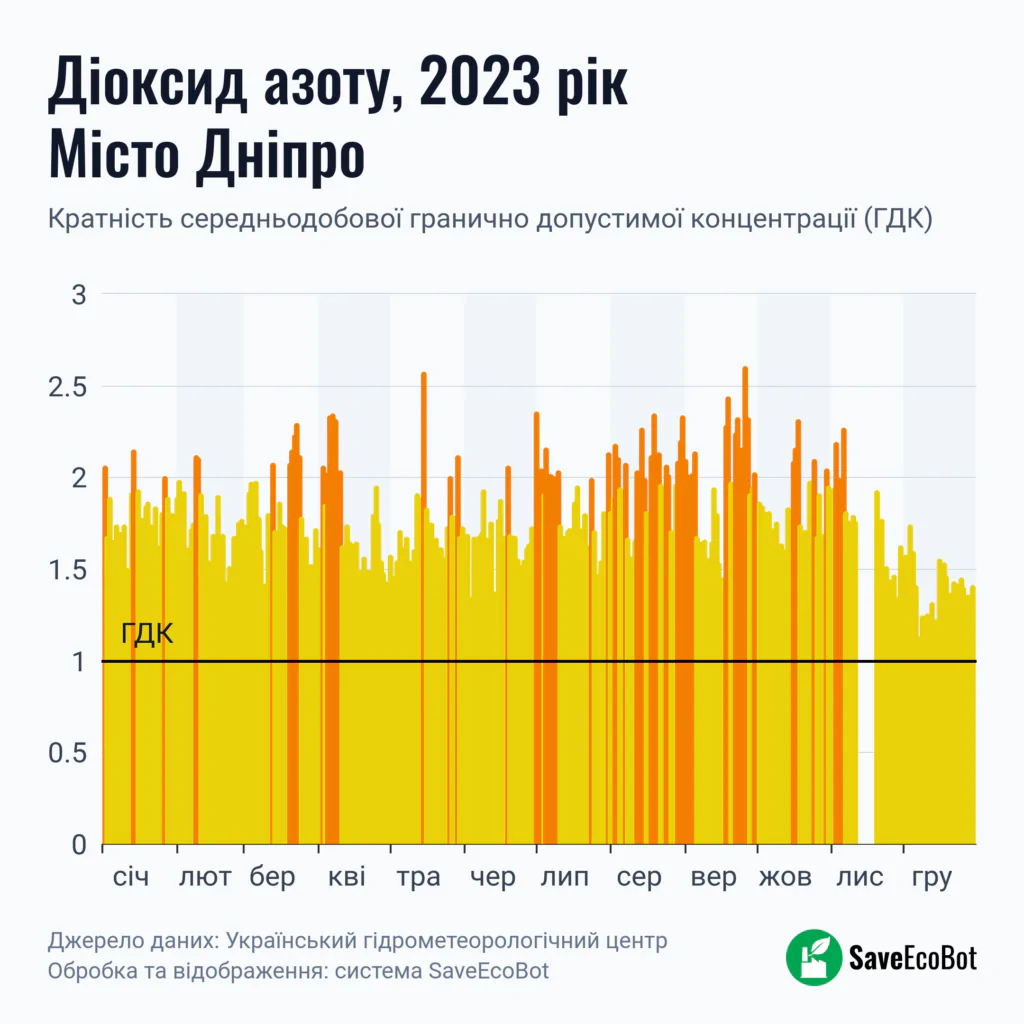
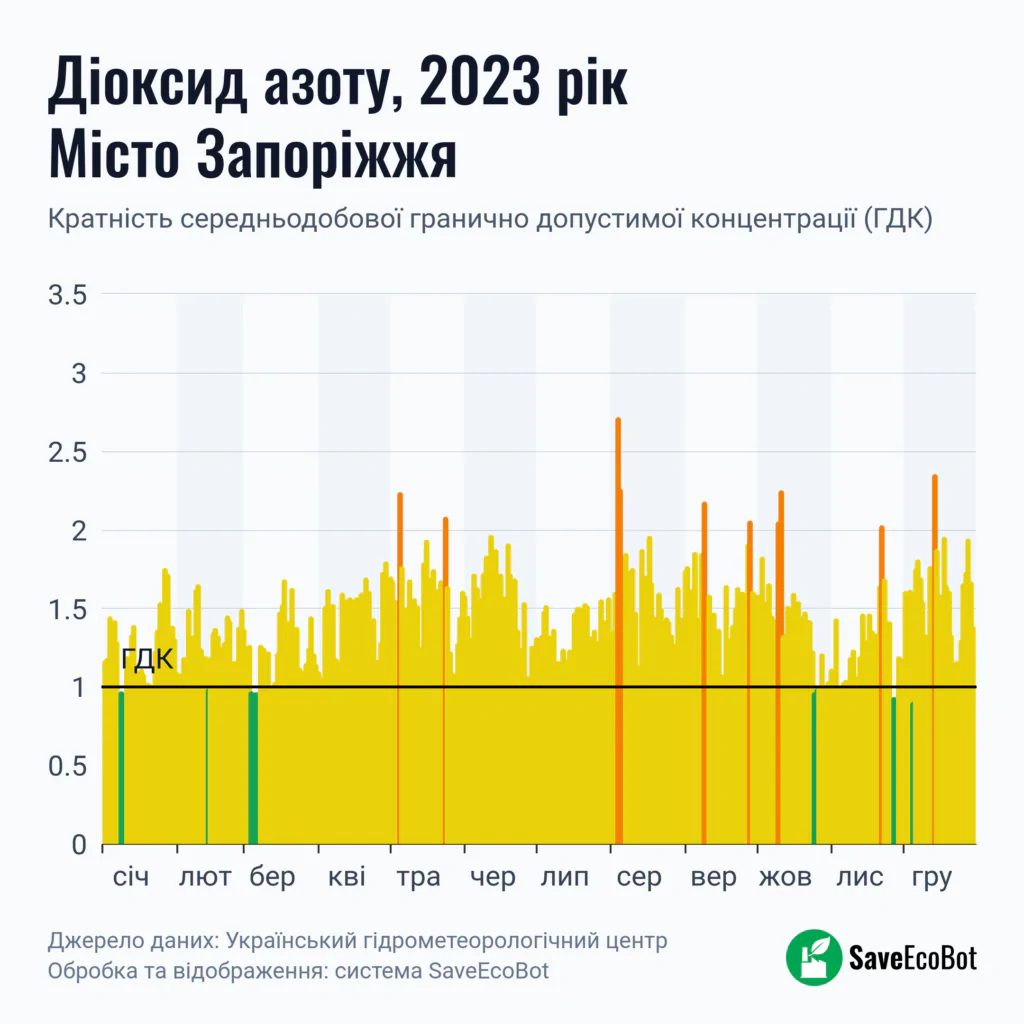
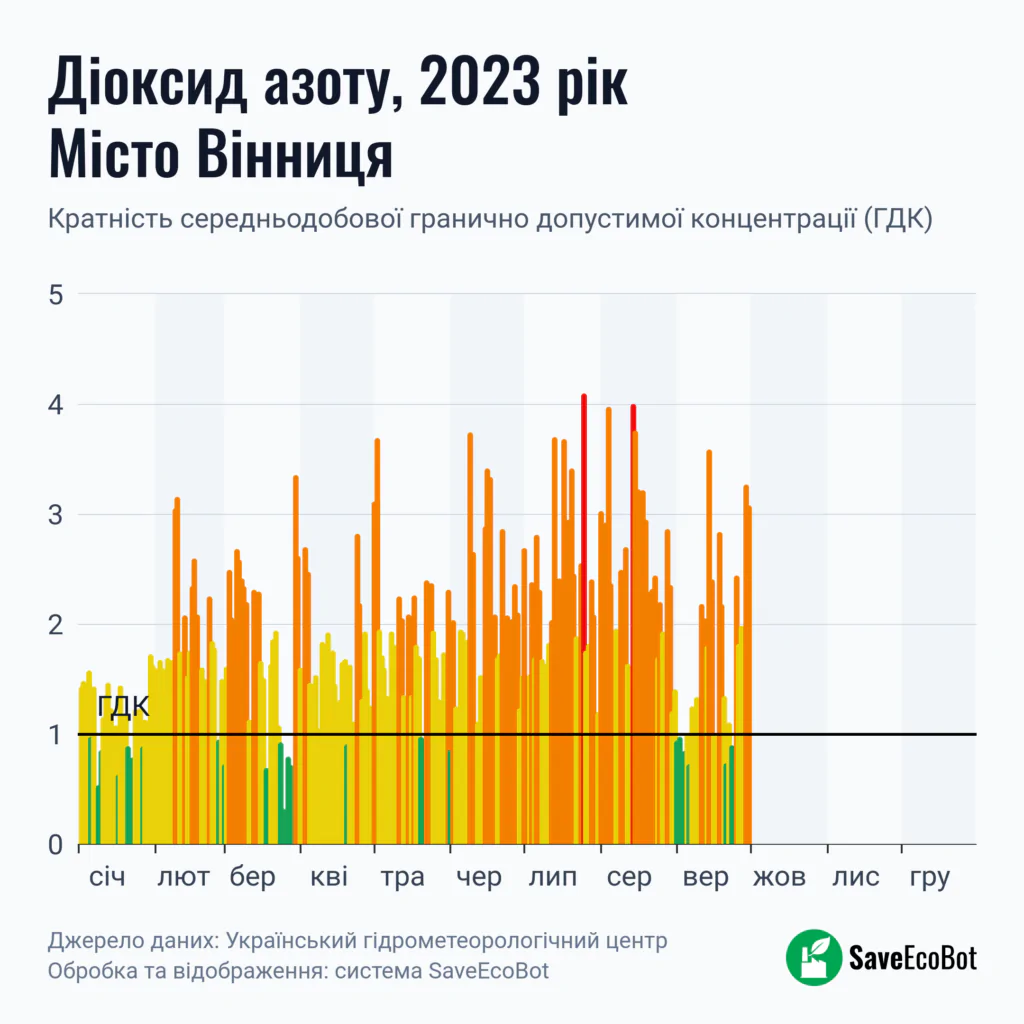
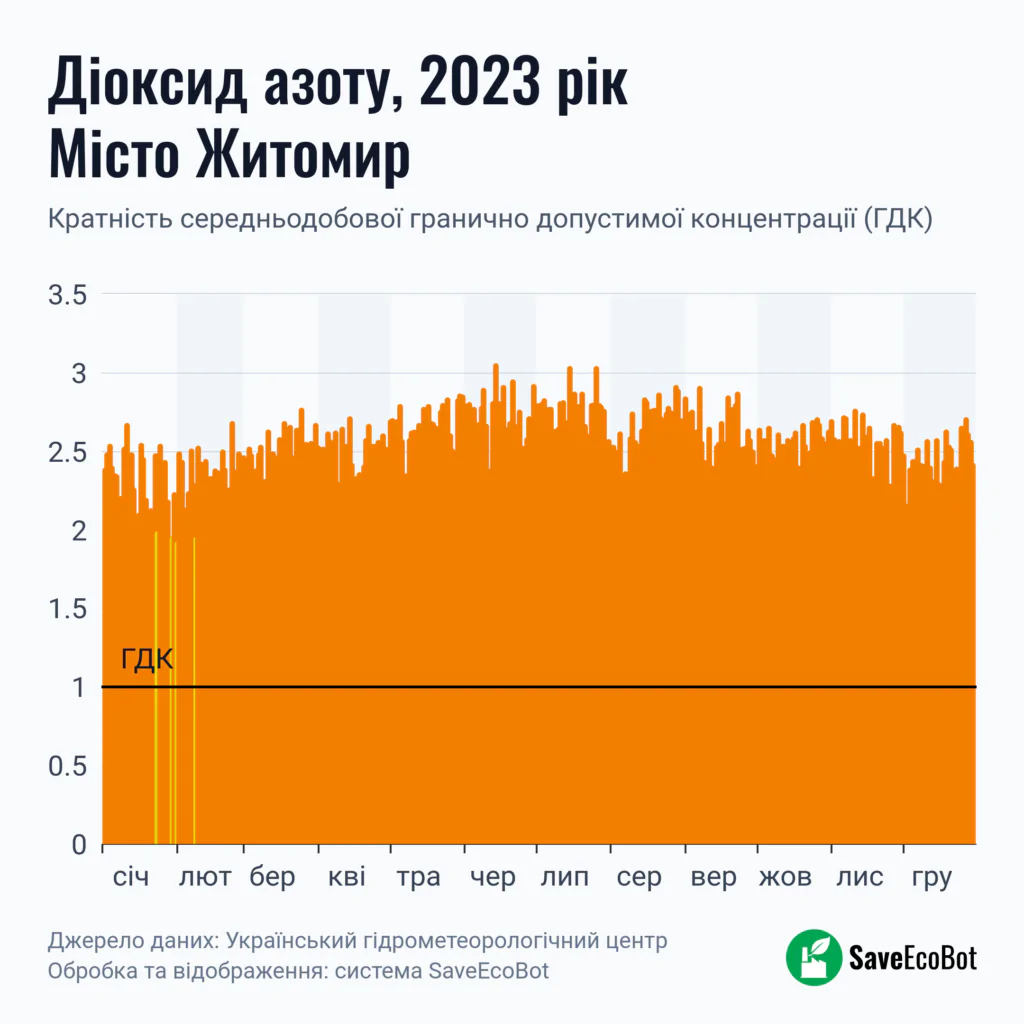
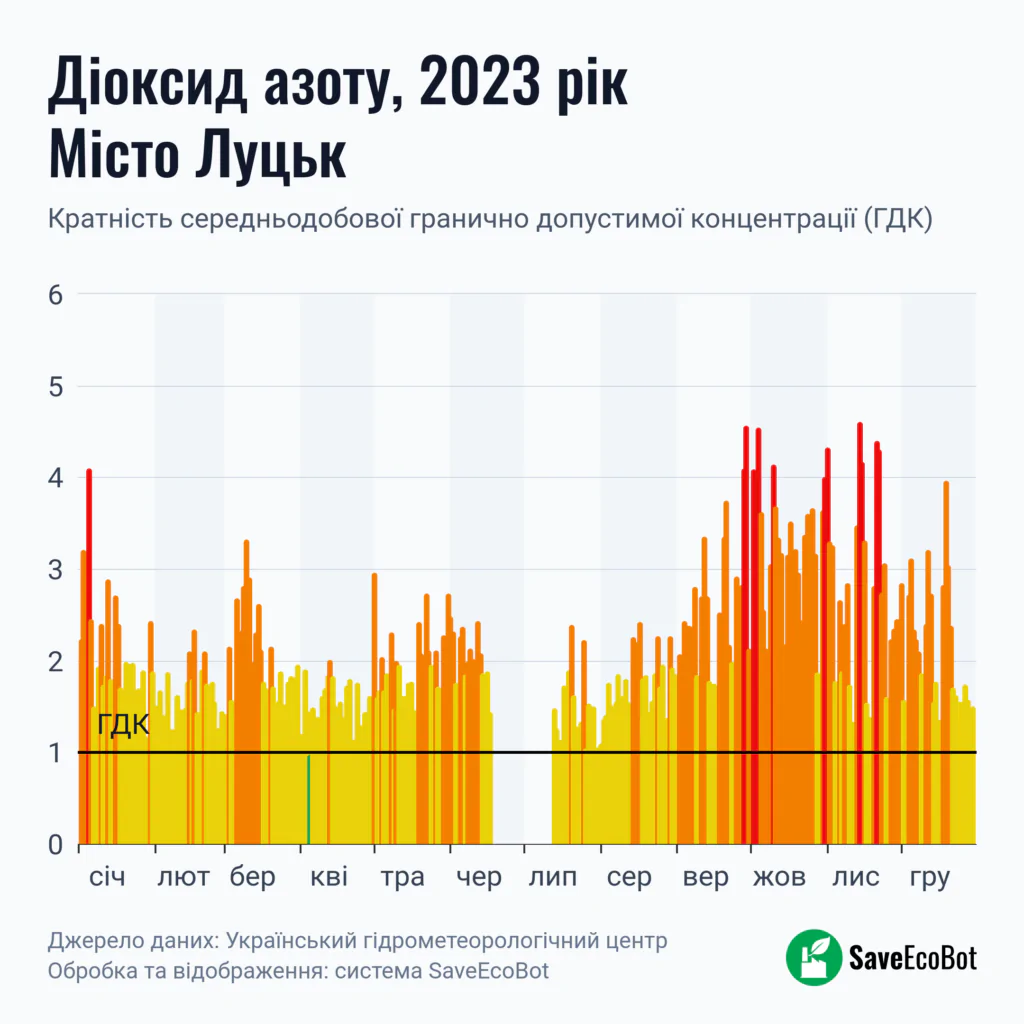
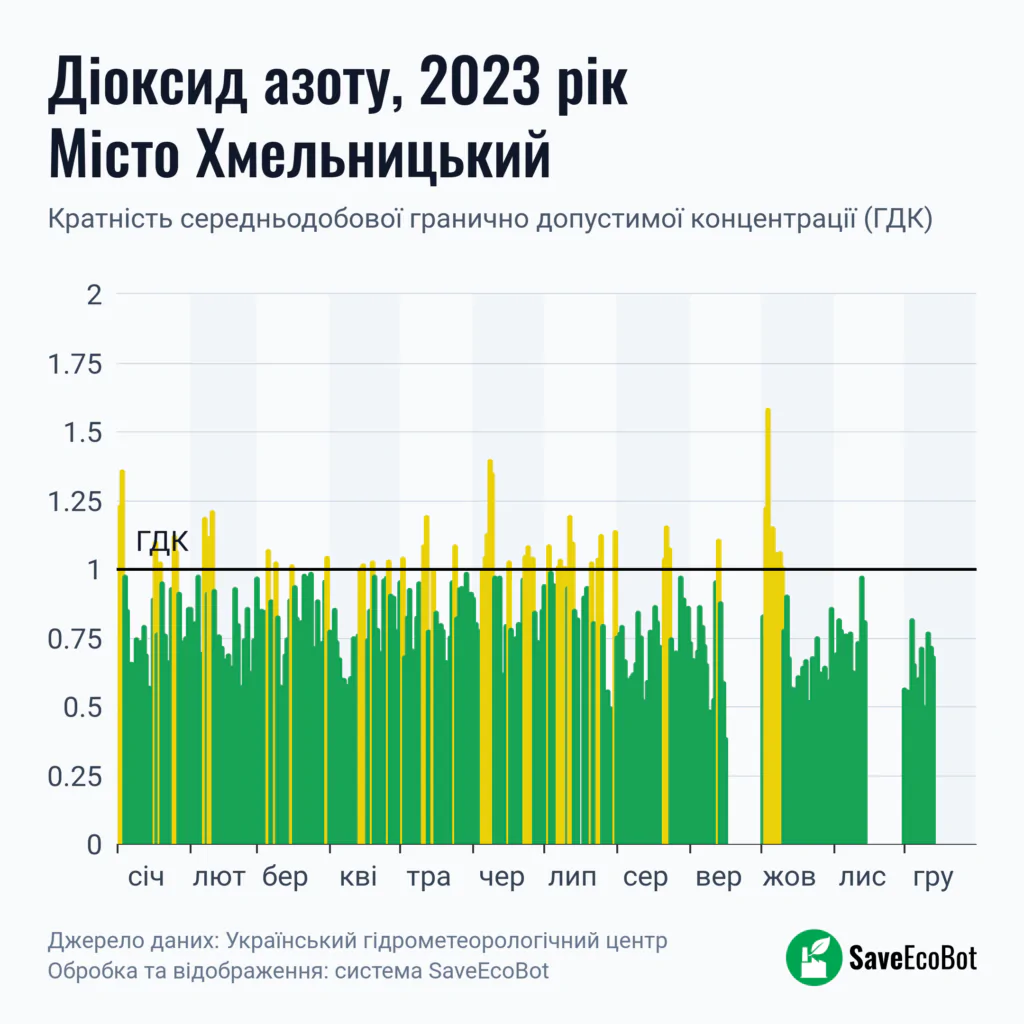
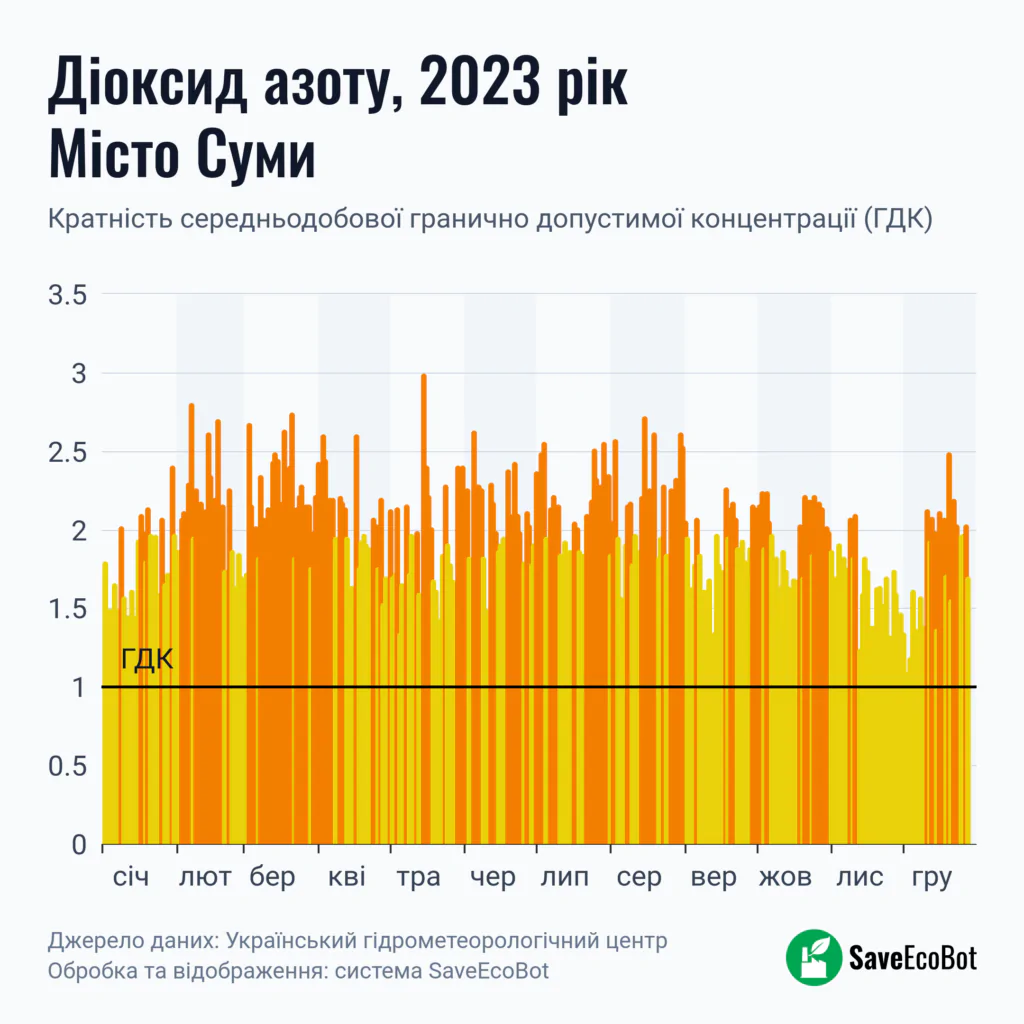
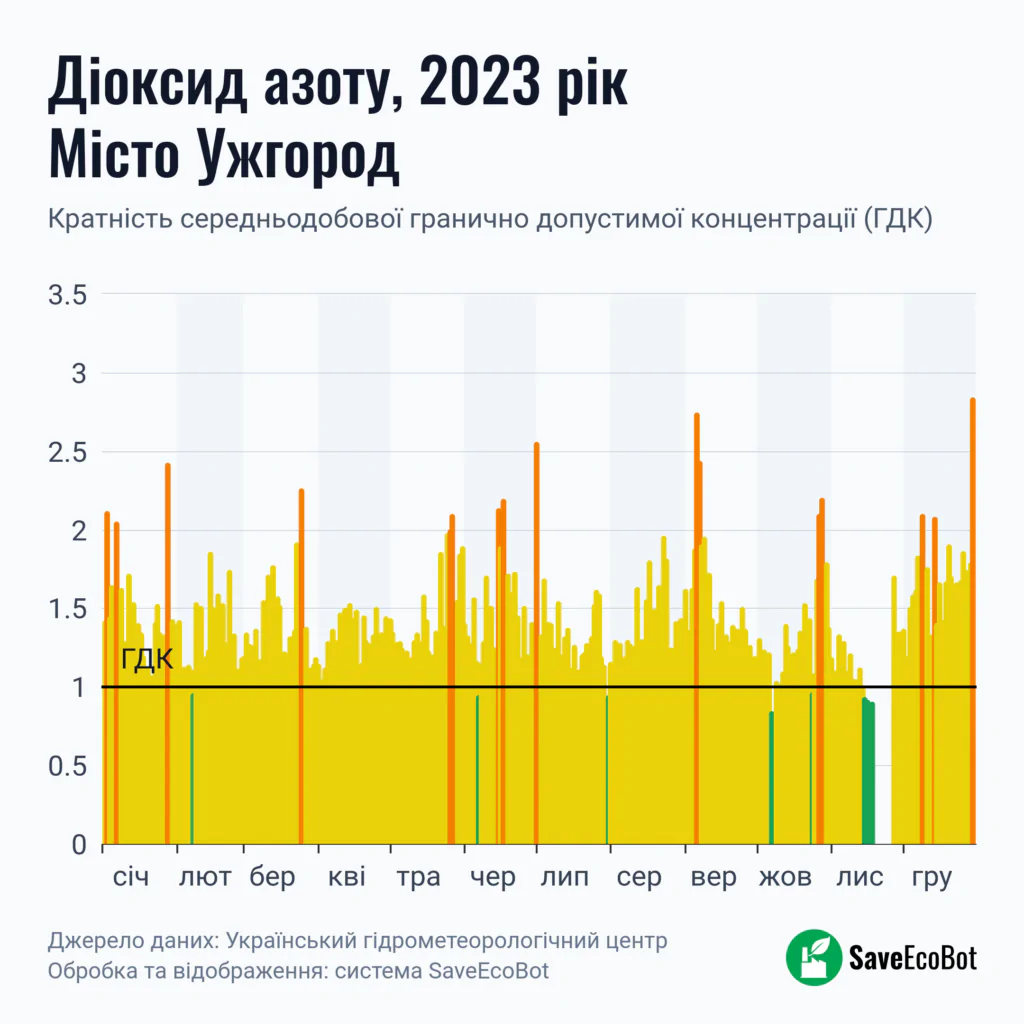
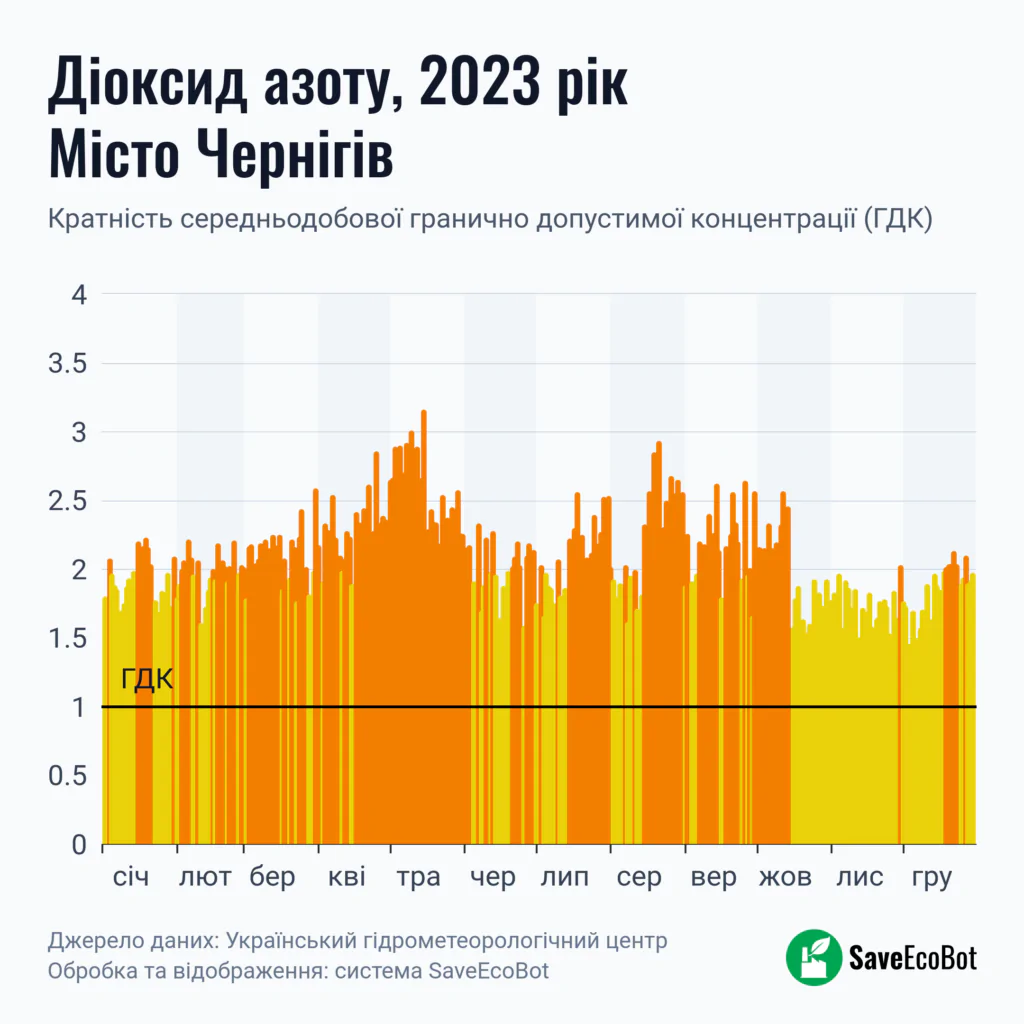
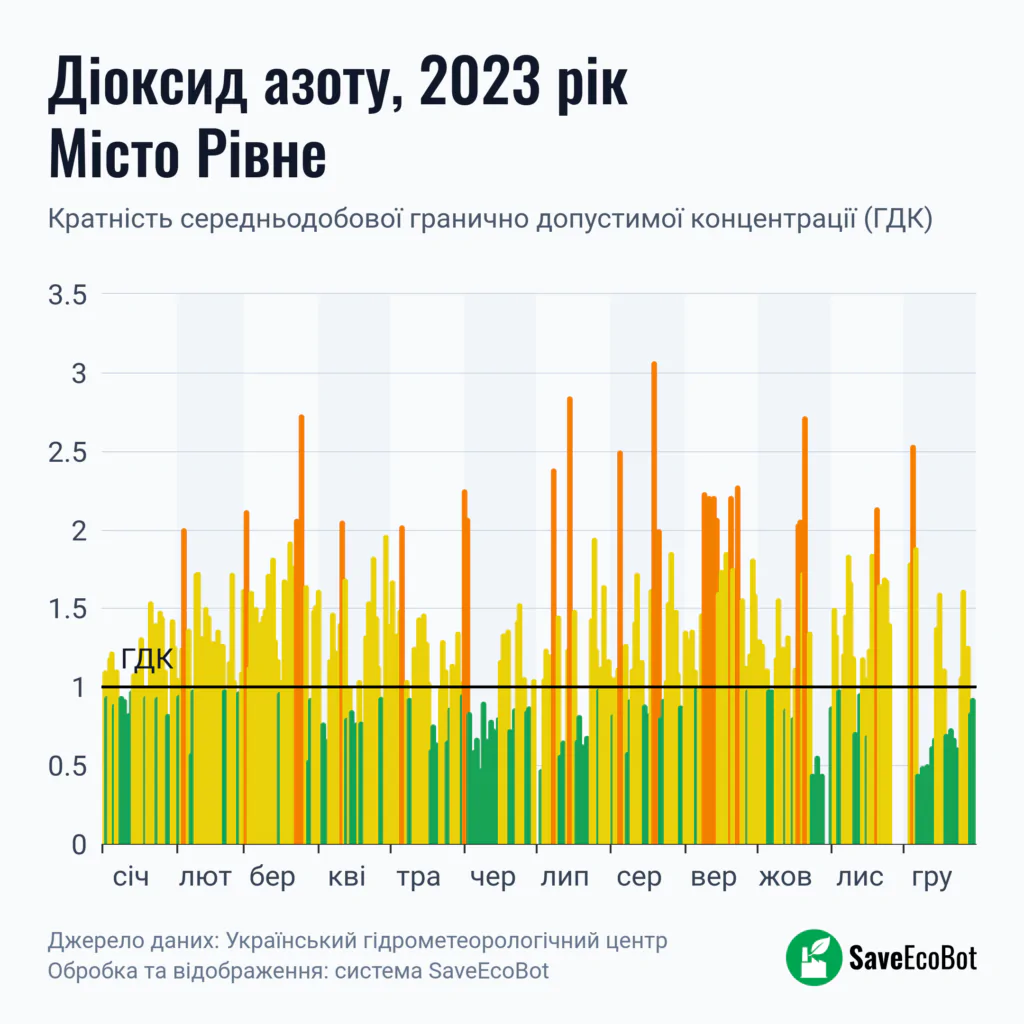
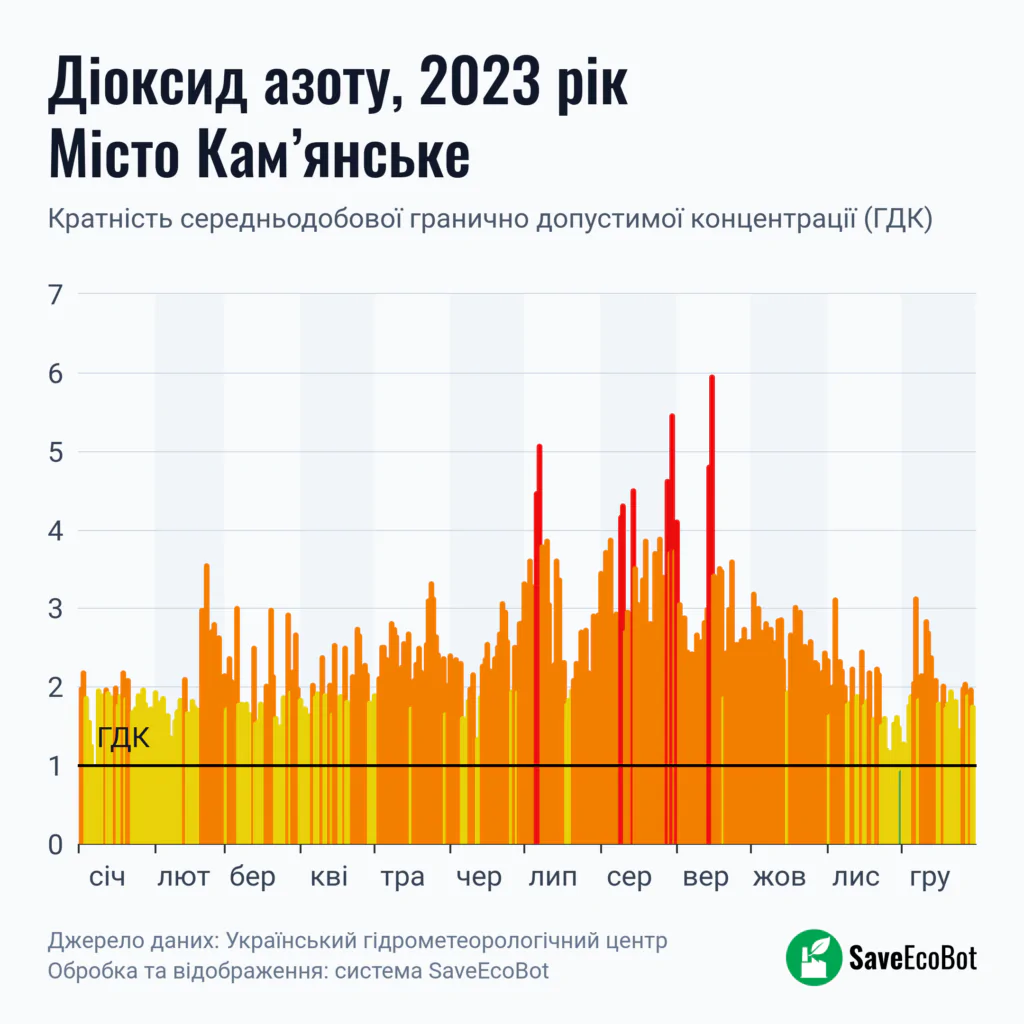
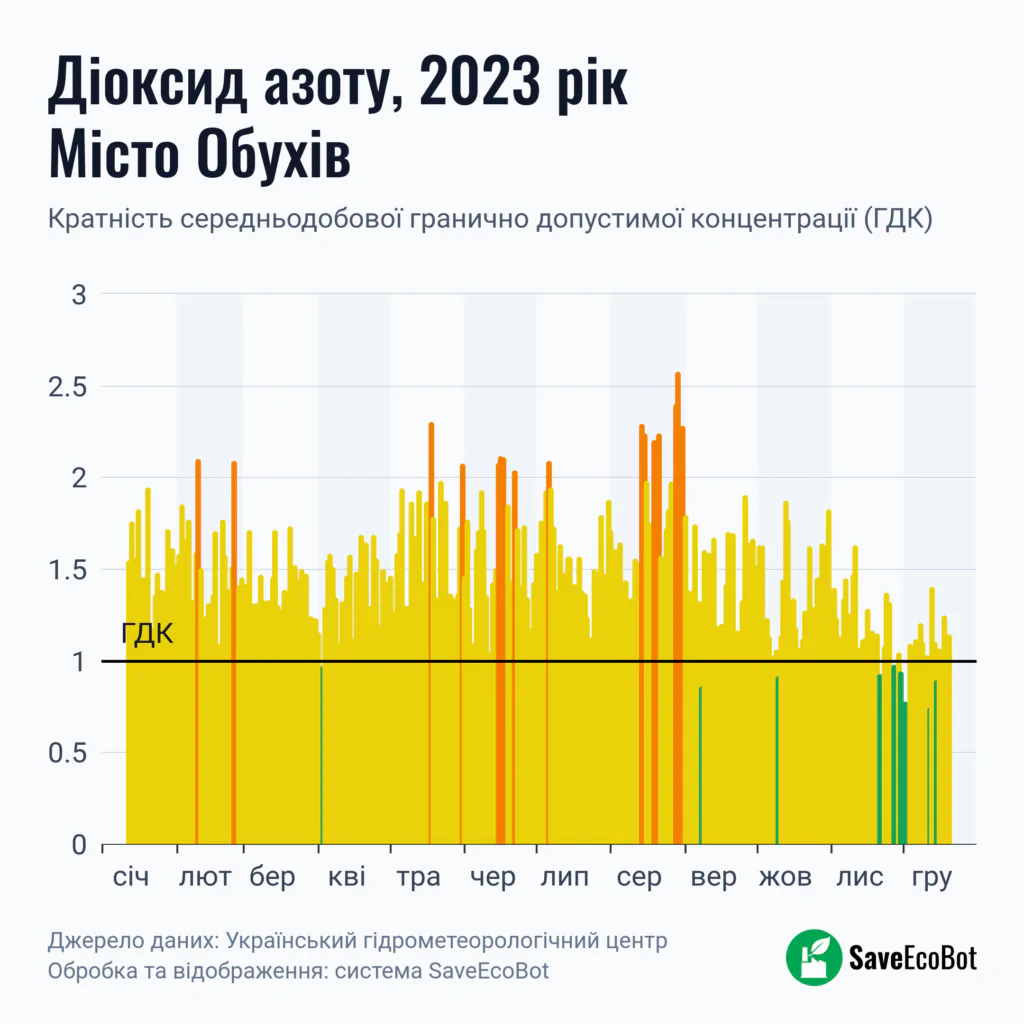
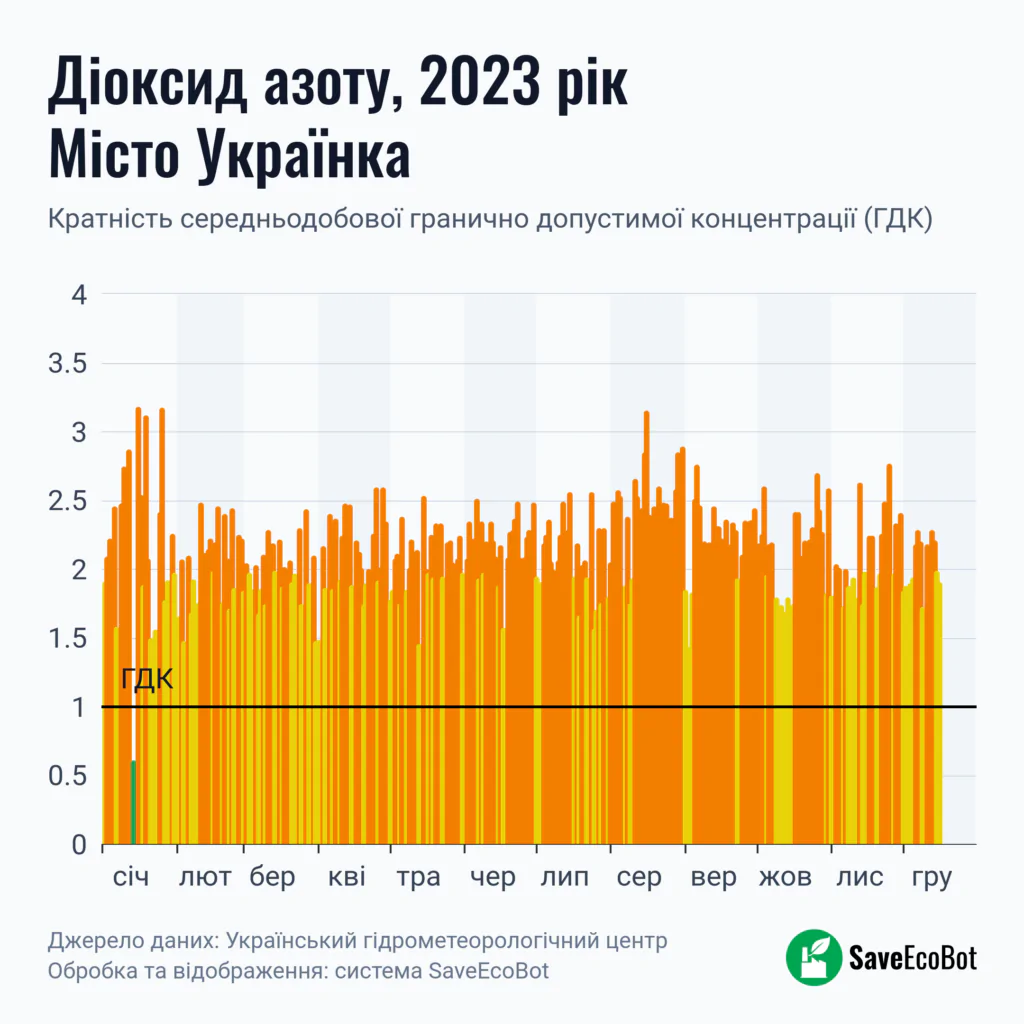
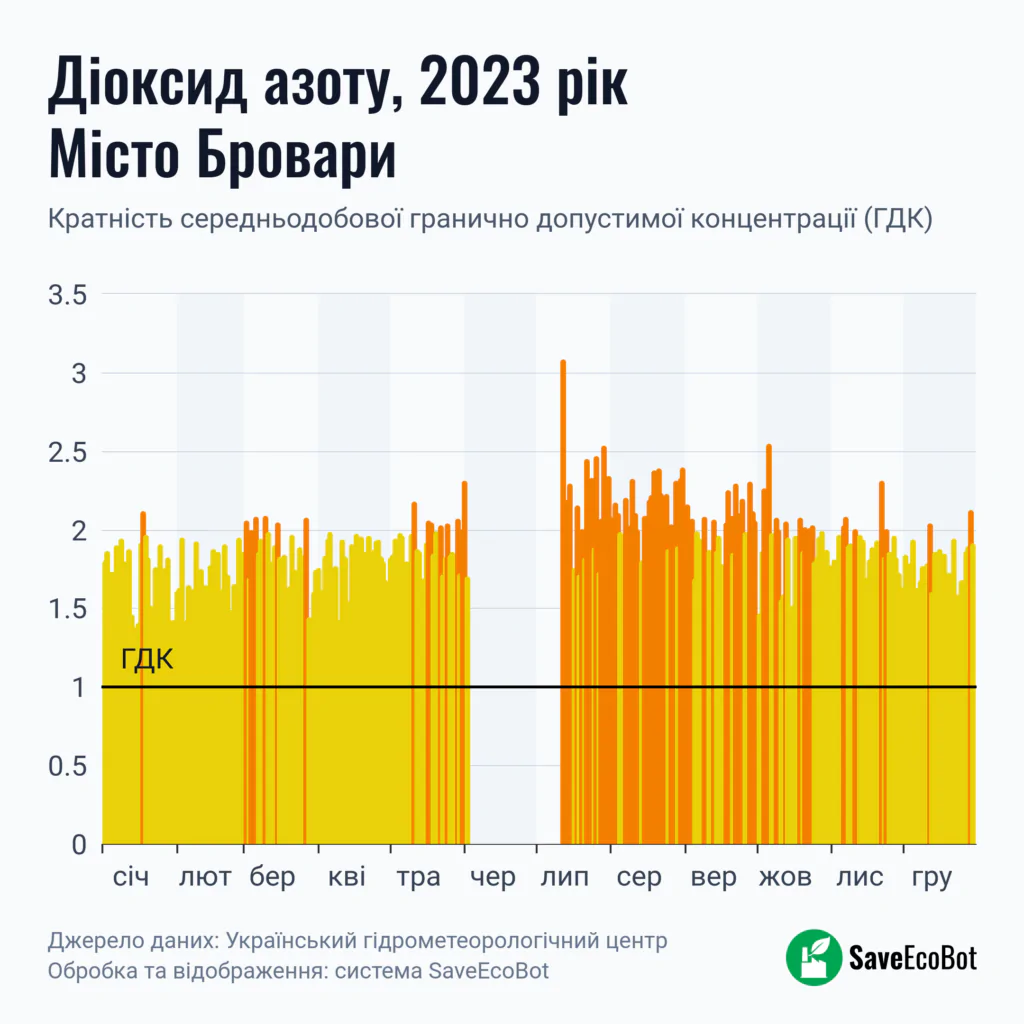
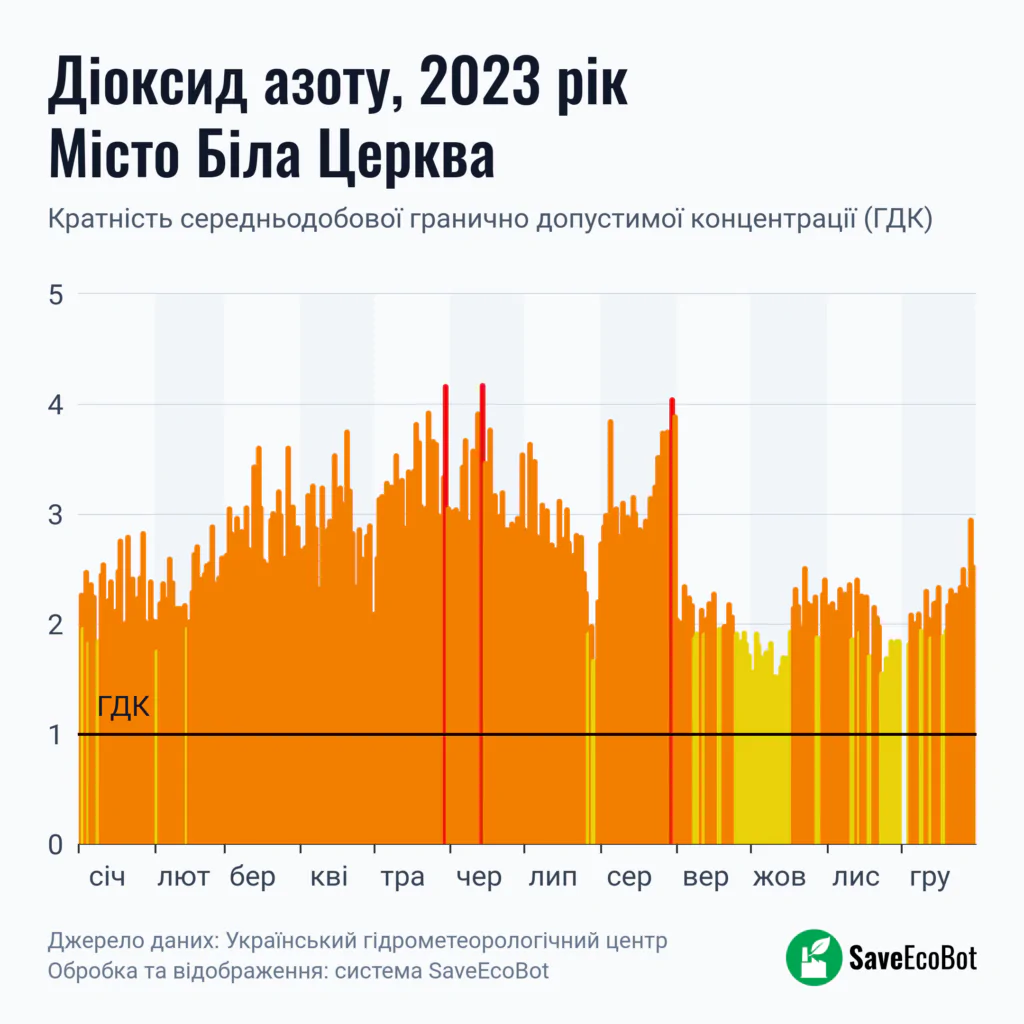
Nitrogen dioxide (NO2) is a dangerous air pollutant. The charts below show Ukrainian Hydrometeorological Centre data for 2023. Coloured bars indicate NO2 concentrations in the air. A green bar means the reading is within the limit. Exceedances appear yellow, orange, red or burgundy according to their magnitude. The vertical axis shows how many times the limit was exceeded.
The data was taken in tabular form from the website of Ukraine’s Ministry of Environmental Protection and Natural Resources and recognised and converted into clear charts by SaveEcoBot. Some data was also obtained from Hydromet in PDF format through information requests.
















Why is NO2 harmful?
On contact with moisture in the human respiratory tract, it forms nitric and nitrous acids that corrode the walls of the lungs’ alveoli. It contributes to asthma, bronchitis and pulmonary oedema and reduces resistance to respiratory infections.
When inhaled, it enters the bloodstream and therefore affects all body systems. These effects are not fully understood, but evidence links nitrogen dioxide air pollution with cardiovascular disease, diabetes, reproductive outcomes, physical and mental development and premature mortality.
What other dangers does it pose?
Nitrogen dioxide is not just toxic. It also initiates a chain of reactions turning one harmful substance into another.
When a nitrogen dioxide molecule absorbs a photon of sunlight, chemical reactions lead to atmospheric smog. Smog contains hazardous substances including formaldehyde, a carcinogen we recently wrote about; secondary PM2.5 aerosols, aparticularly dangerous type of pollution; and ground-level ozone.
When nitrogen dioxide reacts with atmospheric water, it contributes to acid rain.
Where does it come from?
When something burns in air, high combustion temperatures cause atmospheric nitrogen to react with oxygen. It does not matter what burns: even burning ‘green’ hydrogen produces nitrogen dioxide as well as water. The higher the combustion temperature, the more NO2 is formed.
The main sources are therefore power and combined heat and power plants, metallurgy and other household and industrial combustion. About 25% of NO2 emissions are generated by vehicle internal combustion engines. Wartime fires caused by attacks must also be added.
How can it be prevented?
Preventing excessive pollution starts with understanding the scale of each city’s problem. Detailed Hydromet data analysis could help, but the Ukrainian Hydrometeorological Centre does not currently provide full access, which explains gaps in some charts. Important data collected by its regional centres therefore remains unavailable for reuse by civil society organisations, researchers and local government.
Identifying each city’s main sources and then reducing their pollution is the principal solution. Vegetation can mitigate consequences such as high formaldehyde levels. Trees absorb formaldehyde through leaves, trunks and roots and convert it into harmless substances through photosynthesis and metabolism. Studies indicate that trees can reduce airborne formaldehyde concentrations by 7–23%.
This publication is distributed with financial support from the European Union. Its contents are the sole responsibility of SaveDnipro and do not necessarily reflect the views of the European Union.