How SaveDnipro developed its Methodology for Assessing Natural Sites and Areas Affected by Russia’s Military Aggression and tested it in practice.
Studying Ukrainian nature reserves and landscape parks affected by the war is part of the project ‘Advocating international accountability for environmental crimes’, supported by the International Renaissance Foundation.
Earlier in the project, SaveDnipro joined the Ukrainian delegation at COP29 in Baku in November 2024. There, we presented genuinely unique VR content about the war’s devastating impact on Ukraine’s environment.
A methodology for collecting environmental crime data
Recording environmental crimes and assessing the damage and environmental consequences are essential for future legal action against Russia and decisions on restoring war-affected areas.
SaveDnipro therefore developed guidance explaining what to do, intended for specialists, activists without specialist training, undergraduate and master’s students in environmental disciplines, civic activists, local authority representatives and other interested people.
The State Environmental Inspectorate currently documents the war’s environmental impacts. Greater public understanding of data collection principles, however, will help document more Russian environmental crimes, both qualitatively and quantitatively.
The Methodology for Assessing Natural Sites and Areas Affected by Russia’s Military Aggression provides an initial assessment procedure for sites affected by military activity. It allows users to assess changes in contaminated or damaged areas even after some time has passed, and to understand an area’s current condition.
The procedure can be used to assess:
- soils;
- water bodies;
- vegetation cover.
We have already tested this in practice, collecting photographs and video from the areas visited, recording eyewitness testimony and preparing written descriptions of what we saw.
Leading Ukrainian specialist scientists and lawyers worked on the guidance. The Specialised Environmental Prosecutor’s Office and State Environmental Inspectorate also participated in discussing and developing it.
Locations visited
To check how convenient and effective the methodology was, SaveDnipro selected three locations for field visits.
Drevlianskyi Nature Reserve
This nature reserve is in Zhytomyr region, near the border with Belarus.
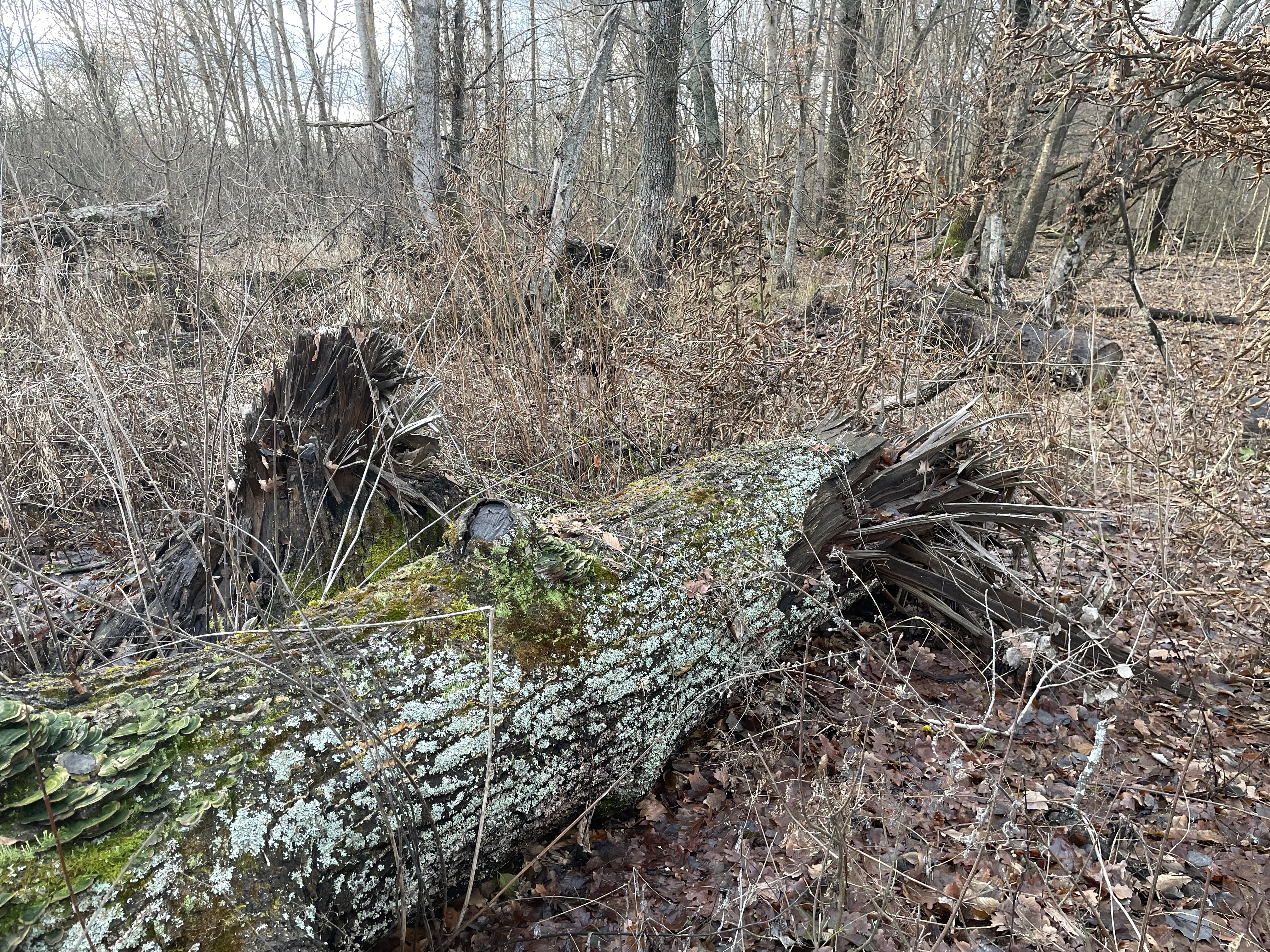
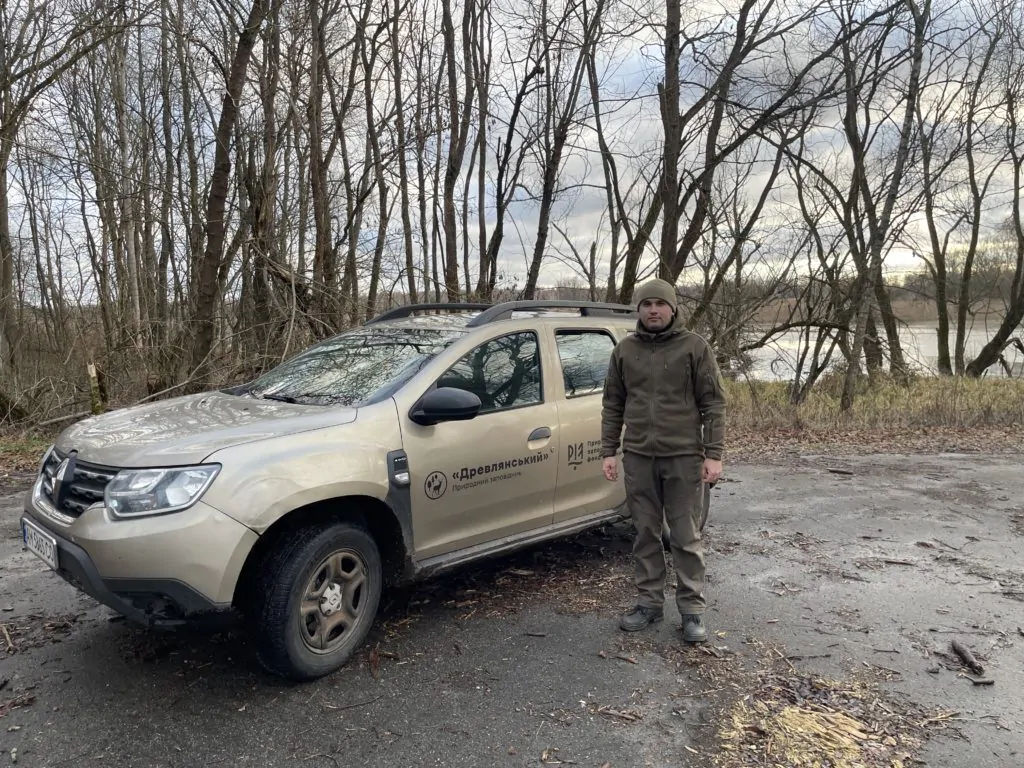
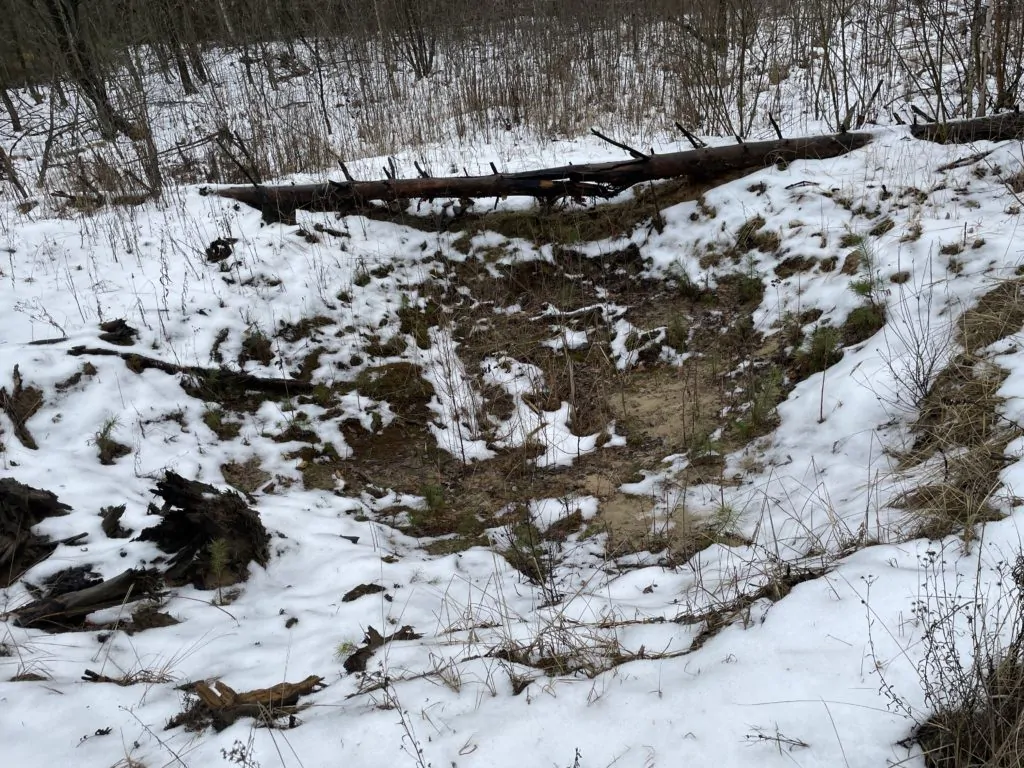
The reserve lies within the area affected by the Chornobyl disaster but has no official radiation and ecological reserve status. Local staff described shell craters that can reach fifteen metres in places. Such soil displacement can bring radionuclides that had gradually settled into deeper layers back to the surface, potentially raising background radiation levels.
In 2022, Russian forces used the reserve as a staging area to prepare a logistical route for capturing Hostomel Airport. Tracks left by enemy infantry fighting vehicles are still visible, along with destroyed or mined bridges, missile fragments embedded in roads, unexploded missiles in the ground and locations where cluster munitions exploded or failed to detonate.
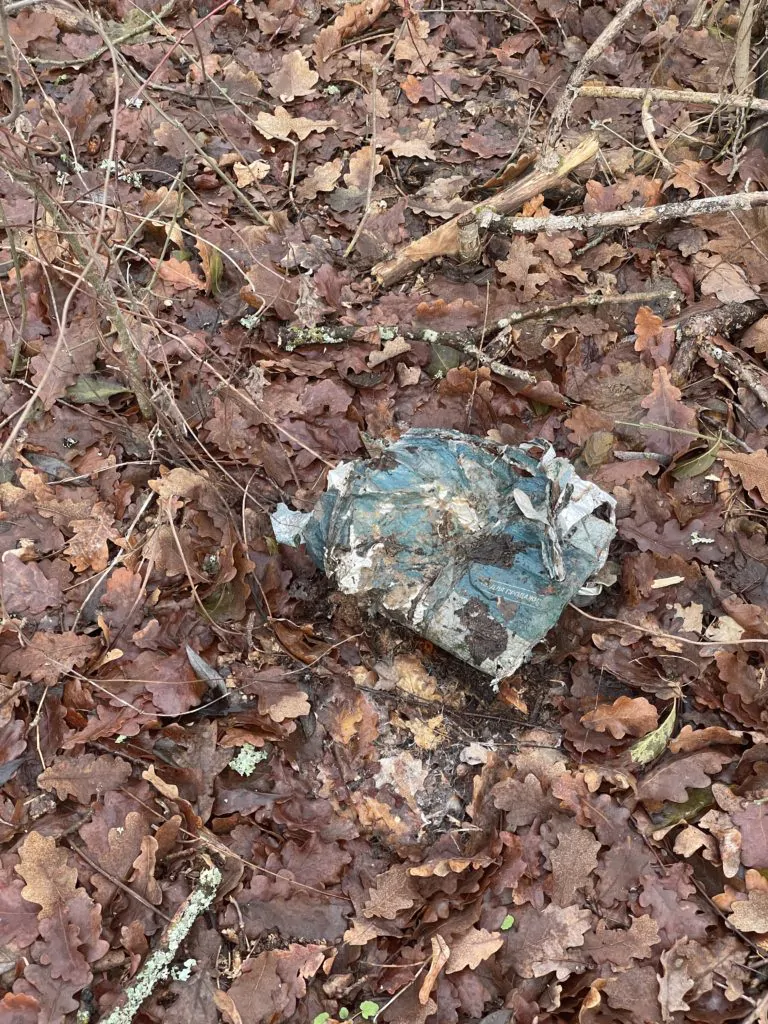
During our study of this protected area, we recorded:
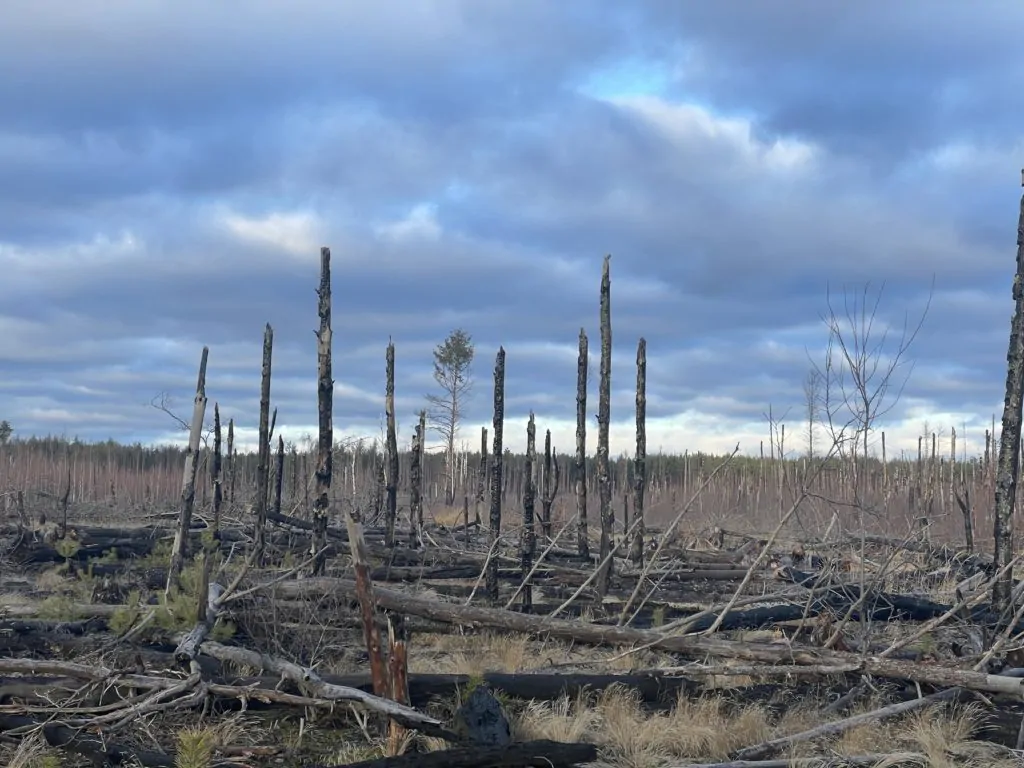
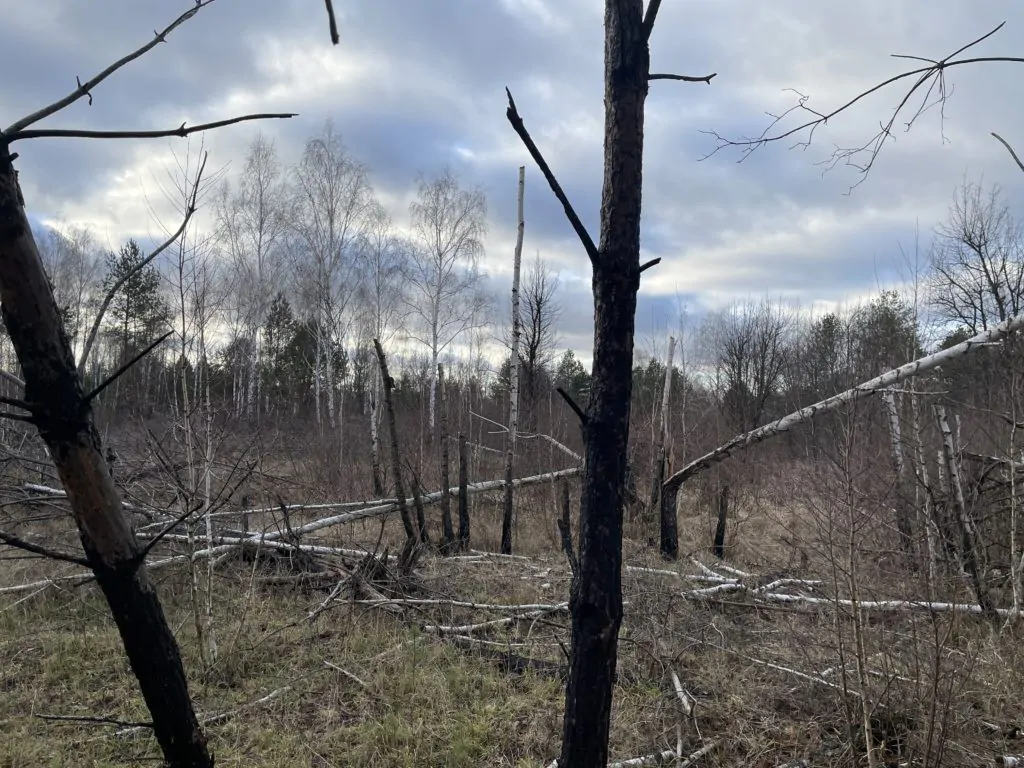
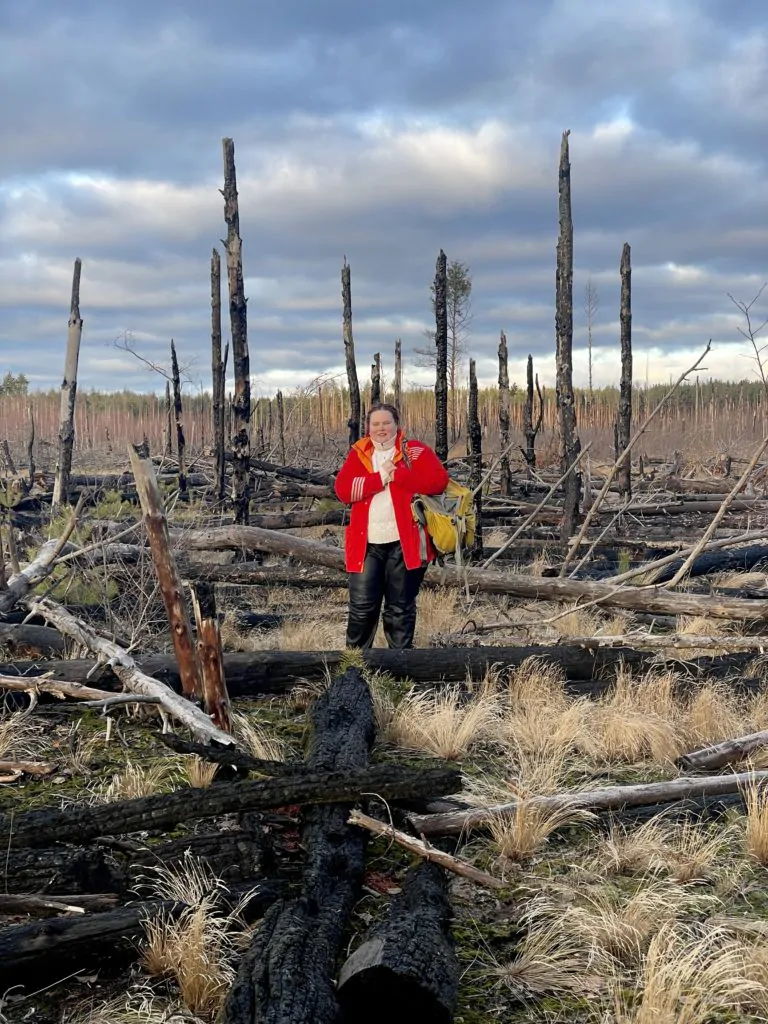
- 3,158 square metres of trees broken by Russian Grad rocket attacks. The area had numerous fire sites.
- A burned layer up to five centimetres deep. As pines predominate, the soil is sandy or sandy loam: sand remains underneath, with a dense ash layer formed above by severe fires.
- Extremely valuable ancient oaks grow in the reserve. Some have turned to charcoal despite retaining their shape.
Hetmanskyi Nature Park
The protected area is in Sumy region and extends to the Russian border.
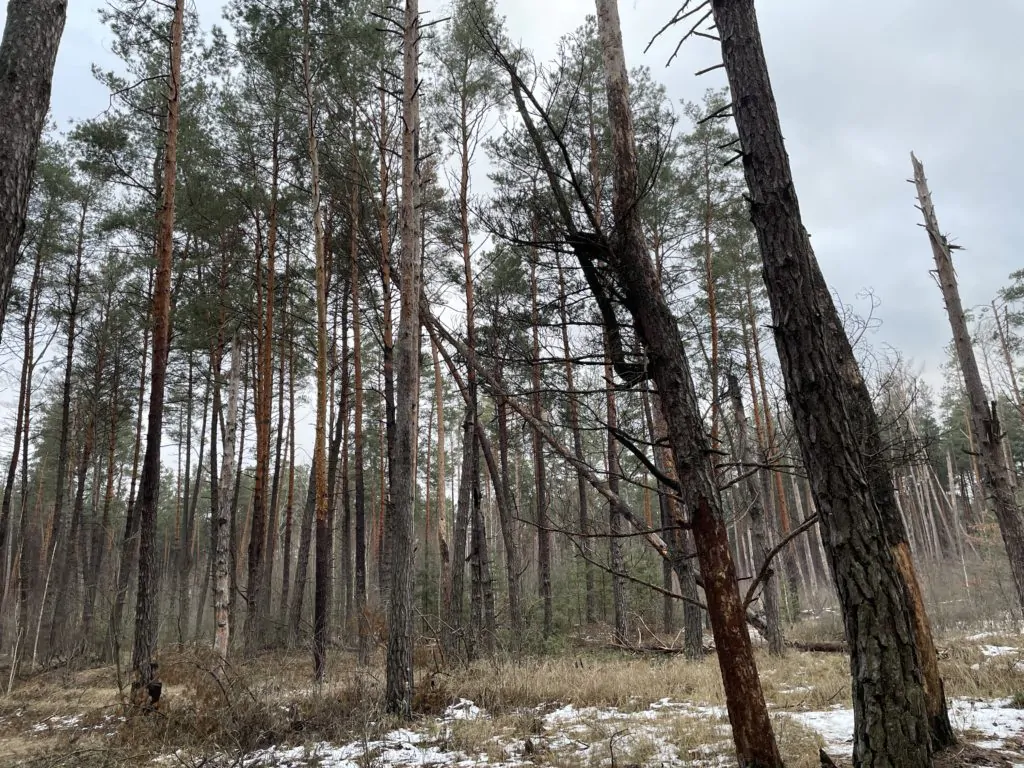
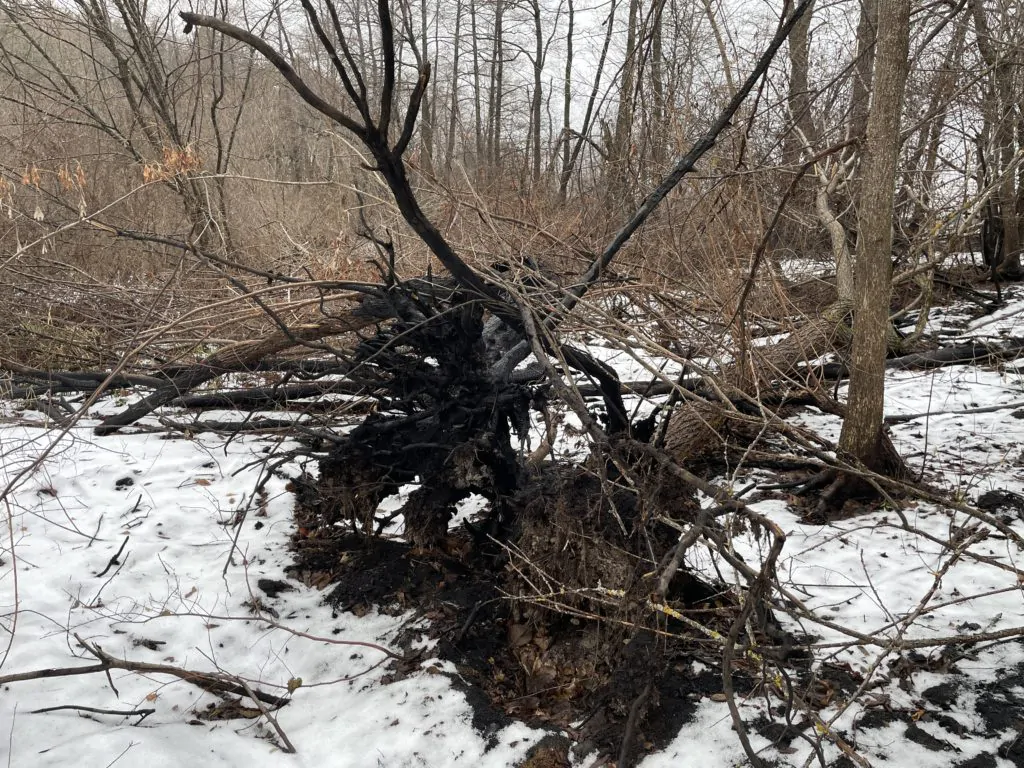
Because the front line is nearby, some sections were inaccessible for research. The Vorskla River, considered one of Ukraine’s cleanest, flows here but remains constantly threatened by shelling.
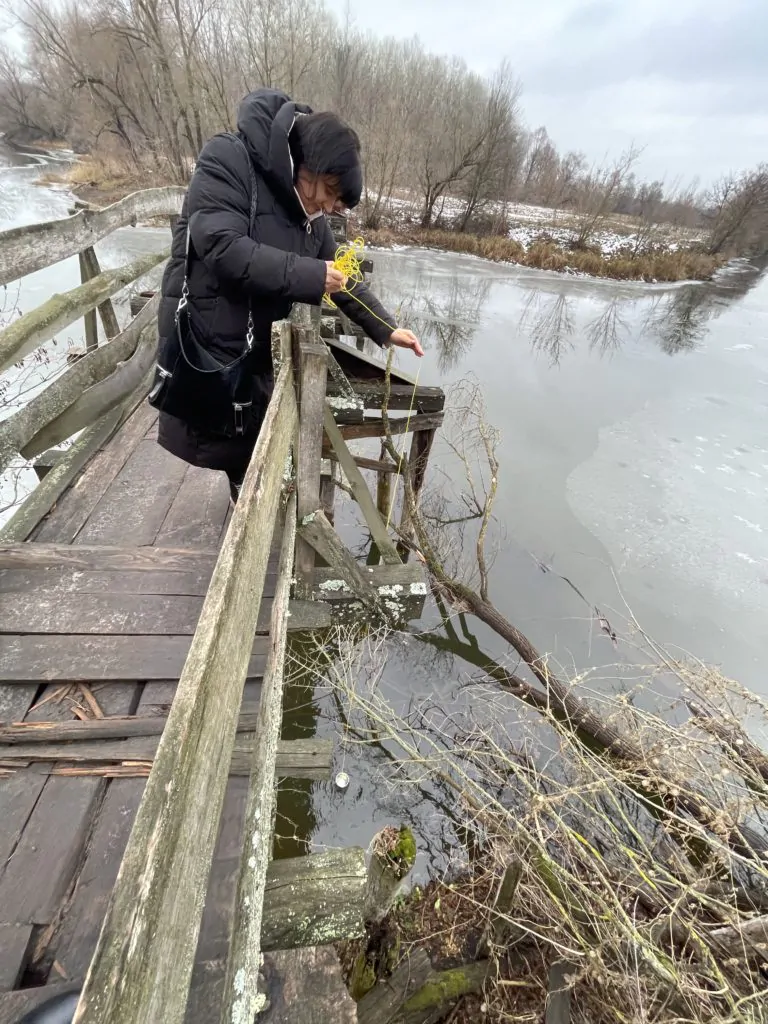
The protected area has repeatedly suffered missile strikes and fires. Its territory is considered potentially contaminated and not fully surveyed: humanitarian demining has been only partial, making it an urgent, vital priority. Employees travel only through designated safe areas.
A park employee said the main damage occurred in March 2022. Staff could reach and inspect missile strike locations only two to three months after Trostianets was liberated from occupation.
The park’s north-eastern section is currently the most contaminated.
In the Hetmanskyi protected area, we saw:
- Thirty-eight sites bearing environmental crime impacts, identified, examined and described by reserve staff.
- Completely burned wetlands and peatlands, in places to a depth of one to two metres. As these habitats characterise the area, fires caused by missile strikes inflict the greatest destruction.
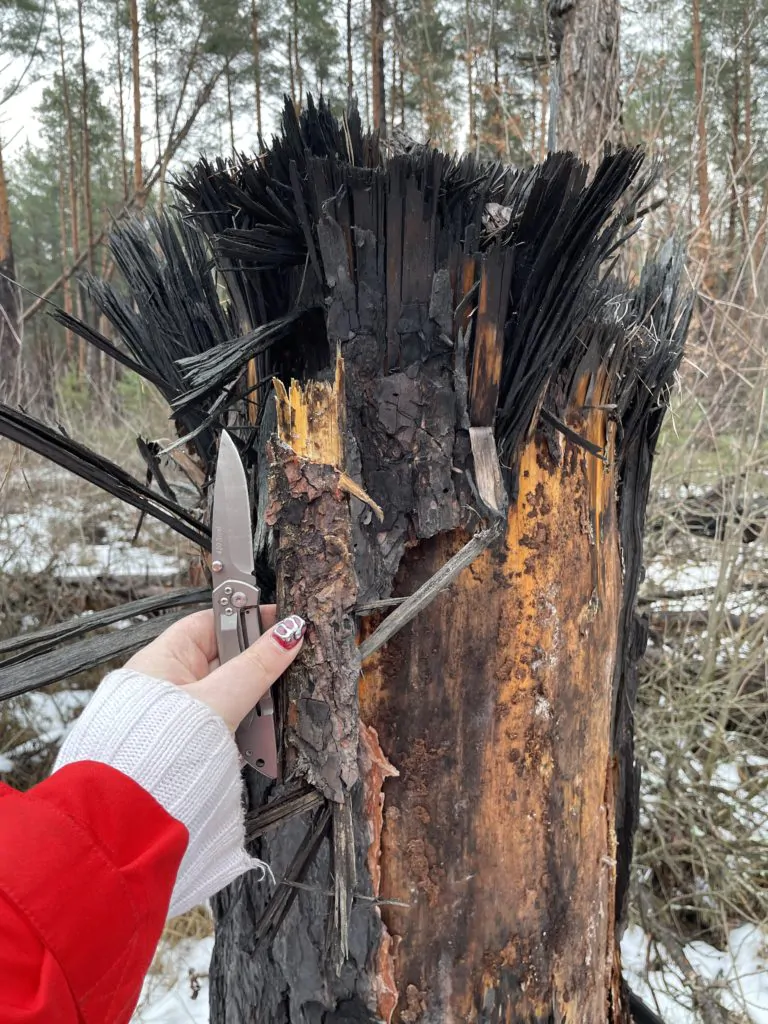
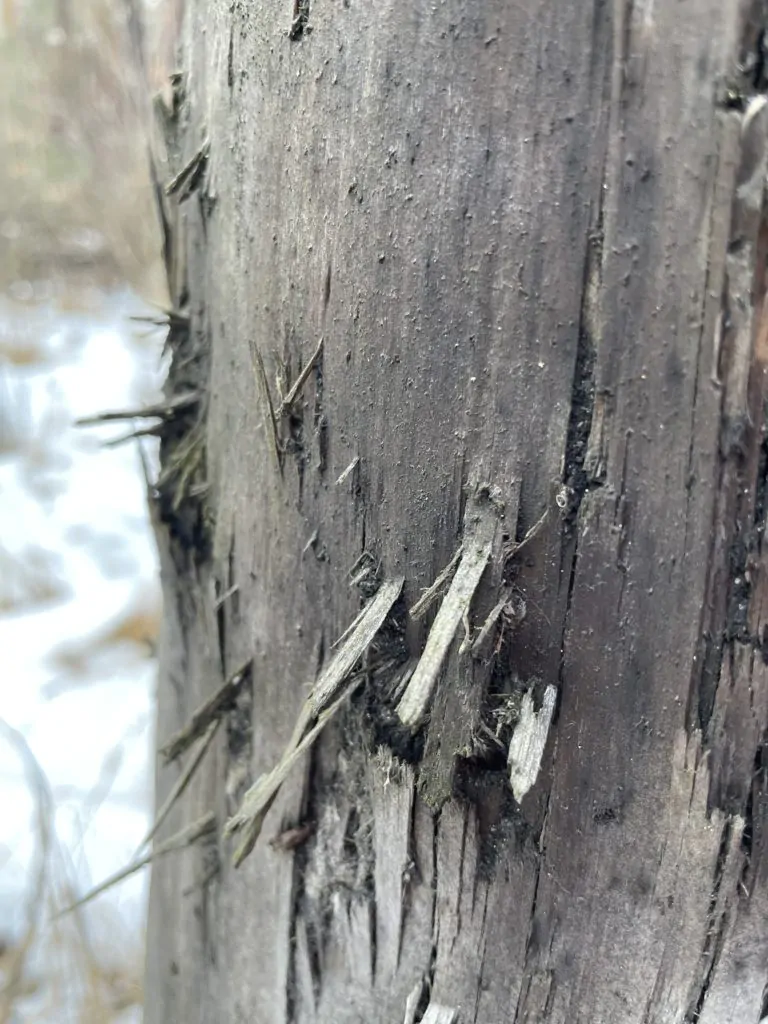
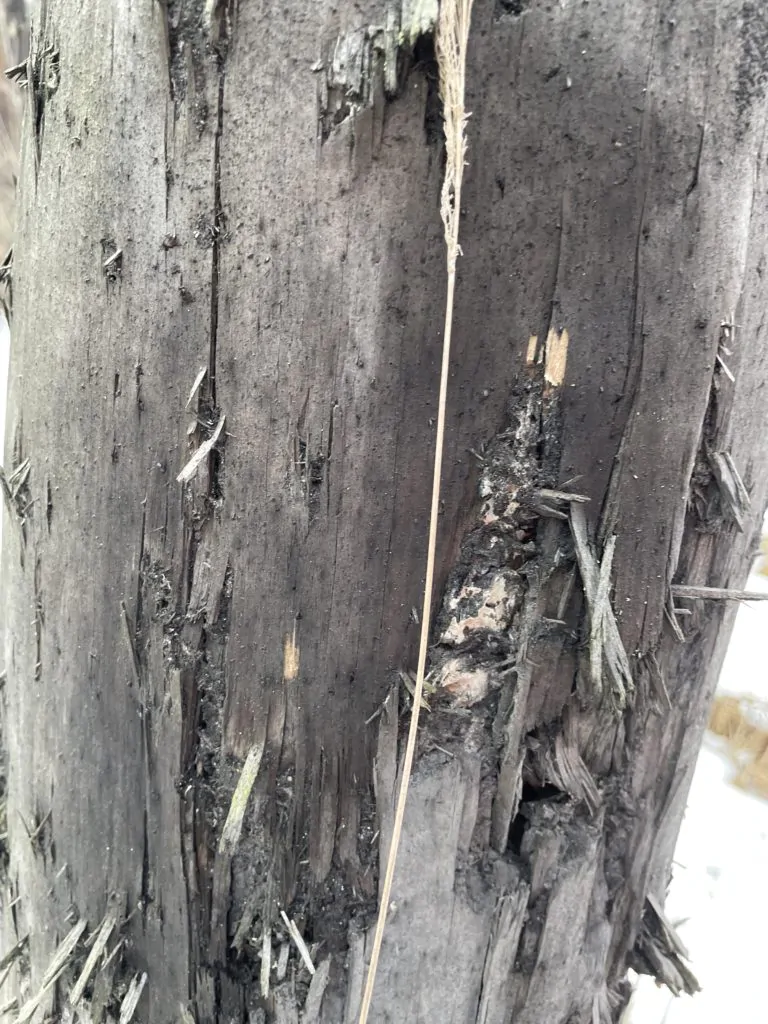
- Large numbers of pines, which form the main vegetation, severely mangled and cut by fragments — these unfortunately will not recover — or scorched, with those trees still having a chance of survival.
- Within about forty metres of missile impact centres, trees were damaged to the point of ceasing growth.
Seimskyi Landscape Park
This landscape park is in Sumy region.
The Seim River, which originates in Russia’s Belgorod and Kursk regions, flows through it. In August 2024, Russians demonstrated another way of harming Ukrainian nature: a sugar factory discharged organic waste into the river, contaminating it with ammonium. Oxygen levels dropped sharply, and fish and other river animals began dying en masse.
Park staff described seeing a black mass filling the entire river channel and moving from enemy territory. The water gave off an unbearable stench. Natural recovery is still continuing. Although conditions had improved by the SaveDnipro team’s visit, fish had not yet returned. Our contact at the protected area believes that, unfortunately, such emergencies could recur while the war continues.
At Seimskyi Park, we learned that:
- The pollution spread along the whole Seim River and reached the Desna.
- Water samples were examined by the State Environmental Inspectorate, a department of the Ministry of Environmental Protection and Natural Resources, and the State Service on Food Safety and Consumer Protection.
- After the fish deaths, a black substance settled on the riverbed.
- Soils and vegetation were not adversely affected by the river pollution.
An example of laboratory analysis
We sent samples collected in the protected areas to the specialist UkrKhimAnaliz laboratory.
According to its testing, in Drevlianskyi Nature Reserve:
- soil samples showed:
- no exceedance of maximum permissible concentrations of petroleum products;
- heavy metals — cadmium, lead, manganese, zinc, copper, nickel, cobalt and chromium — within permissible limits or below detection limits;
- a pH of 5.0, which does not meet regulatory requirements for most soils, indicating changes in acidity requiring attention to restore normal conditions;
- water samples from the water body showed:
- no petroleum products detected;
- pH within the normal range;
- all parameters within regulatory values, including chemical oxygen demand, nitrates and metals;
- samples of damaged vegetation showed:
- significant damage from a munition impact;
- fire had charred the trunk to the point of ceasing growth, broken the bark and damaged internal tissues;
- these impacts could seriously disrupt the plant’s vital functions, weakening it and potentially contributing to the tree’s subsequent death.
The samples collected now therefore revealed no exceedances or significant contamination. However, the reserve experienced its most severe wartime impacts in early 2022, giving nature some time to recover. The damaged vegetation we saw and recorded in photographs and video nevertheless leaves no room to forget what happened here.
The final laboratory report for the Drevlianskyi samples is available here.
A list of possible laboratories for analysing collected samples is provided in our Methodology for Assessing Natural Sites and Areas Affected by Russia’s Military Aggression.
Reporting evidence of environmental crimes: how to do it and what problems arise
Once the facts have been collected, the crucial moment comes: submitting them to the state through the competent authorities.
Formally, legislation recognises only one digital service for recording environmental crimes: EcoZagroza. The Ministry of Environmental Protection and State Environmental Inspectorate officially confirmed this in response to our inquiry. Another way to submit data is by email.
Practice brought an unpleasant surprise: EcoZagroza can be used only with a qualified electronic signature or BankID. This raises an obvious question: how can people without a file-based electronic key, or those in temporarily occupied areas wishing to report an environmental crime anonymously, submit evidence?
Looking for alternatives, we tested other digital options:
- The EcoShkoda Telegram chatbot, created by the State Environmental Inspectorate for rapid recording of environmental crimes, does not work. It can be found through search and sent messages, but it does not react or reply.
- The Office of the Prosecutor General told us it has no specialist online tools. Instead, information can be submitted through its RWS application, which is very difficult to find: app searches do not locate it, so a direct link is needed. It accepts only photographs or screenshots with no accompanying text. How, then, will specialists identify crime locations, and on what will they base further investigations?
Ultimately, the infrastructure for recording environmental crimes does not work as a coordinated mechanism. The overall situation is:
- digital services authorised to collect environmental crime data do not account for the difficulties people may face, such as lacking physical access to Ukrainian postal services or electronic identification;
- as a result, the state does not receive important information needed, among other things, for future proceedings against Russia and compensation claims;
- formally, the state also shows little willingness to rely on eyewitness testimony and does not expect information from anyone other than the State Environmental Inspectorate;
- evidence therefore remains scattered among different civil society organisations and individual citizens.
More to come
We can say frankly that this project gave SaveDnipro unique experience. We learned that we can generate ideas and implement them well.
We are moving forward and plan to continue distributing the Methodology for Assessing Natural Sites and Areas Affected by Russia’s Military Aggression among local authorities, civil society organisations and activists, involving as many fellow citizens as possible in collecting evidence.
We will also take opportunities to visit other Ukrainian protected areas to obtain a fuller picture of their condition during the war.
The project ‘Advocating international accountability for environmental crimes’ is supported by the International Renaissance Foundation. This publication represents the authors’ position and does not necessarily reflect the position of the International Renaissance Foundation.