Translation note: This translation of the April 2022 article corrects advice about wet masks, skin neutralisation and stomach washing. Chemical exposure requires urgent professional assessment. Sources: NIOSH nitric acid guidance.
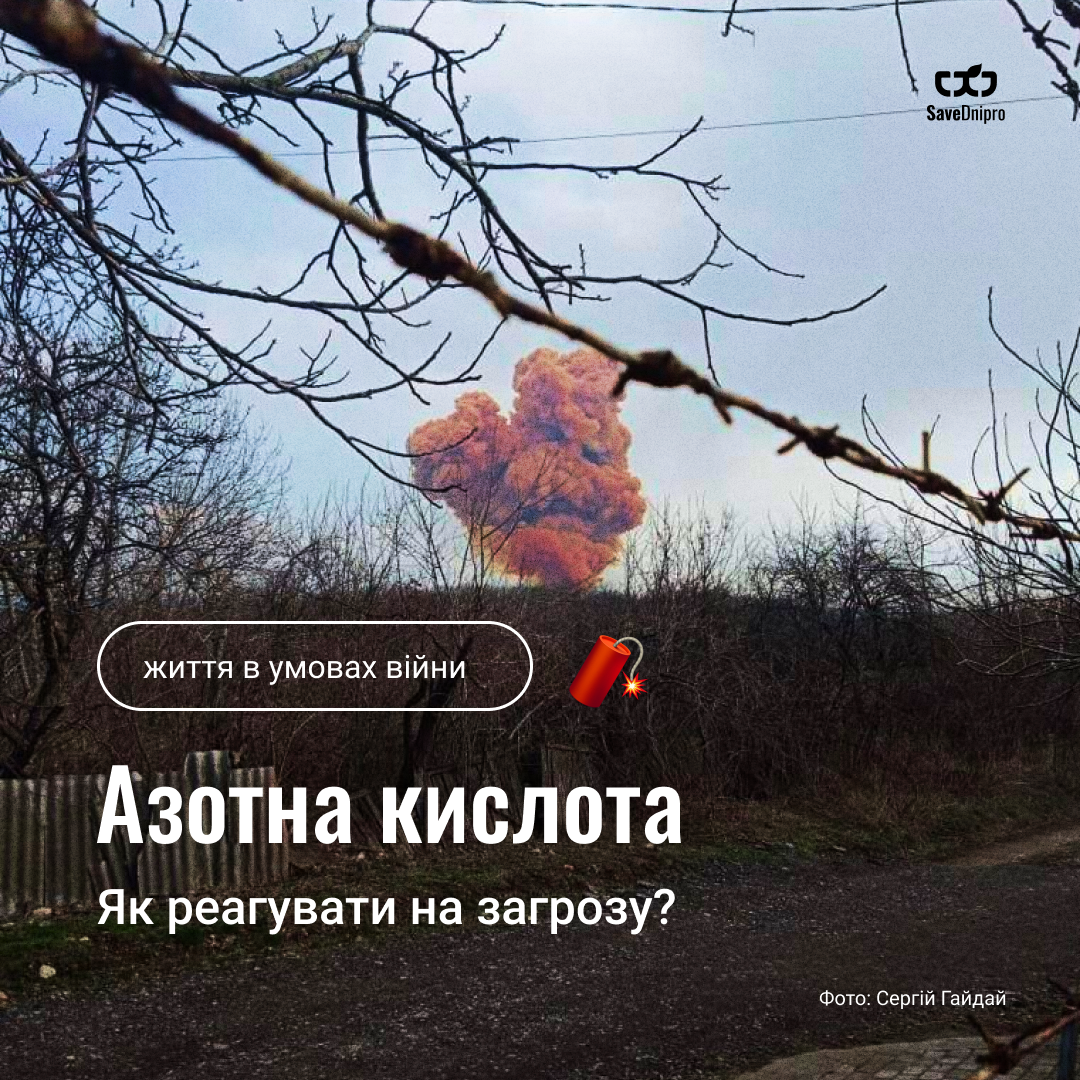
On 5 April, reports emerged of a russian strike on a nitric acid tank in Rubizhne, Luhansk region.
What is nitric acid?
Nitric acid is a fuming liquid with an acrid smell. It may be colourless or yellowish as it decomposes. It is a strong oxidiser and corrodes many metals.
Why is nitric acid dangerous?
 It can cause injury through inhalation, swallowing or contact with skin, eyes and other sensitive tissues.
Eye contact can cause severe burns, damage to the cornea and conjunctiva, and loss of vision.
Vapours irritate the airways. Exposure can cause bronchitis, breathing difficulties and delayed pulmonary oedema, even after an initially mild period.
Swallowing nitric acid can severely burn the mouth, oesophagus and stomach and cause dangerous swelling of the airway.
Concentrated acid causes severe skin burns and characteristic yellow staining. Dilute solutions can also damage and irritate the skin.
What if there is a release outdoors?
Follow official shelter or evacuation instructions; do not go out into a chemical cloud.
Close doors and windows and turn off ventilation that draws outdoor air inside.
Do not rely on wet face masks: they do not provide dependable protection against acid vapour or nitrogen oxides.
Protection requires appropriate chemical respiratory equipment and training. Do not enter a contaminated area relying on an ordinary mask.
First aid:
Immediately irrigate exposed eyes with plenty of clean running water and obtain urgent medical care.
Remove contaminated clothing if safe and flush affected skin with plenty of water. Do not add baking soda or attempt to neutralise acid on the body.
If swallowed, do not induce vomiting or attempt a stomach wash. Contact emergency medical services immediately and follow their instructions.
Anyone exposed should receive prompt medical assessment, particularly after inhalation because lung effects may be delayed.
Take care of yourself. 
