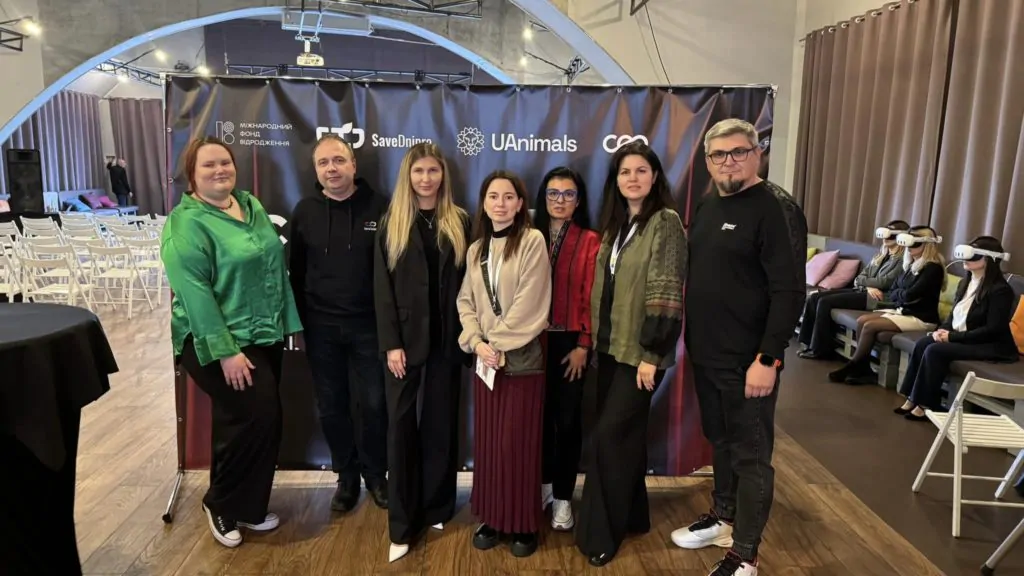
‘Listen, Iryna, what if we tried to show the environment’s pain through modern technology? Combine environmental messages with immersive reality? Because nobody responds to numbers and images alone any more’ — said the idea’s author, Olena Romaniukova, her eyes alight, to SaveDnipro’s chair as they stood outside Kyiv City Hall in the heart of the capital.
On a gloomy day in February 2024, a meeting in an office at UNIT.City marked the start of this project. Its working title, ‘Museum of Ecocide’, gave only a general sense of the idea: not everyone associates a museum with cutting-edge technology.
The SaveDnipro and Mriya Production teams came together. Mriya was known for immersive communications, having won awards at international creative festivals in London, Berlin and Cannes. SaveDnipro was known in environmental protection circles.
At the meeting, we set a goal: use augmented reality to convey to the international community the horrifying consequences of Russia’s aggression for our nature. Create a personal immersive experience in which viewers become the main character and what they see and hear touches their deepest emotions. Through that emotional impact, we would convey the information that mattered.
We planned to show the immersive content in European capitals and at the COP29 climate conference, but had made no final decision on either venues or the technology. Everything depended on funding, which we did not have either.
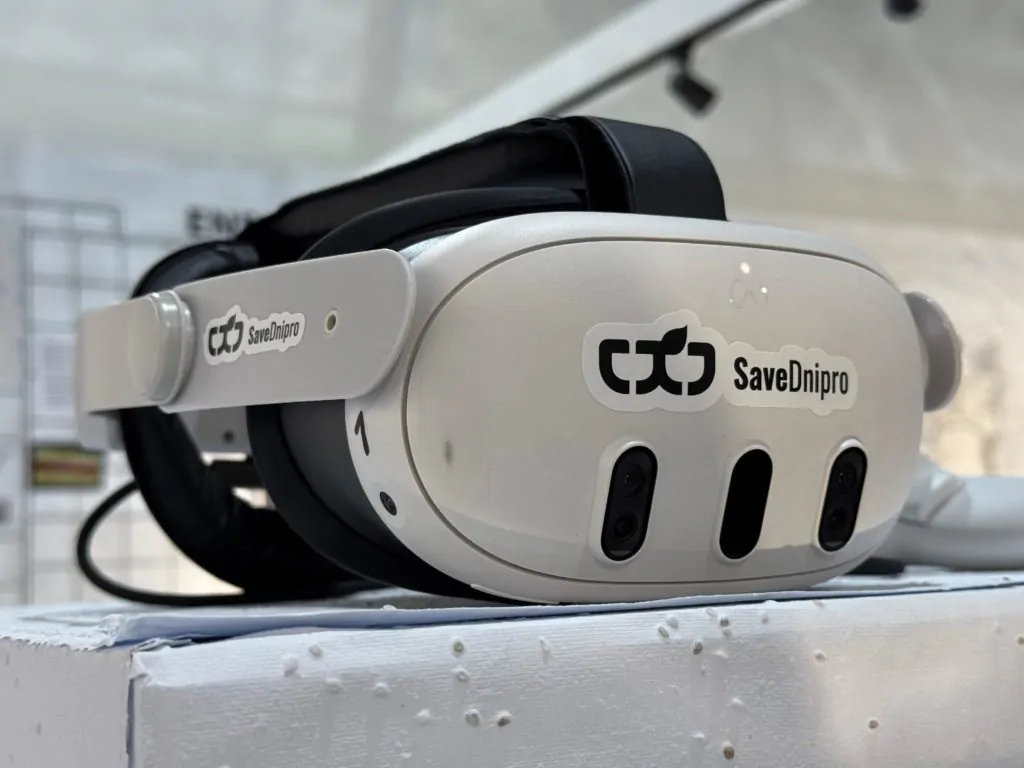
What we did have was an idea and faith that it would work. Inspired, we approached the Ministry of Environmental Protection, which was coordinating Ukraine’s participation in the world’s largest climate conference, COP29, to join the official delegation and Ukrainian pavilion. We were delighted when Svitlana Sushko, who headed the preparatory committee, immediately embraced the idea and championed it in subsequent discussions with the leadership.
Work began on all fronts at once: finding funding, developing immersive content and clarifying technical specifications. The International Renaissance Foundation became interested and funded a substantial part of the project. Covering the full cost required additional partners, whom SaveDnipro chair Iryna Chernysh sought together with Olena Romaniukova.
The search was not straightforward. Some potential partners saw the project as ‘too peaceful and not timely’; others thought it too closely linked to the war. Two months before COP29, we still lacked the full budget. Fortunately, our UAnimals colleagues agreed to join us as co-organisers and provided substantial help with media coverage. CEO Club covered another part of the costs — especially valuable during difficult times for responsible business — with personal coordination by SaveDnipro board member Yurii Ostapchuk.
Work gathered pace on a film about the pain of Ukraine’s war-scarred environment.
A preview screening
The first public showing of our VR content took place two weeks before COP29. Ukraine’s Ministry of Environmental Protection and Natural Resources organised PreCOP, a special event to coordinate the Ukrainian delegation. With little preparation time, our film was not yet finished. But when had that ever stopped us?
We decided to use the opportunity to show the film and gather feedback. Despite its unfinished state, we presented our work and heard the first responses: ‘Thank you, this is amazing’, ‘This will definitely find an audience’, ‘I couldn’t hold back my tears’. Among those interested enough to put on the VR headset were Environmental Minister Svitlana Hrynchuk and Verkhovna Rada environmental committee chair Oleh Bondarenko. Many other PreCOP participants also watched our unfinished production.
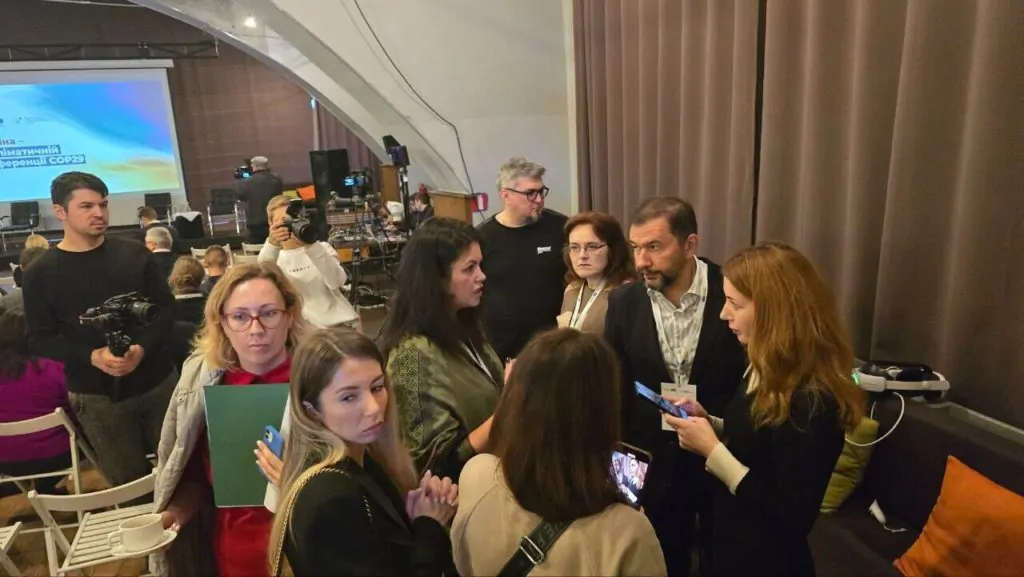
The feedback was positive, and we incorporated valuable suggestions. In particular, we created a shorter two-minute version alongside the six-minute full film because senior visitors to the Ukrainian pavilion usually have very tight schedules. This proved excellent advice, enabling us to show the content to leading international policymakers. More on that later.
Together with the Gres Todorchuk agency, we worked on the Ukrainian pavilion’s COP29 concept. It was continually refined, affecting the design of our VR area as well. Considerable effort was needed to keep up with this marathon of adjustments and changes, which continued almost until COP29 opened.
COP29 with a taste of oil
Baku hosted the international climate conference in 2024. A small team flew there on our behalf. Artem Ivanenko of Mriya Production handled the technical side of the VR experience, assisted by Sofiia Bochkor and Veronika Sobkovych, ecology students in the Faculty of Natural Sciences at Kyiv-Mohyla Academy. The experienced Viktoriia Voitsitska was entrusted with advocacy conversations with viewers after the film.
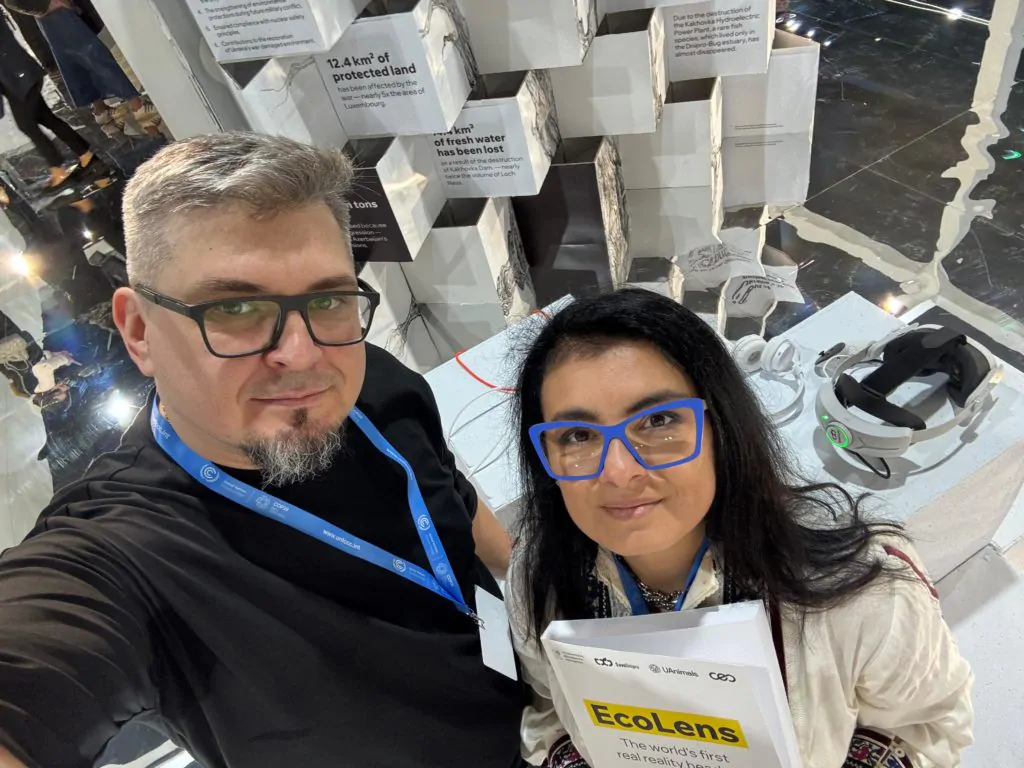
She conveyed Ukraine’s vision of mechanisms to hold the aggressor accountable and secure compensation for environmental crimes. We developed the main advocacy messages during preparation, working with MP Yuliia Ovchynnykova and Maksym Popov from the Prosecutor General’s Office, and agreed them with the Ministry of Environmental Protection.
First impressions
On 11 November 2024, COP29’s first day, we saw that our idea worked and our journey to Baku was fully worthwhile. ‘There is a constant stream of viewers, so the headsets cannot keep up and need recharging. Lots of people want to watch,’ Artem Ivanenko reported in our coordination chat.
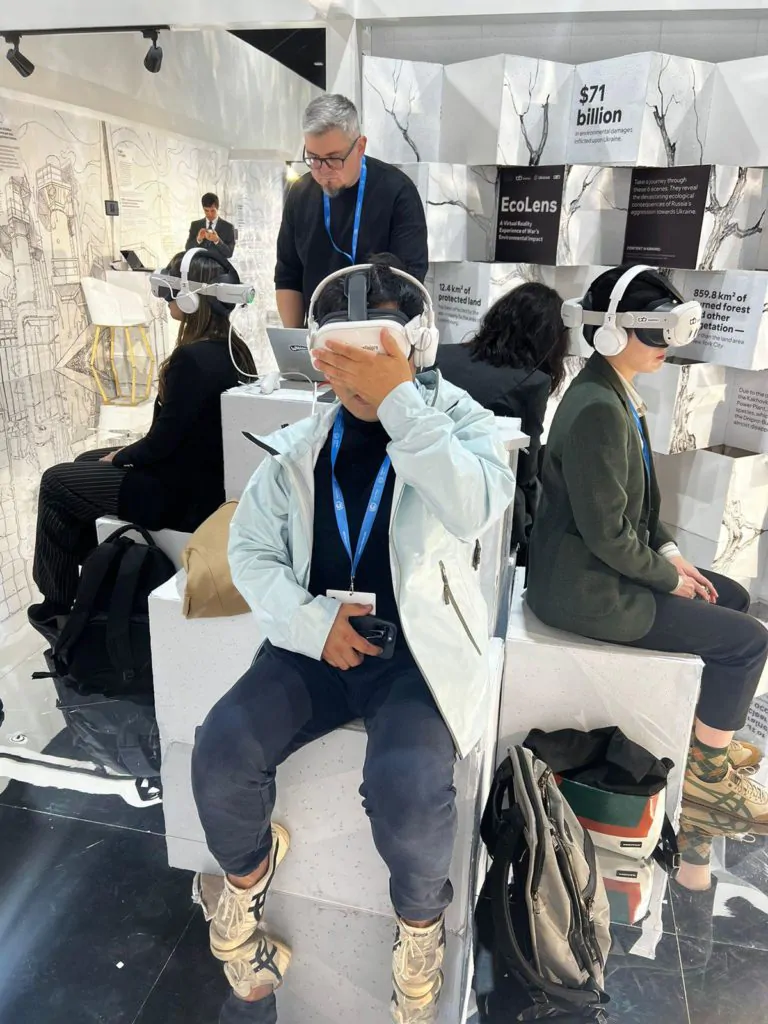
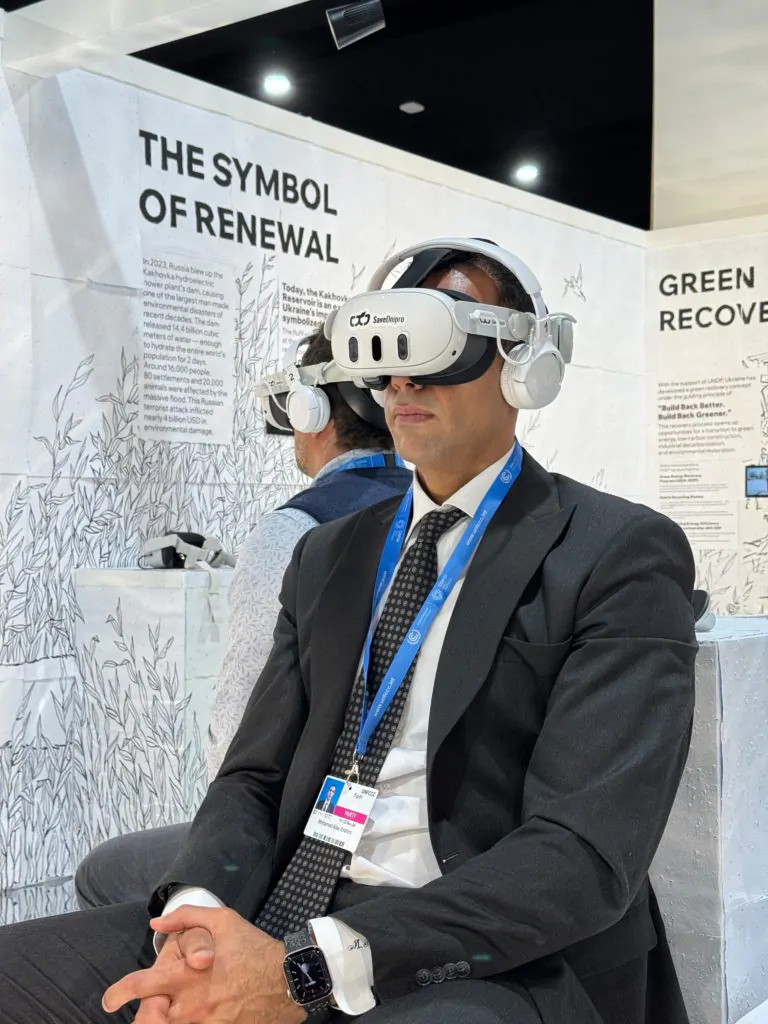
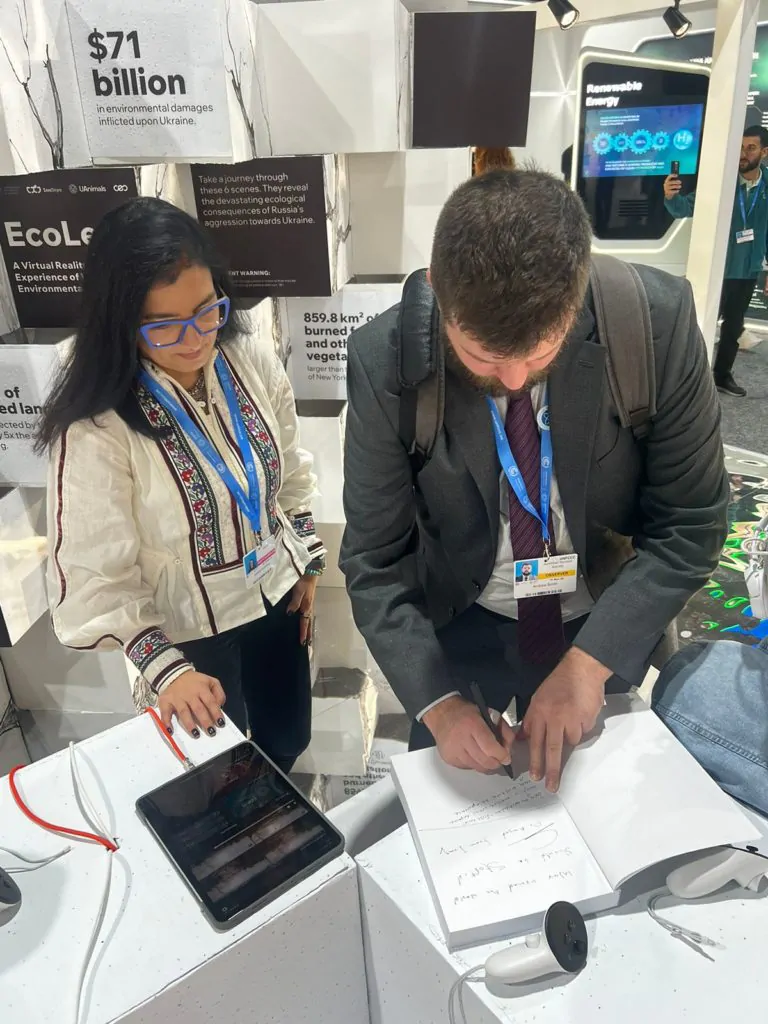
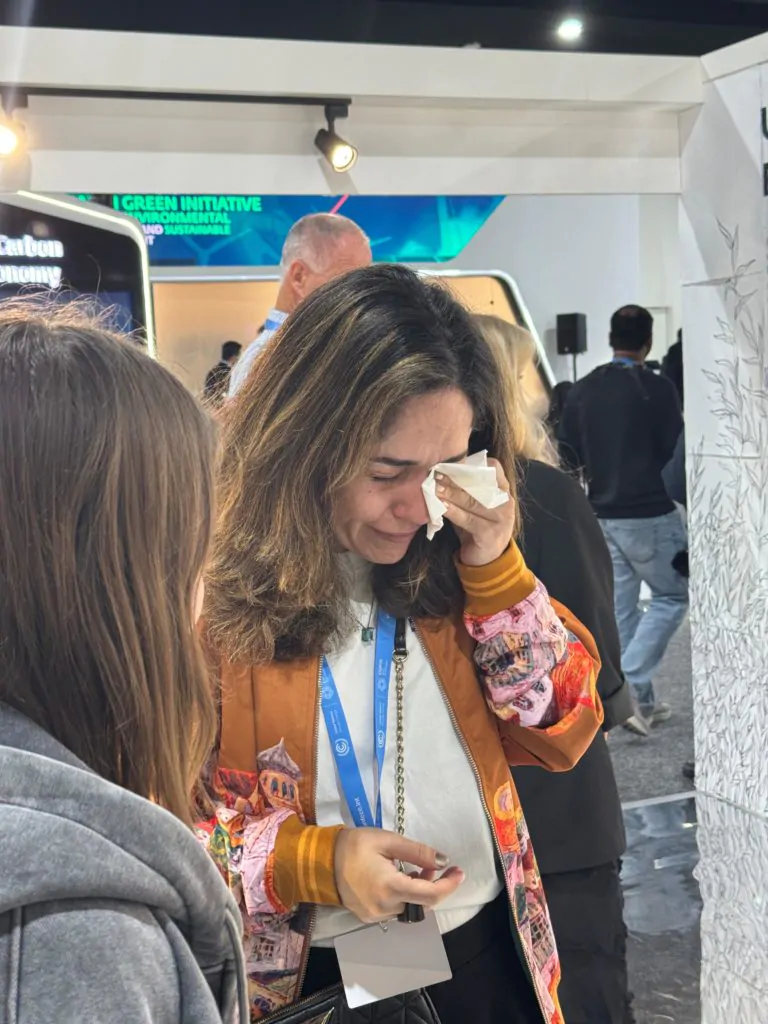
From that first day, we began seeing something that would become familiar and recur until the conference closed: some viewers could not contain their emotions or hold back tears.
It was clear that our content really moved people. Our UAnimals partners made a video about this, which you can watch here. Importantly, we deliberately avoided graphic shock content. So as not to turn viewers away, we found a balance between emotional impact and what an unprepared audience could bear.
Hundreds of viewings
For days, our heroic team could barely sit down for a break because the stream of people wanting to watch never stopped. The conference lasted two weeks. The VR area became a real magnet within Ukraine’s COP29 pavilion.
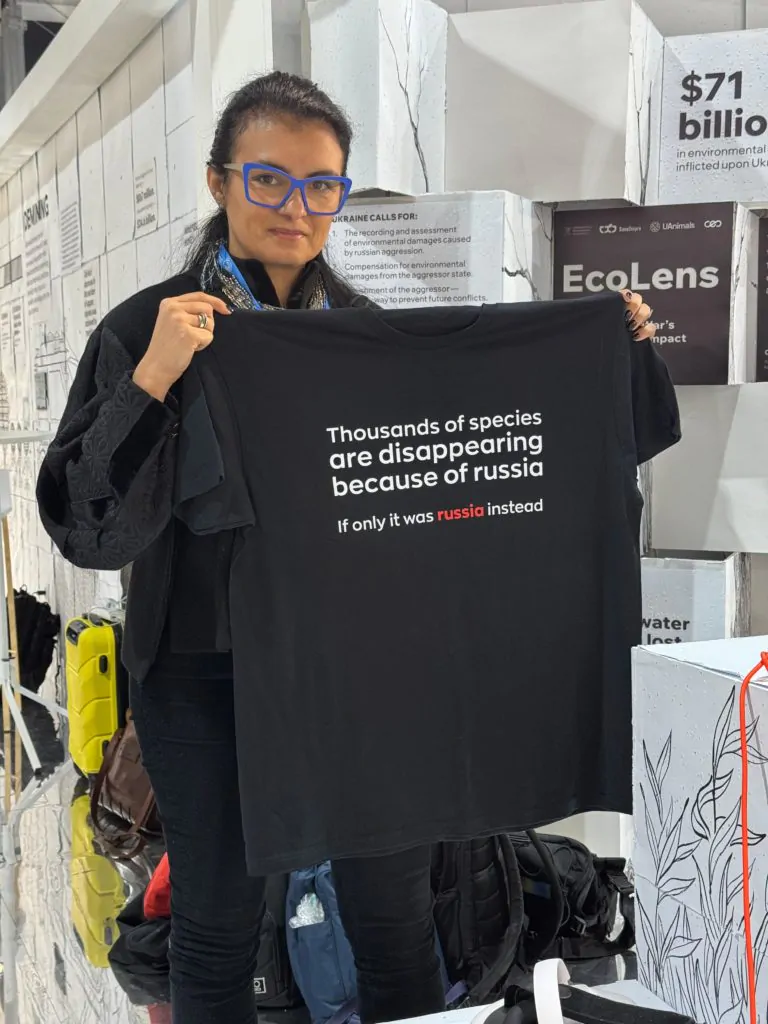
Senior visitors were among the conference participants who came to us. The first was US Assistant Secretary of State for Energy Resources Geoffrey Pyatt, a former US ambassador to Ukraine and a personal acquaintance of Viktoriia Voitsitska. For guests like him, we prepared special gifts: T-shirts bearing the English message, ‘Thousands of species are disappearing because of Russia — better if it were Russia itself’.
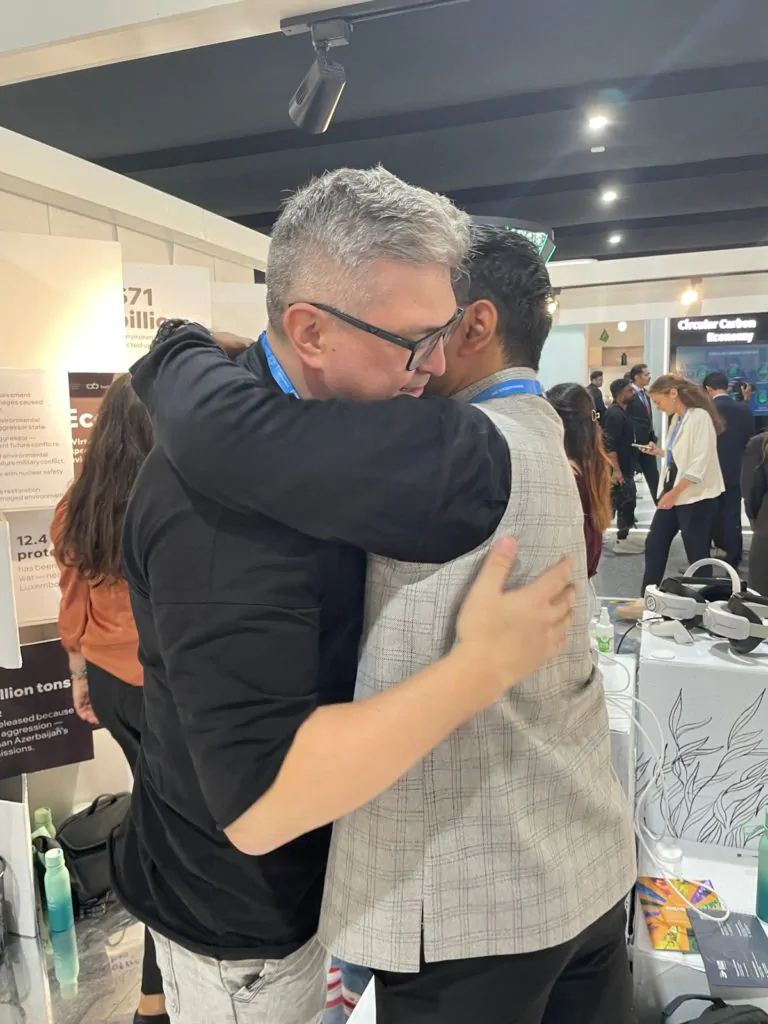
Over those days, we became accustomed to hugs, words of support, heartfelt emotions and vivid descriptions of Russia from viewers. But even we were taken aback by the tears of the ‘iron’ US Secretary of Energy, Jennifer Mulhern Granholm.
Other senior visitors who watched our film included:
- Simonas Gentvilas, Lithuania’s Minister of Environment;
- Kerry McCarthy, UK Parliamentary Under-Secretary of State for Climate;
- Anton Gerhard, member of Germany’s Bundestag;
- Seymur Mardaliyev, Ambassador Extraordinary and Plenipotentiary of Azerbaijan to Ukraine;
- Matt Haney, member of the California State Assembly;
- Pat Spearman, member of the Nevada State Senate;
- Saija Vuola, adviser to Finland’s Minister of the Environment;
- Dimitri Gvindadze, lead economist at the European Bank for Reconstruction and Development.
All received a list of concrete steps to take together with Ukraine to hold the aggressor accountable and help nature heal. Viktoriia Voitsitska and Anastasiia Skok, who replaced her during the forum’s second week, ensured this.
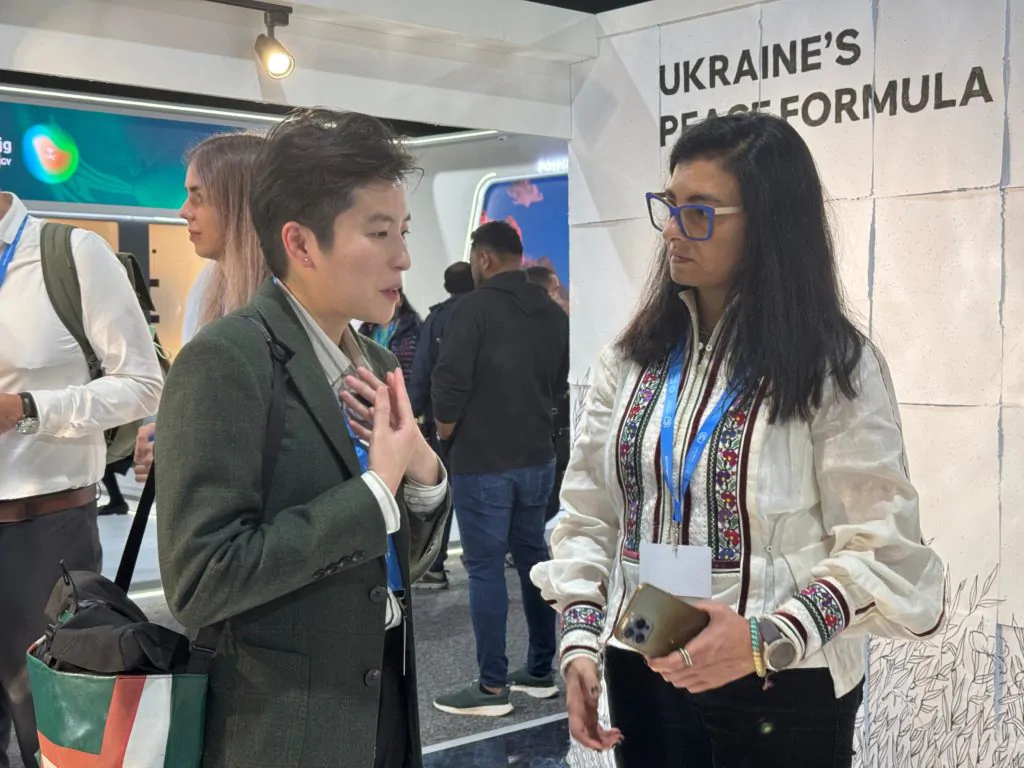
Alongside conversations with guests, Viktoriia also found time for journalists. Audiences across Ukraine saw her live appearance on Suspilne, where she clearly explained why participating in such forums matters: you could never bring together so many influential, knowledgeable people in one place on your own.
Over the conference’s two weeks, more than 700 participants from every continent watched our VR film: officials, politicians, scientists, civic activists and business representatives. Every viewer mattered to us. We explained to each that whether evil is punished depends on their personal position and their country’s position. We are confident every viewer left more supportive of Ukraine than before.
What stays with people matters
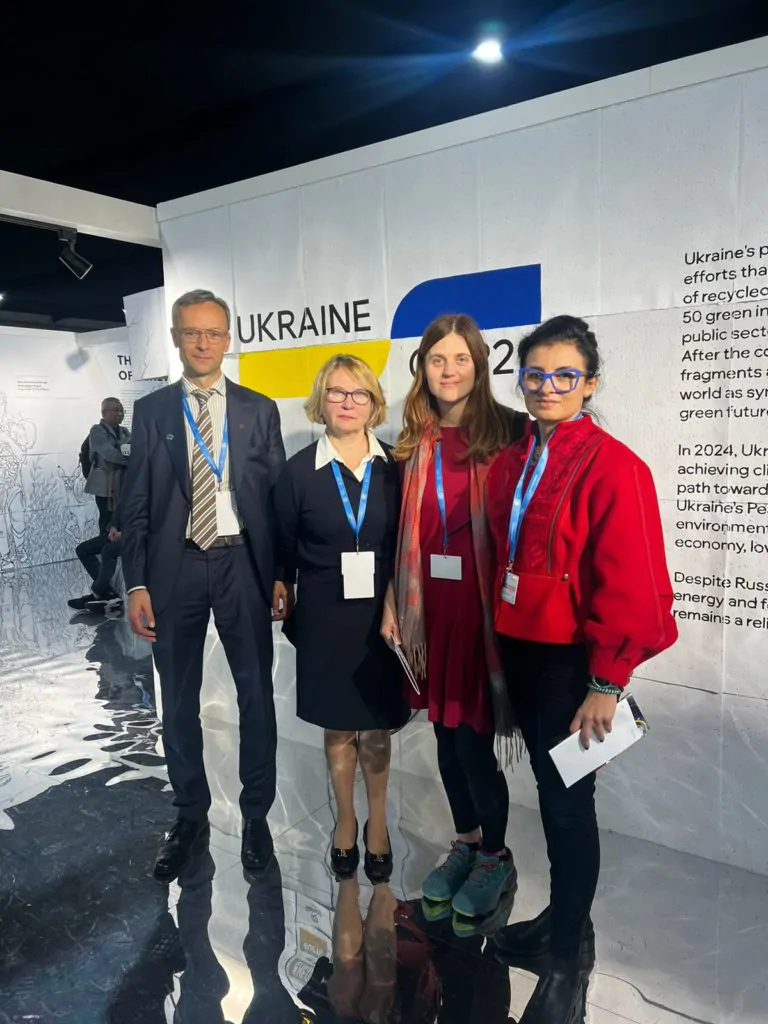
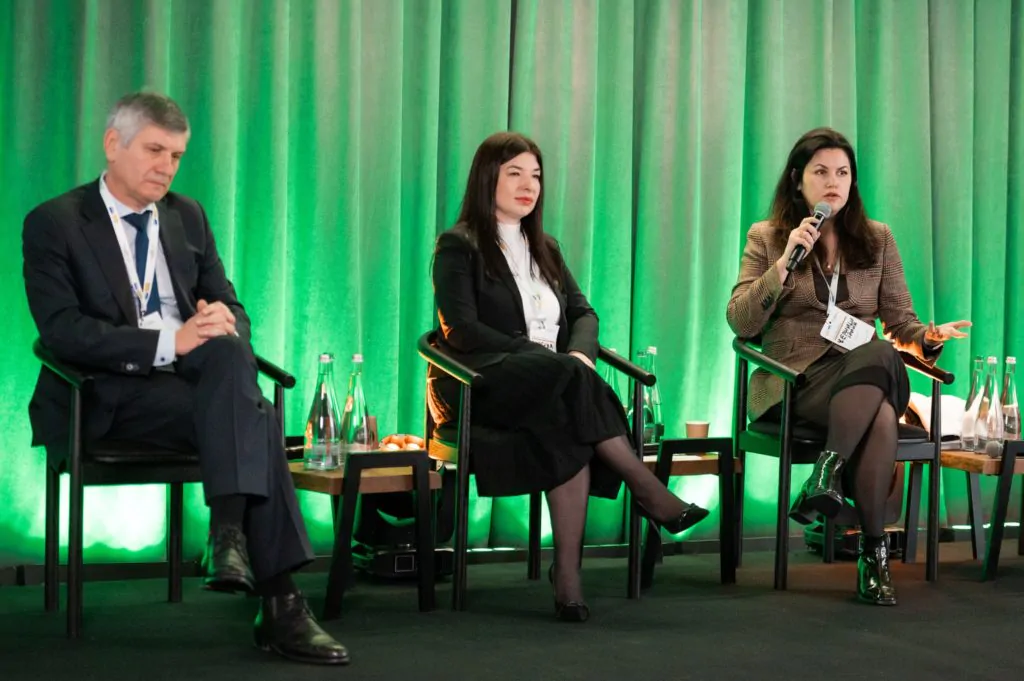
After COP29, the ministry held PostCOP to review the forum’s results. Most participants considered COP29 successful for Ukraine. Our pavilion was among the best and most visited, welcoming over 7,000 conference participants. The VR area created by SaveDnipro and UAnimals attracted particular international attention, for which Environmental Minister Svitlana Hrynchuk thanked us personally.
Iryna Chernysh spoke on PostCOP’s first panel. Her account of advocating Ukraine’s position through immersive technology was interrupted by applause. We again showed the film to those who had not yet seen it, and at PostCOP we recorded a short video of recollections about our VR experience from people who had been in Baku.
The VR filmshown at COP29 is now on YouTube for everyone to watch. We recommend using a VR headset and headphones for spatial sound. Before watching, select the highest video quality and use the 360-degree view. Warning: the content includes sensitive scenes.
Our VR film is in English, so please share it with international audiences if you can.
Acknowledgements
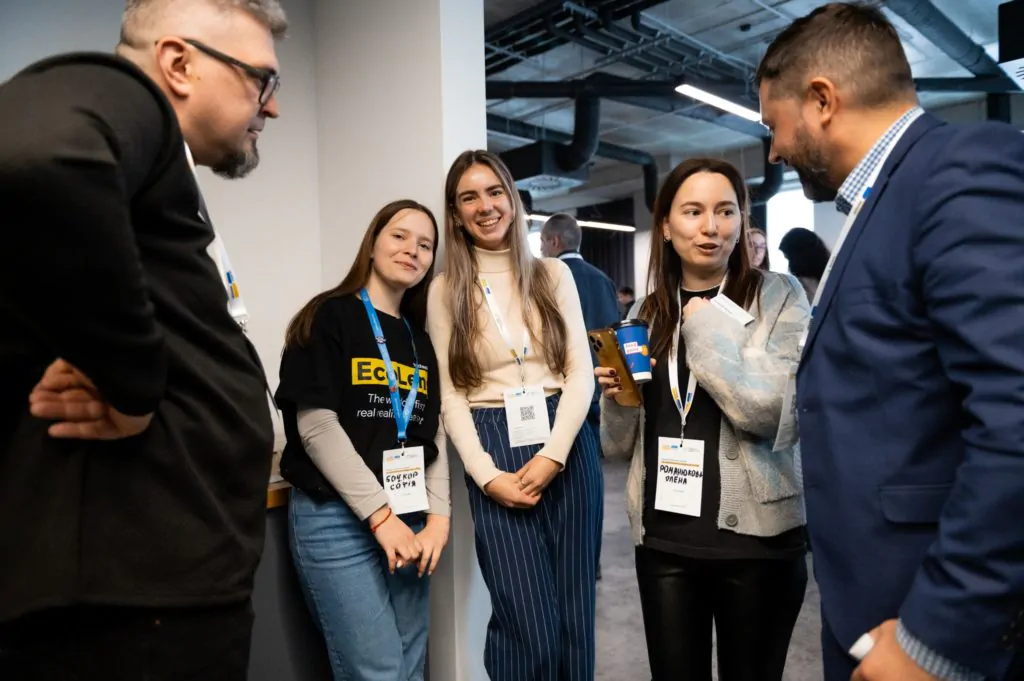
Thank you to everyone without whom this project would not have happened: the SaveDnipro, UAnimals and Mriya Production teams.
The project was implemented with support from the International Renaissance Foundation and CEO Club. Cooperation with Ukraine’s Ministry of Environmental Protection and Natural Resources enabled the project team to represent Ukraine at COP29 as part of the official delegation.